
Dressage
Alles over dressage.
7 artikelen gefocust op dressage — praktisch, met concrete getallen en bronnen.
Also check out the dedicated overview pages per category: Health, Management, Conditions, Training, Nutrition, Breeding, Competitions, Care, Apps, Hoof Care, Dressage, Season, Costs, Sales, Riding School, Stable Management
Dressage
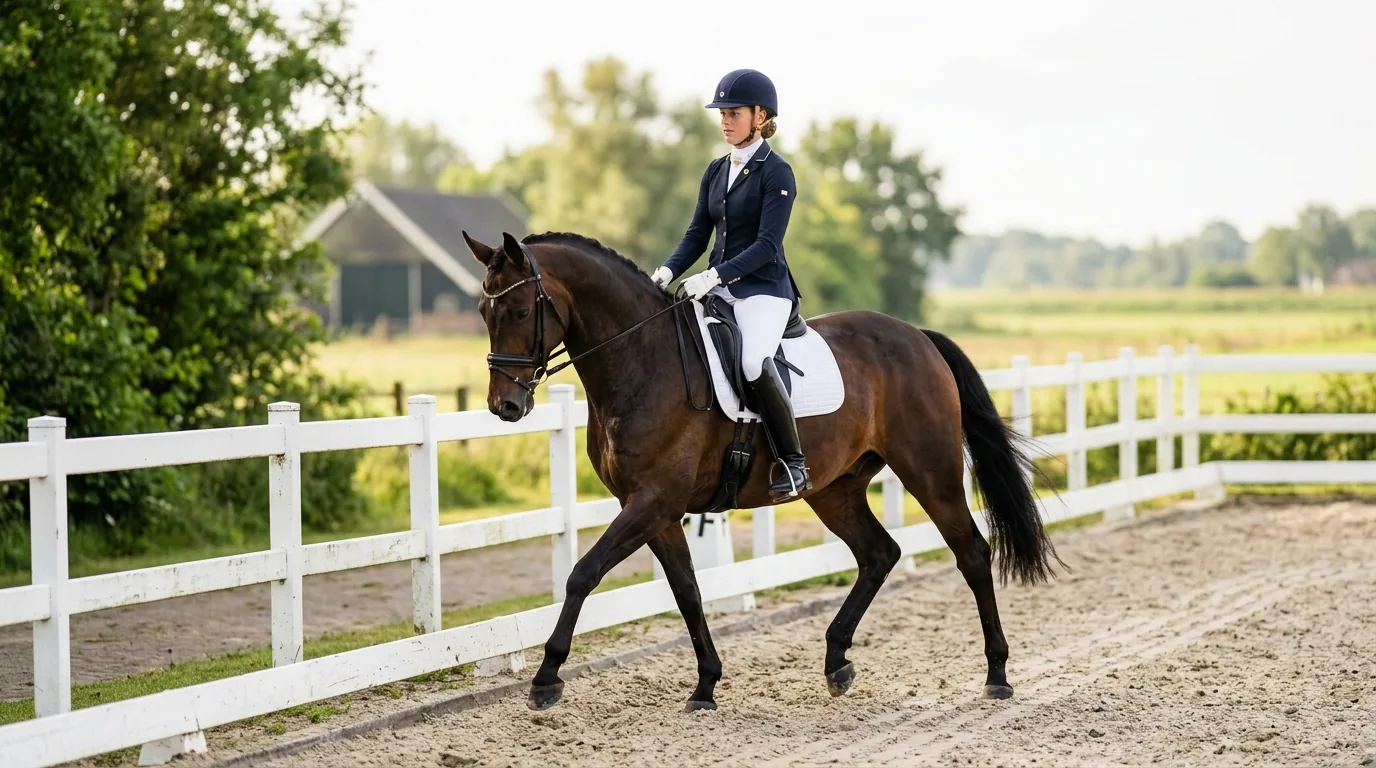
Teaching lateral movements: shoulder-in and travers
Lateral movements are the building blocks of advanced dressage, but they are also excellent for making your horse more supple, stronger and better balanced. Shoulder-in and travers look similar, but each requires a different combination of aids and a different body posture from the horse. Once you understand the difference and how to build the exercises step by step, you can train them systematically. In this article you will learn how to teach both lateral movements, which mistakes are most common and how to track your progress.
Read more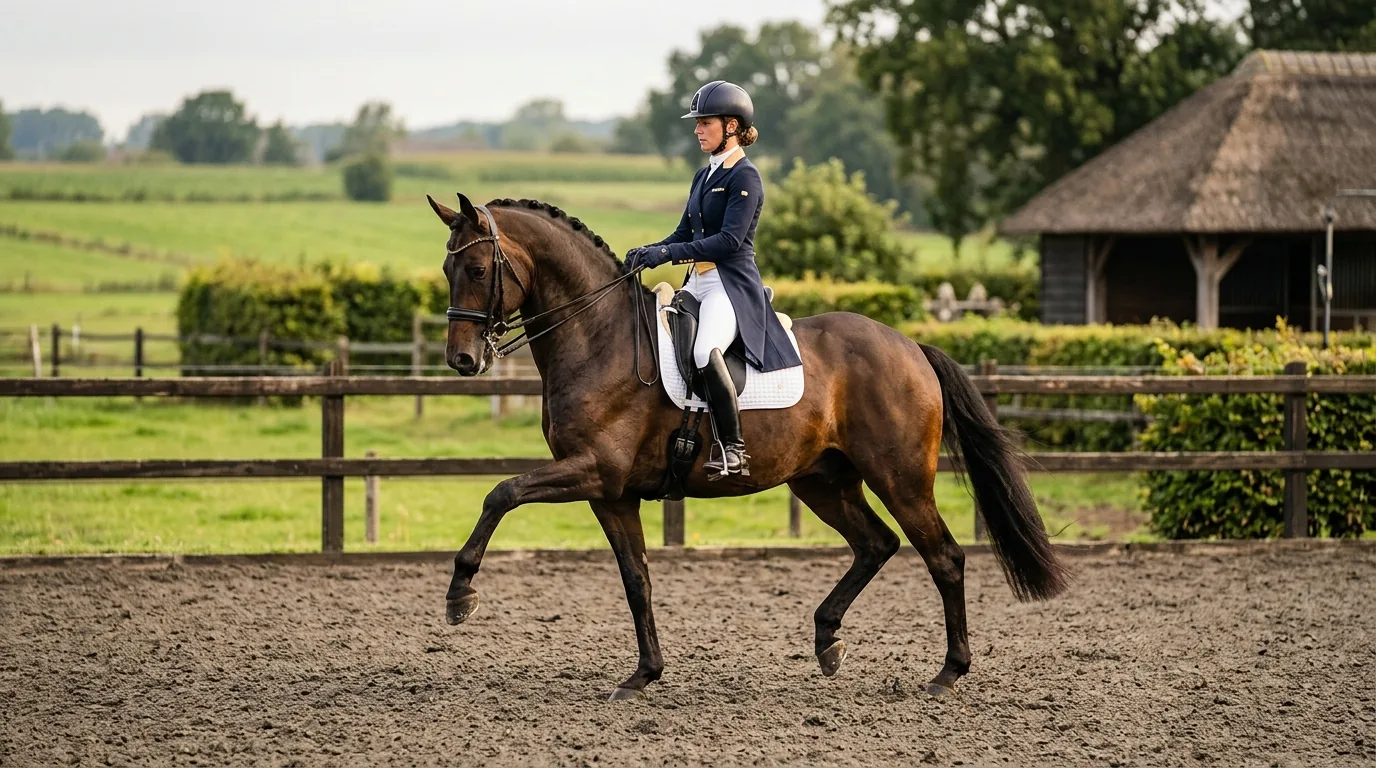
Dressage
Piaffe and passage: building the foundations
Piaffe and passage are considered the crowning achievements of dressage training, but the journey towards them begins much earlier than you might think. Both movements build on the same foundations: impulsion, balance, and suppleness. In this article you will discover which foundational steps you and your horse need to master first, how to develop the initial aids, and which pitfalls to watch out for along the way.
Read more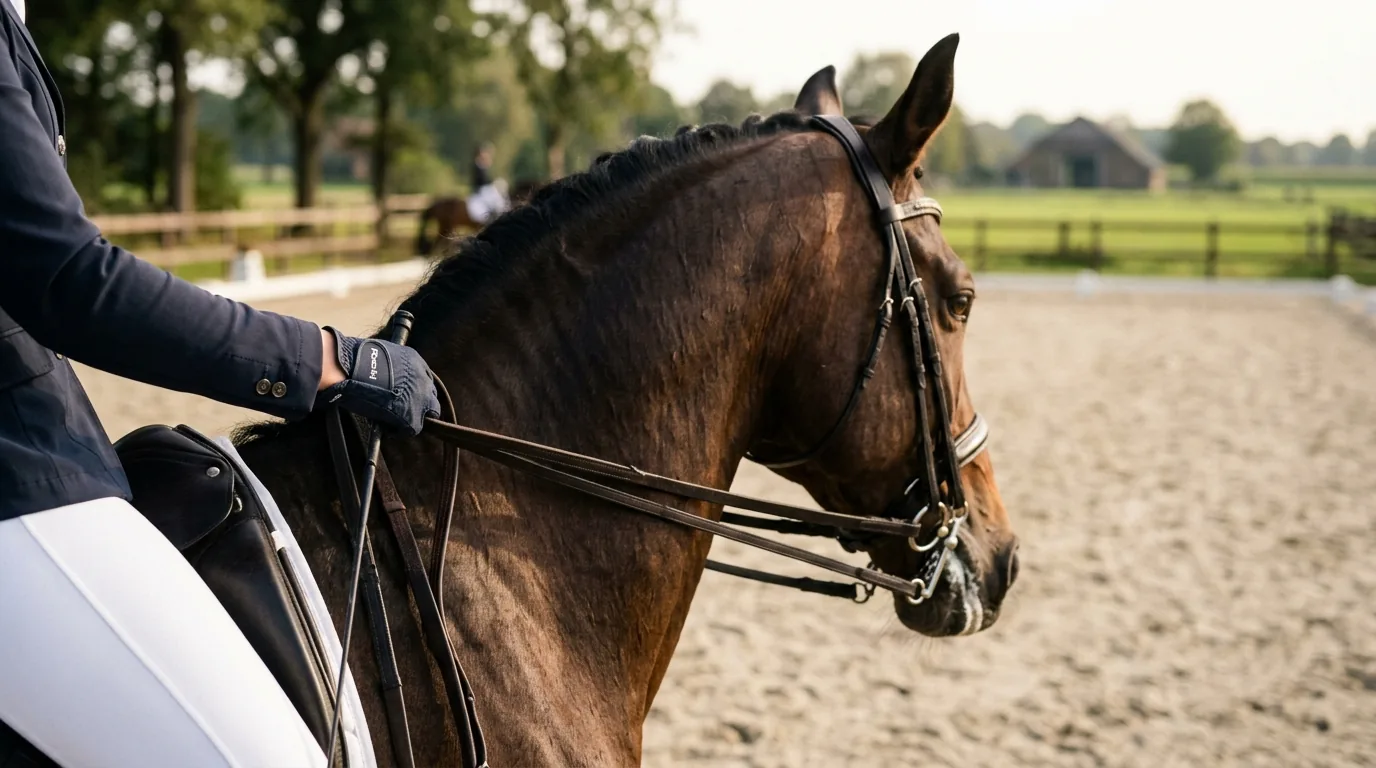
Dressage
Contact in dressage: how to learn it step by step
Contact is one of the most discussed concepts in dressage, but also one of the hardest to truly understand. It is not about the weight in your hand, but about a living, honest connection between you and your horse. A horse that moves with correct contact accepts the bit, carries its own weight, and responds in a relaxed way to your aids. In this article we explain exactly what contact means, how to develop it, and which mistakes are best avoided.
Read more
Dressage
Flexion and bend: what is the difference?
Flexion and bend are two terms that are often used interchangeably in dressage, yet they are clearly distinct from one another. Flexion refers to the position of the neck and head, while bend refers to the entire spine of the horse. Understanding this distinction allows you to ride more effectively and prevents one-sidedness in training. In this article we explain exactly what both terms mean, how to recognise and practise them, and why together they form the foundation of throughness and straightness.
Read more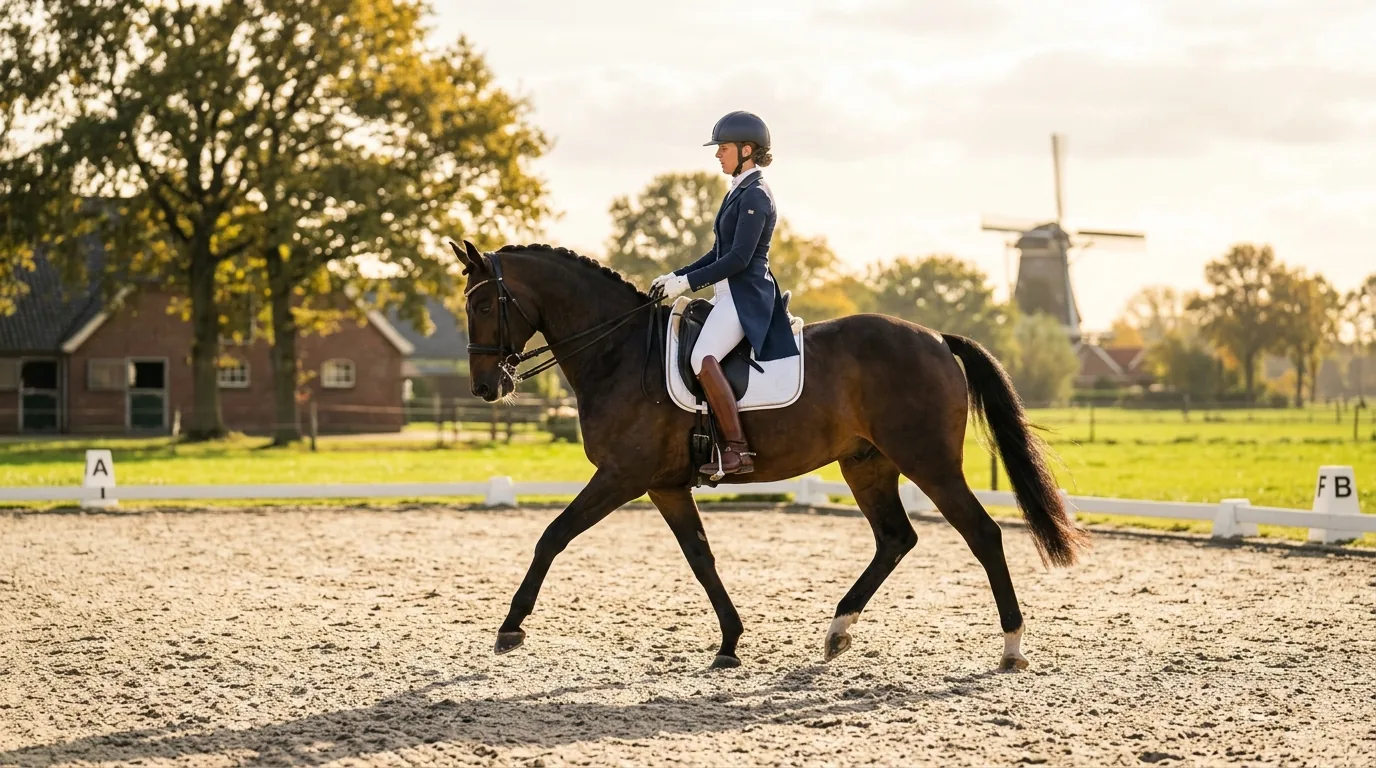
Dressage
Training the back muscles of a dressage horse
A strong, supple back is the foundation of every dressage horse. Without well-developed back muscles, your horse cannot transmit the energy from the hindquarters to the forehand, the stride remains shallow and the risk of injury increases. In this article you will learn how to build your horse's back musculature step by step, which exercises truly work and how to track progress so you always know you are on the right path.
Read more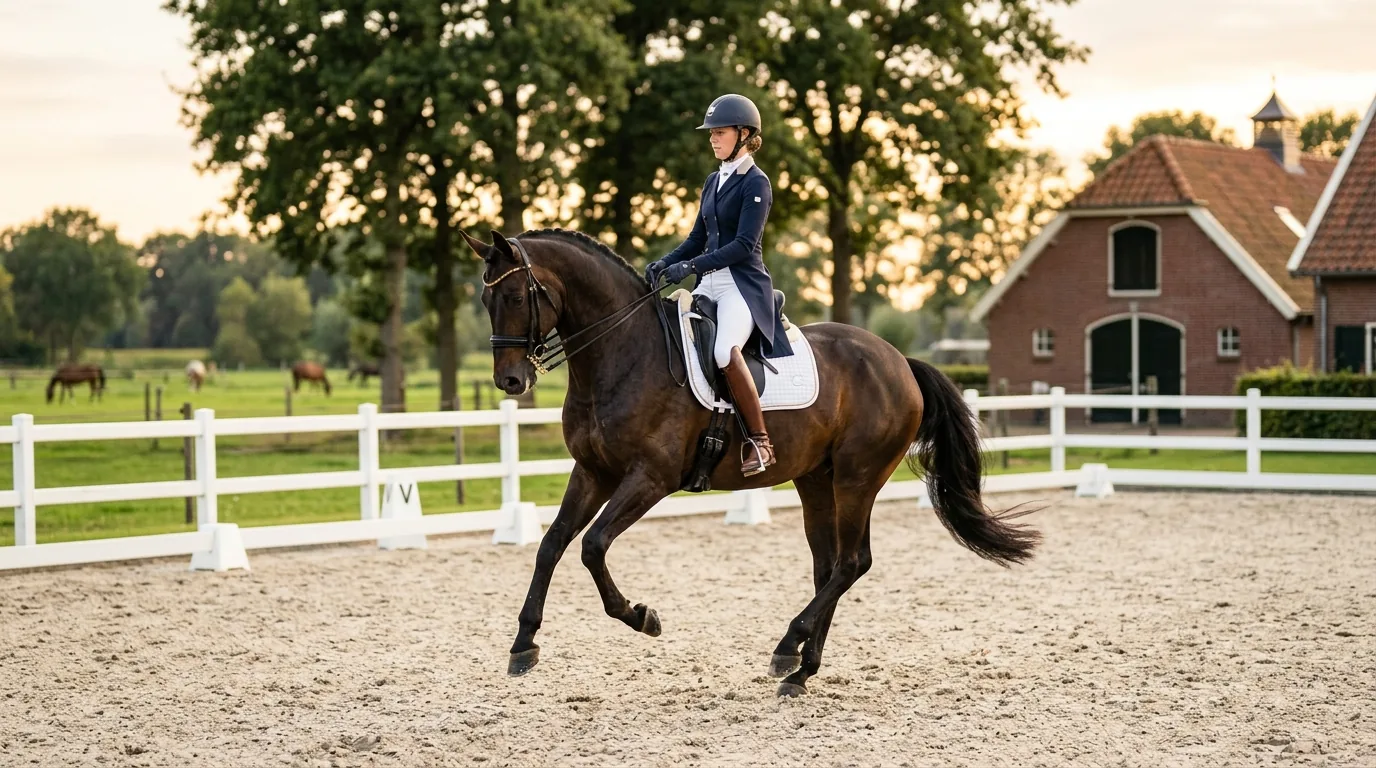
Dressage
Teaching flying changes: step by step
A flying change is one of the most satisfying movements in dressage — when it clicks, it feels effortless. But for many horses and riders, the road to getting there is a puzzle of balance, timing and trust. In this article you'll learn how to systematically prepare a horse for the flying change, which prerequisites truly cannot be skipped, and how to avoid the most common mistakes. Whether you're working towards Novice-level dressage or already competing at Elementary level: with the right progressive build-up, you'll get there.
Read moreDressage
How do you read a dressage score sheet? Step-by-step explanation
Dressage score sheets can seem cryptic — abbreviations, hastily written comments, scores per movement. We explain how to read them, what the judge's codes mean, and how to spot trends.
Read more
Join · Beta tester
Become a Beta tester.
Get 3 months Professional for free.
EquiSight goes live on September 1 2026. Sign up now for the Beta and receive the full Professional package for three months at no cost.
No spam. Unsubscribe at any time.