
Blog
Equestrian knowledge, practically applicable.
From cost overviews to first aid, from hoof care to breeding — 150+ articles, grouped by category so you can quickly find what you're looking for.
Also check out the dedicated overview pages per category: Health, Management, Conditions, Training, Nutrition, Breeding, Competitions, Care, Apps, Hoof Care, Dressage, Season, Costs, Sales, Riding School, Stable Management
Management
How to Keep Track of Multiple Horses in 2026
Whether you own three horses, run a small breeding operation, or manage a stable: managing multiple horses simultaneously requires structure. Where else would you be with all the vaccinations, farrier appointments, training schedules, and feeding plans? In this guide, you'll read concrete tips to maintain overview without your entire calendar filling up with post-its and loose notes.
Read moreApps
Excel or horse management app: what suits you?
Many horse owners start with an Excel file to organize their horse management. A handy spreadsheet with columns for vaccinations, farrier appointments and training data works fine... until your smartphone is in the stable and you want to quickly note something down. Or when your stable mate asks when your horse was last dewormed. That's when you notice the limitations. But does this mean you should immediately switch to a horse management app? In this article, we compare the pros and cons, so you can make an informed choice that fits your situation.
Read moreApps
Which horse management features do you really need?
There are now dozens of horse management apps on the market, each with its own set of features. But which functionalities are truly essential for your situation? Whether you have one horse or manage an entire stable, choosing the right features determines whether an app actually saves you time or creates extra work. In this article, we examine the most important horse management features and help you determine what fits your needs.
Read moreApps
From WhatsApp to a Horse Management App: 5 Reasons
WhatsApp is the communication tool for many horse owners: group chats for stable updates, photos of feed, and quick appointments with the farrier. But anyone who has ever seen an important appointment disappear through the messages or spent half an hour scrolling for that one photo of the leg knows: WhatsApp is not a management system. A specialized horse management app offers structure, overview, and much less hassle. In this article, you'll discover five concrete reasons why more and more stable owners and horse owners are making the switch.
Read moreBreeding
Tracking Your Mare's Cycle: A Practical Guide for Breeders
Accurately tracking a mare's cycle is essential for successful breeding. Whether you're a professional breeder or breeding your mare for the first time, documenting heat cycles, behavioral changes, and veterinary findings significantly increases the chances of conception. In this guide, you'll learn which signs are important, how to record a cycle, and which tools can help you.
Read moreBreeding
First ultrasound after insemination: timing and what to expect
The first ultrasound after insemination is an exciting moment for every horse owner. When is the right time to check if your mare is pregnant? And what can you expect during this first ultrasound? In this article, we explain when the first ultrasound is best scheduled, what the veterinarian checks, and how to optimize the chances of a successful pregnancy. With proper planning, you avoid disappointments and unnecessary costs.
Read moreBreeding
Stallion Selection for Your Broodmare: 7 Concrete Criteria
The choice of a breeding stallion largely determines the quality and usability of your foal. A well-considered stallion selection goes beyond simply checking pedigrees or choosing a popular stallion. You look at compensating weak points, strengthening strong characteristics, and matching bloodlines. In this article, we discuss seven practical criteria to help you make a well-founded stallion choice for your broodmare.
Read moreBreeding
Foal Registration: Studbook, Passport and DNA in 7 Steps
Registering a foal may seem complicated, but with the right preparation the process runs smoothly. From birth notification to studbook registration and DNA sampling: each step has its own deadline and requirements. In this guide we walk you through all registration steps, so you don't forget anything and your foal is correctly recorded in the studbook. This way you avoid fines and ensure the horse passport is ready on time.
Read moreRiding School
Riding school lesson planning: from whiteboard to app
For many riding schools, the whiteboard in the canteen is still the central planning tool. Names are filled in with marker, erased again, and rewritten. What starts as a convenient overview quickly grows into a confusing puzzle of changes, crossings-out, and question marks. Instructors don't always know who's coming, horses are double-booked, and clients receive late notice of changes. A digital lesson planning app solves this chaos and saves riding schools an average of 5 to 8 hours of administration per week.
Read moreStable Management
Livery Yard Communication with Owners: 5 Common Mistakes
Good communication with livery clients is the foundation of your yard. Yet things regularly go wrong: owners feel insufficiently informed, yard managers receive endless messages, and misunderstandings lead to disappointment on both sides. In a livery yard with ten to thirty horses, unclear communication can quickly escalate. This article highlights the five most common communication mistakes in livery yards and provides concrete solutions to prevent them.
Read moreRiding School
How to automate invoicing in a riding school
Invoicing is a monthly chore for many riding school managers. Hours behind the computer to track rides, lessons and livery, create invoices and check payments. It doesn't have to be this complicated. With the right approach and tools, you can automate most of this process, leaving you more time for your horses and clients. In this article, you'll read step by step how to automate invoicing in your riding school.
Read moreStable Management
Owner portal at boarding stables: what to expect as an owner?
An owner portal is the digital bridge between boarding stable and horse owner. More and more stables offer their clients online access to care, invoices and planning. But what can you expect as an owner from such a portal? And what makes a good owner portal truly valuable? We list the most important functionalities and expectations.
Read moreCompetitions
Analyzing Competition Protocols: How to Extract Training Goals
After every competition, you receive a protocol with scores, remarks, and sometimes grades per section. But how do you translate that information into concrete improvement points for your training? A well-analyzed competition protocol is worth its weight in gold: it shows where your strengths lie and where the most progress can be made. In this article, you'll learn step by step how to convert protocols into smart training goals.
Read moreTraining
Video coaching for horse riding: practical workflow
Video coaching is transforming the way riders train and make progress. By recording your rides and analyzing them afterwards, you see exactly what's going well and where improvement is possible. Nowadays, you don't have to wait for your trainer: with a smartphone and the right approach, you create your own video archive where your development becomes visible. In this article, we discuss the practical steps to use video coaching effectively for your horse riding training.
Read moreTraining
Setting Goals for Horse and Rider: The SMART Model
Which rider doesn't dream of winning a competition, learning a new dressage test, or finally achieving that perfect canter? But without clear goals, dreams often remain just dreams. The SMART model helps you formulate realistic, achievable goals for you and your horse. Whether you ride recreationally or train competitively, concrete goals give direction to your training and make progress measurable.
Read more
Health
Why is my horse coughing? Causes and solutions
A coughing horse is never something to ignore. Whether it's a single cough after feeding or a persistent dry cough during riding — coughing is always a signal that something is wrong in the airways. The causes vary widely: from dust in the hay to a respiratory infection or a chronic condition such as IAD or RAO. In this article you'll find the most common causes, when to call your vet immediately, and what you can do yourself to help your horse.
Read more
Health
Colic in horses: recognising early symptoms
Colic is the most common medical emergency in horses and one of the leading causes of death. Yet with the right knowledge, you can intervene much earlier than most horse owners think. The sooner you pick up on the first signals, the greater the chance of a smooth recovery. In this article you'll find which early symptoms may indicate colic, when to call the vet immediately, and how to use the horse profile in EquiSight to track patterns in your horse's health.
Read more
Health
Horse with a runny nose: when should you call the vet?
A little nasal discharge is sometimes perfectly normal, but when does it become more than that? Nasal discharge in horses can range from an innocent reaction to dust to a sign of a serious respiratory infection or even strangles. In this article you'll learn how to tell the difference, which signs genuinely require a vet visit, and what you can track yourself to help reach the right diagnosis faster.
Read more
Health
Lame horse: how to assess it step by step
You can sometimes spot a lame horse straight away, but more often the signs are subtle: a slight head movement, a marginally shorter stride, a horse that just isn't moving quite right. How do you assess lameness in a structured way so that you have useful information for the vet? With a consistent approach you miss less and save time during the consultation. In this article you'll learn how to carry out an initial assessment yourself, what to record, and when to call the vet immediately.
Read more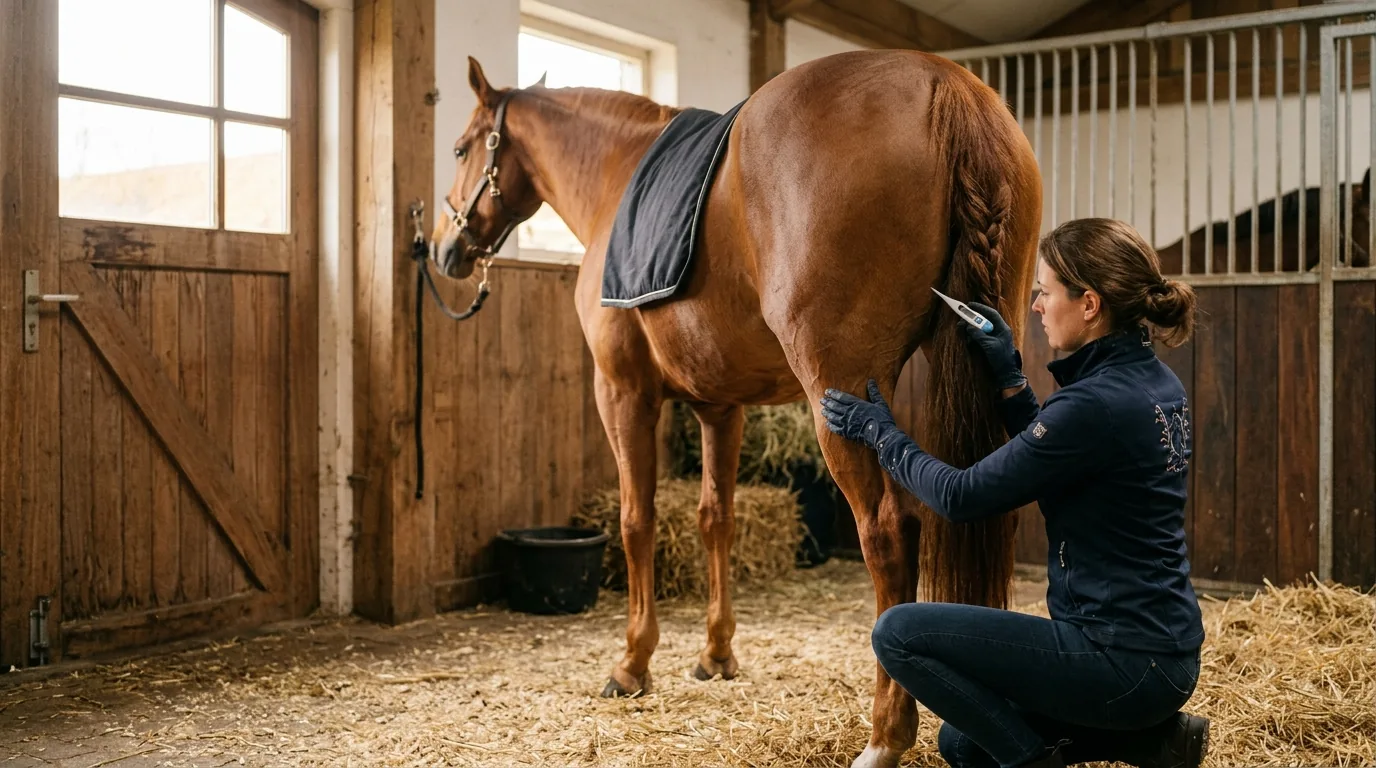
Health
Fever in horses: values and what to do
A horse with fever requires prompt action. Normal body temperature is between 37.5 and 38.5 °C — anything above that is considered a fever, and above 39.5 °C it becomes serious. Knowing how to measure temperature correctly, which threshold values really matter, and when to call the vet can make the difference between a quick recovery and a lingering illness. This article tells you exactly what you need to know.
Read more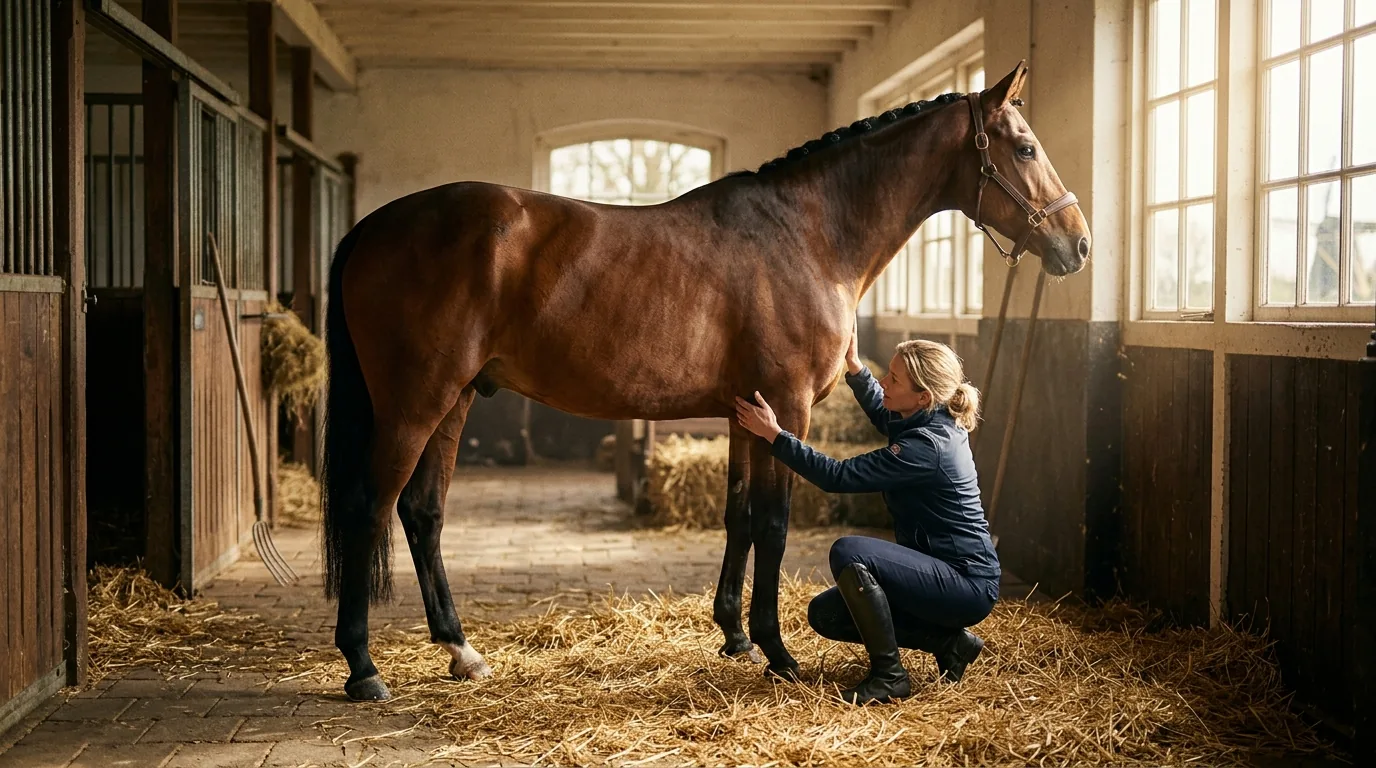
Health
Blood in horse urine: what's behind it?
If you notice red or brown urine in your horse, that's a signal you shouldn't ignore. Blood in the urine — medically known as haematuria — can point to a wide range of conditions, from a relatively harmless bladder irritation to a serious kidney disorder. In this article you'll find the most common causes, how to recognise them, and when to call your vet immediately.
Read more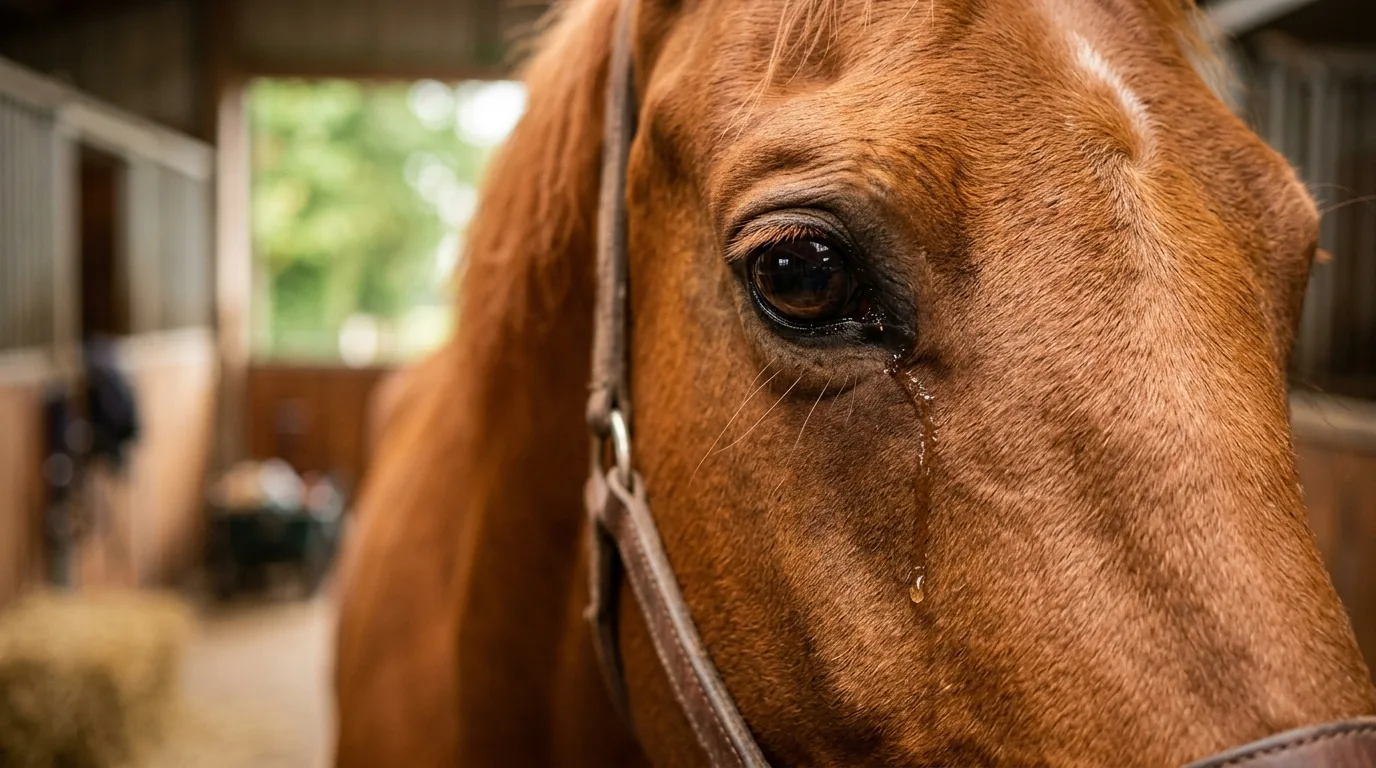
Health
Watery eyes in horses: what does it mean?
A wet eye on your horse is easy to overlook, but persistent tearing can be a signal that something is wrong. The causes vary widely: from a speck of dust under the eyelid to a serious infection or blocked tear ducts. In this article you will learn how to recognise common causes, when to call the vet immediately, and what you can do yourself to monitor the eye closely.
Read more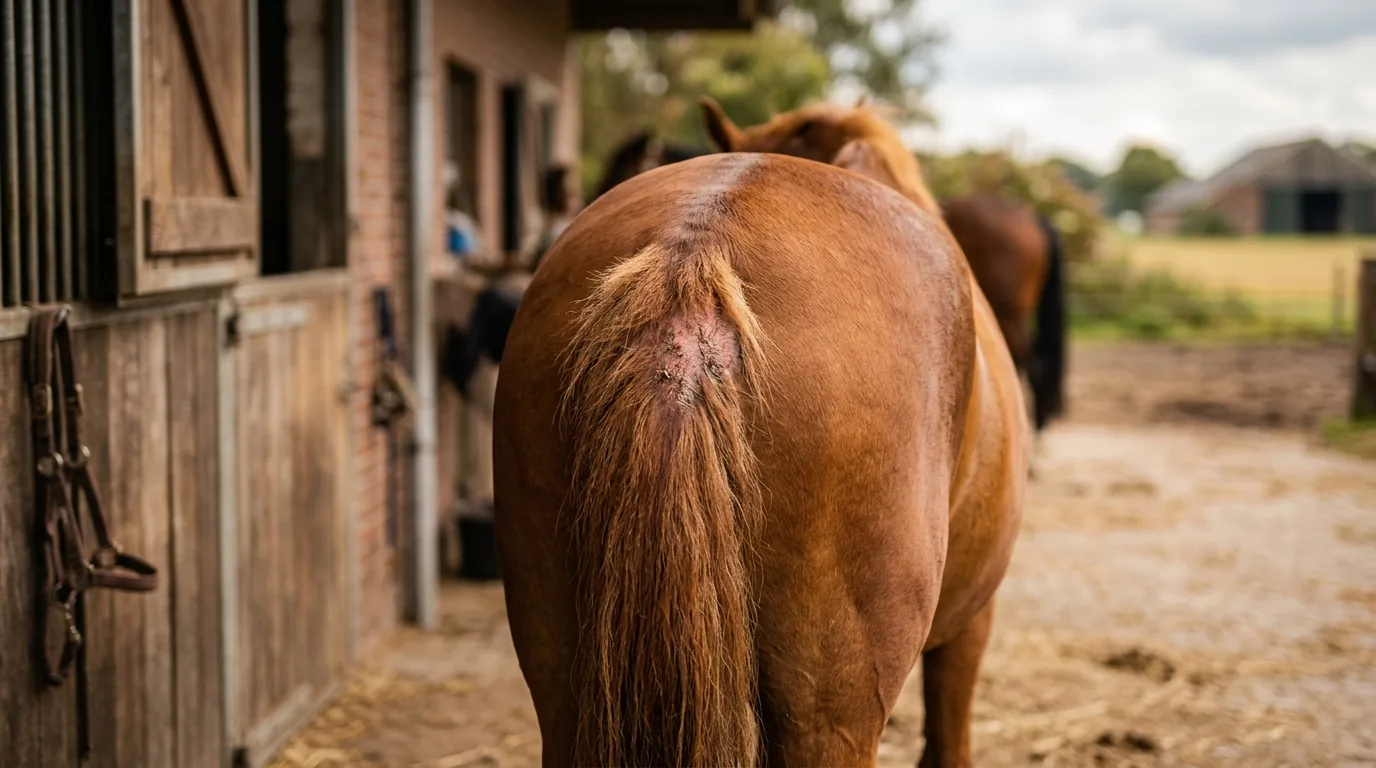
Health
Tail itching in horses: the causes
Your horse is rubbing its tail against the fence post or constantly scratching — a familiar and frustrating sight. Tail itching is a common problem in horses across the Netherlands, but the cause is not always clear. From parasites and skin fungi to allergies and poor hygiene: the possible culprits are varied. In this article we outline the most common causes so you can take targeted action and better inform your vet or farrier. With the horse profile in EquiSight you can easily track complaints, treatments and their progress.
Read more
Health
Dry or wet cough in horses: what should you do?
Your horse coughs a few times in the stable or during a ride. But is it a dry, irritated cough or a wet cough with mucus? The distinction sounds subtle, but it makes a big difference in how you respond. A dry cough often points to airway irritation or asthma, while a wet cough more commonly indicates an infection or excessive mucus production. In this article you will learn how to tell the two apart, when to call the vet, and what you can do yourself to support your horse.
Read more
Health
Gut sounds in horses: what do they tell you?
A rumbling or silent belly in your horse can mean the difference between healthy gut function and the onset of colic. Gut sounds are a direct indicator of how the intestines are working, and as an owner it is valuable to know what is normal and when you need to take action. In this article you will learn what the different sounds mean, how to assess them yourself, and when to call the vet.
Read more
Conditions
EMS in horses: what you really need to know
Equine metabolic syndrome (EMS) is one of the most common metabolic conditions in horses in the Netherlands, especially in ponies and easy keepers. The syndrome is characterised by insulin resistance, excess weight and an increased risk of laminitis. The earlier you recognise EMS, the more you can do to keep your horse healthy and active. In this article you will learn exactly what EMS is, what signs to look out for and how to manage it through nutrition, exercise and good monitoring.
Read more
Conditions
Headshaking in horses: causes and management
Headshaking is one of the most frustrating conditions a horse can have: the animal shakes its head uncontrollably, sometimes so severely that riding becomes impossible. In the Netherlands, an estimated 1 in 200 horses suffers from a serious form of this syndrome. The causes are varied and diagnosis is often a lengthy puzzle, but with the right approach improvement is possible for many horses.
Read more
Conditions
Wheezing in horses: causes and approach
Do you regularly hear your horse wheezing, or have you noticed that it becomes out of breath more quickly than usual? Wheezing and respiratory problems are common in horses and can range from a mild irritation to a serious chronic condition. Early recognition makes a big difference: the sooner you intervene, the lower the risk of permanent damage to the airways. In this article you will read exactly what wheezing involves, what causes it, how to recognise it, and what you can practically do about it.
Read more
Health
Liver values in horses: how to read your blood test results
A blood test result for your horse often contains a row of abbreviations and numbers that seem to say little at first glance. Yet those figures tell you a great deal about how the liver is functioning. The liver is a crucial organ: it processes nutrients, breaks down toxic substances, and plays a major role in metabolism. Knowing which values matter and what abnormalities mean helps you ask the right questions of your vet more quickly — and make better decisions for your horse.
Read more
Conditions
Lyme disease in horses: recognise the symptoms
Lyme disease is more common in horses than many owners realise. The bacterium Borrelia burgdorferi, transmitted by ticks, can cause a wide range of complaints in horses — from vague lameness to serious joint problems. The tricky part is that the symptoms closely resemble those of other conditions, meaning Lyme disease is often recognised late. In this article you will find out which signs to watch for, when to call the vet, and how to keep track of your findings in your horse's EquiSight profile.
Read more
Nutrition
Recognising hay quality: colour, smell and analysis
Good hay is the foundation of a healthy horse's diet, but how do you know whether what you're buying is actually any good? The colour, smell and structure tell you a great deal before you even have a laboratory analysis. Yet there are situations where an analysis is indispensable — especially if your horse is sensitive to sugars, has allergies or regularly shows health problems. In this article you'll learn what to look for when assessing hay, when to request an analysis and how to incorporate the results into your horse's daily management.
Read more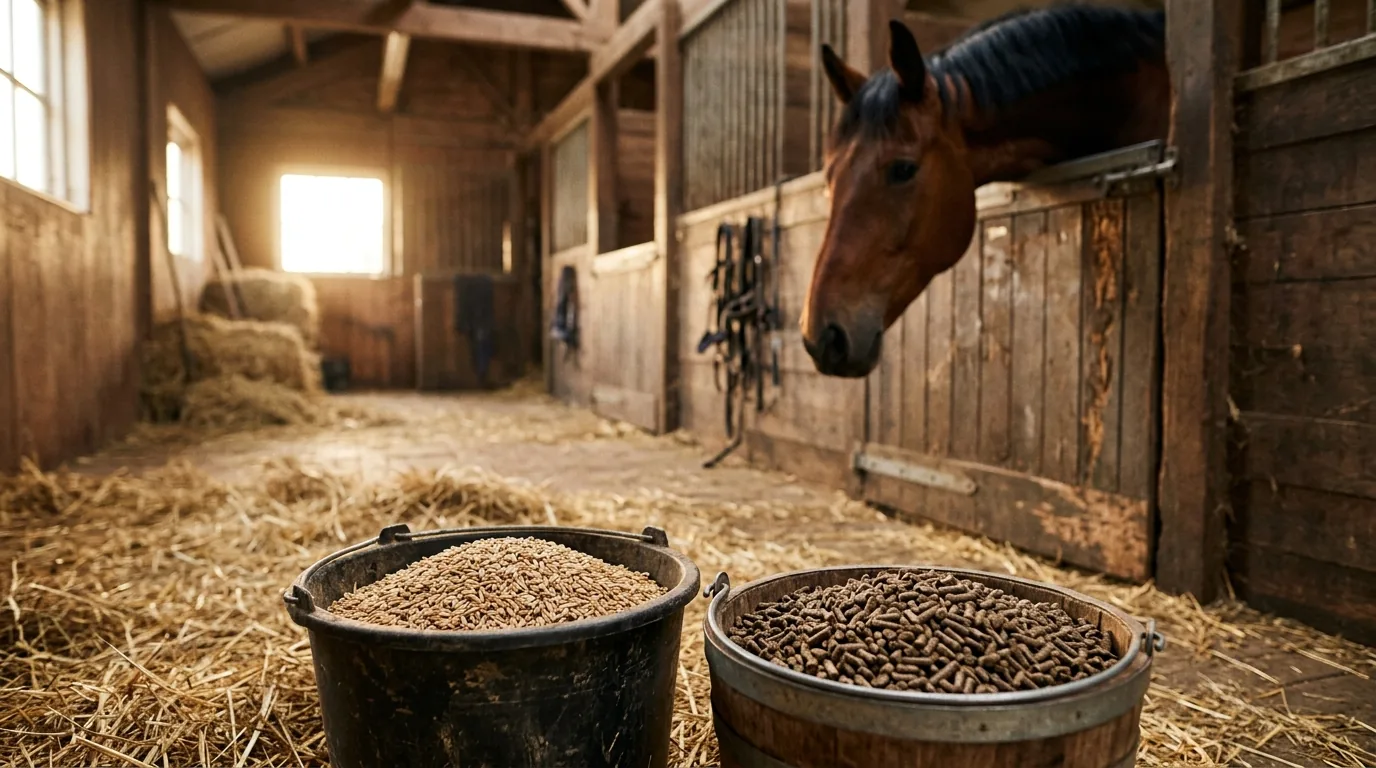
Nutrition
Oats or compound feed: what do you choose for your horse?
Oats have been the go-to concentrate feed for horses for centuries, but compound feed has firmly established its place in the stable over recent decades. Which option suits your horse best? The answer depends on factors such as workload, age, and any health conditions. In this article, we compare the characteristics of both options side by side, so you can make an informed choice.
Read more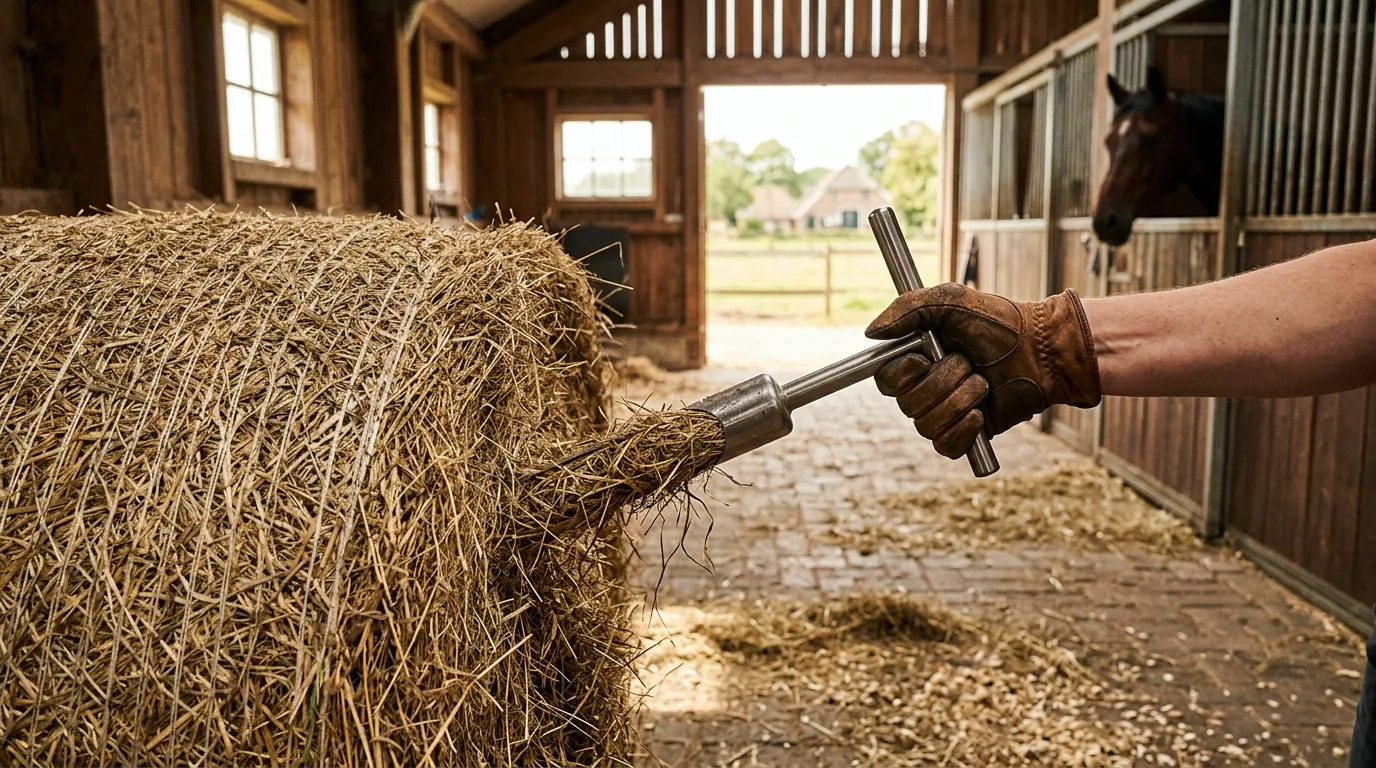
Nutrition
Getting a forage analysis done: step by step
Do you know what is actually in your hay or haylage? Most horse owners feed by feel, but the nutritional value of forage varies enormously between batches — sometimes by as much as 40% in protein content. With a forage analysis you know exactly what your horse is taking in and can supplement the ration in a targeted way. In this article you walk through the entire process, from sampling to translating the results into practical feeding advice.
Read more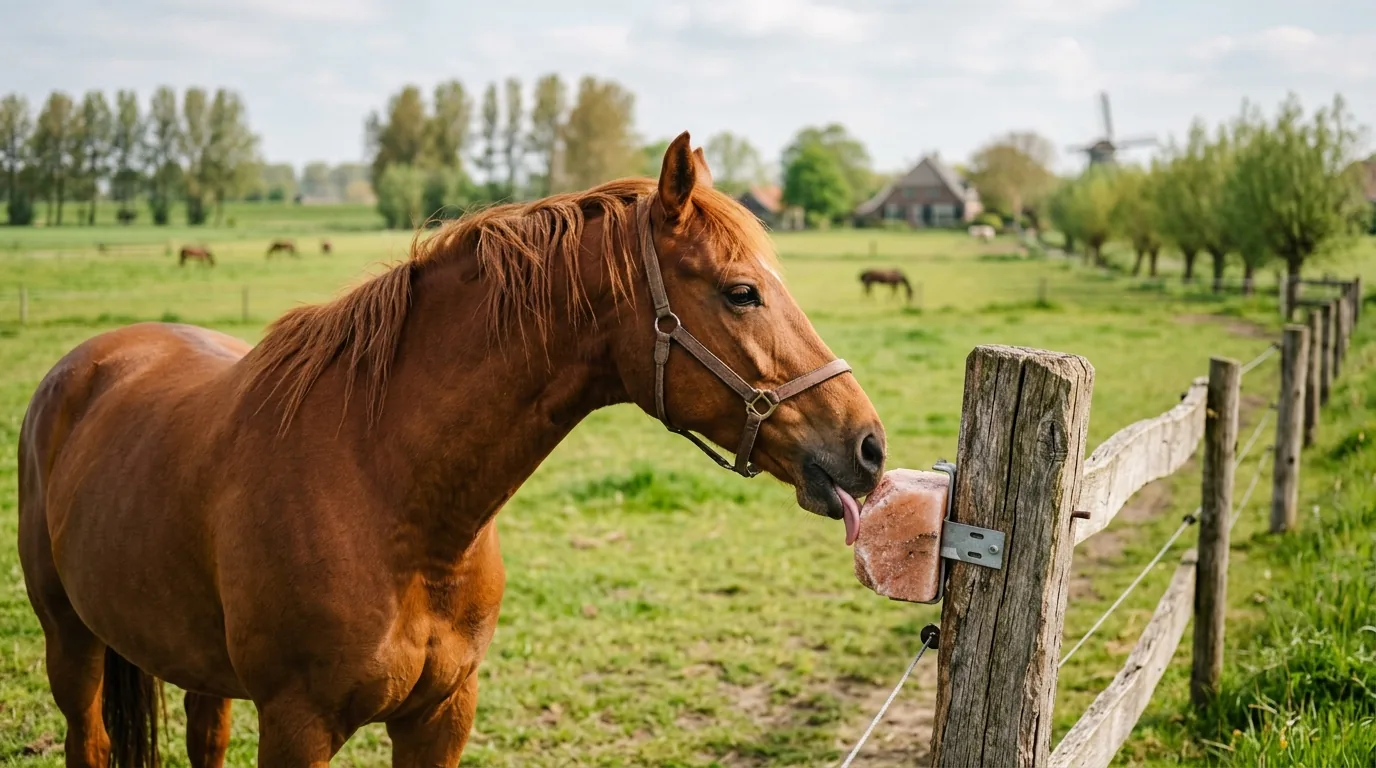
Nutrition
Salt licks for horses: necessary or superfluous?
A salt lick in the stable or out in the pasture: almost every horse has one. But does your horse really need that salt supplement, or is it more habit than necessity? The need for minerals varies from horse to horse, season to season, and ration to ration. In this article you'll find out when a salt lick is genuinely useful, what types are available, and what to watch out for so you don't inadvertently over- or under-supplement.
Read more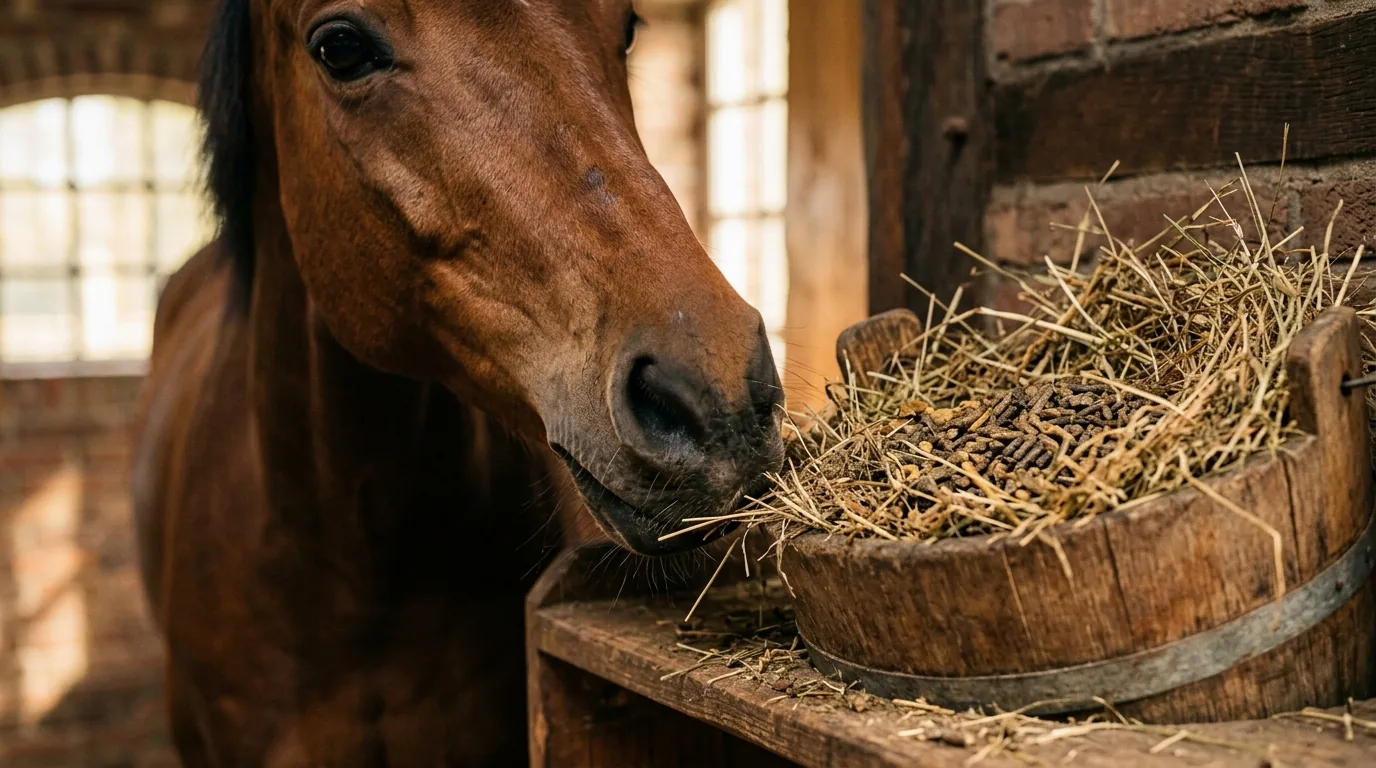
Nutrition
Avoiding molasses and cane sugar in horse feed
Many commercial horse feeds contain molasses or cane sugar as a flavouring or binding agent. For healthy horses, a small amount is rarely a problem, but for horses with insulin resistance, EMS or laminitis, even a minor sugar spike can have serious consequences. In this article you will learn why these ingredients are so widespread, how to recognise them on the label, and which alternatives you can choose.
Read more
Nutrition
Magnesium for horses: when does it make sense?
Magnesium is a mineral involved in hundreds of processes in your horse's body: from muscle function and nerve conduction to energy metabolism. Yet magnesium deficiency in horses is less common than is often assumed. Many horse owners quickly reach for a supplement when faced with nervousness or muscle problems, but whether that is always justified depends strongly on the ration and the individual situation of the horse. In this article you will read when supplementation can genuinely be beneficial, what dosages are commonly used, and how to keep track of this effectively.
Read more
Nutrition
Brewers' grain for horses: benefits and risks
Brewers' grain — the by-product of breweries — is appearing more and more frequently as a cheap roughage supplement for horses. It is packed with protein and highly palatable, but it also carries some clear risks. If you want to know whether brewers' grain suits your horse, it is wise to get the facts straight first. In this article you will read exactly what brewers' grain is, what its nutritional values are, when it makes sense to feed it, and when you are better off avoiding it.
Read more
Nutrition
Feeding plan for a leisure horse: here's how to approach it
A leisure horse may only work three to four times a week, but that doesn't mean nutrition matters any less. Things can go wrong quickly with lightly exercised horses: too much energy, too little movement, and before you know it you have an overweight horse with behavioural problems or worse. A good feeding plan takes into account weight, condition score, roughage and workload. In this article you'll learn how to put together a practical feeding plan for your leisure horse, step by step.
Read more
Nutrition
How much water does a horse drink per day?
A horse needs a substantial amount of water every day — more than many owners expect. On average, a horse drinks between 25 and 55 litres per day, but in heat, during heavy work, or on a dry forage ration, this can rise to 80 litres or more. Do you know when your horse is drinking too little and how to recognise it in time? In this article you will find the key factors that influence water intake and how to monitor your horse's hydration effectively.
Read more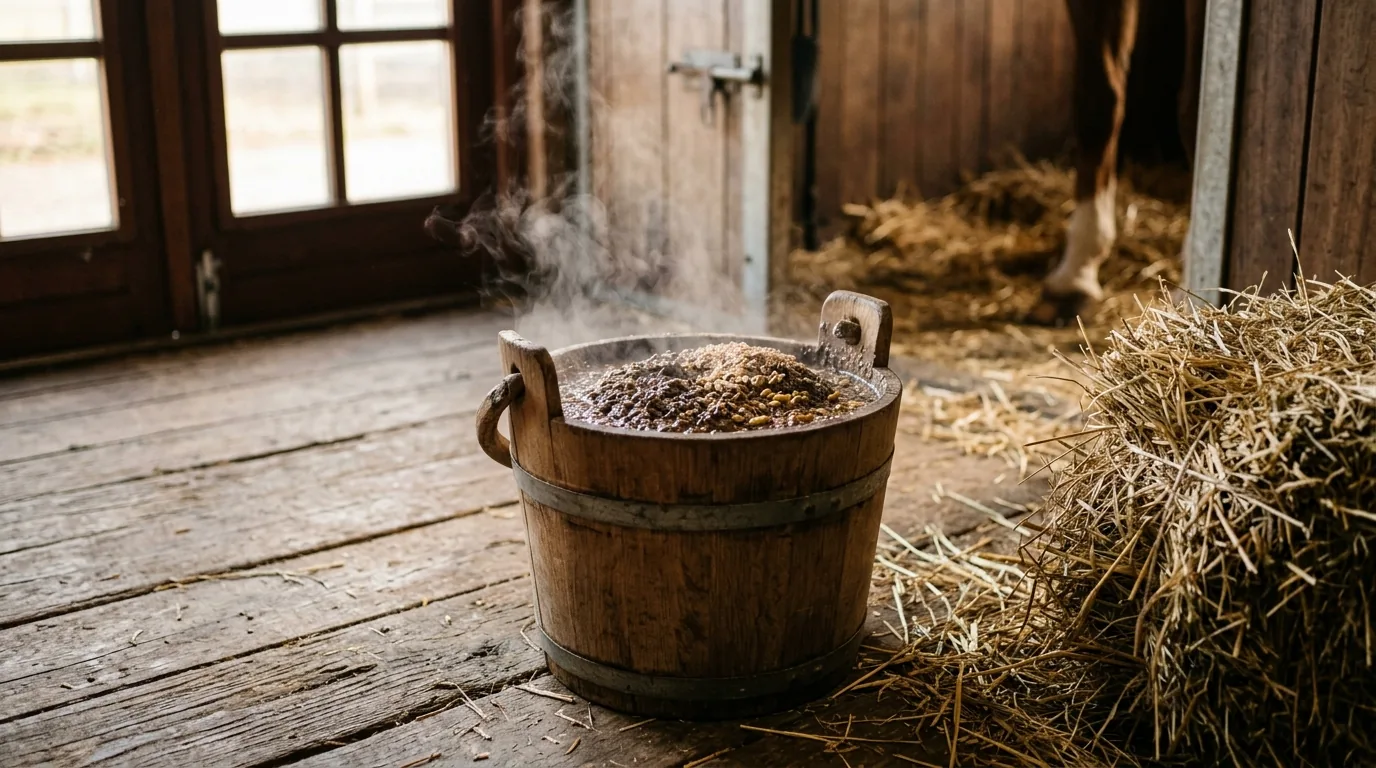
Nutrition
Making your own horse mash: basic recipe
A homemade mash is a warm, soft meal that gives your horse extra moisture, energy and minerals — ideal after a heavy training session, in cold weather, or when your horse is eating a little less. You only need a handful of ingredients and preparation takes no more than ten minutes. In this article you will find a simple basic recipe with variations, so you can tailor the mash to your horse's individual needs.
Read more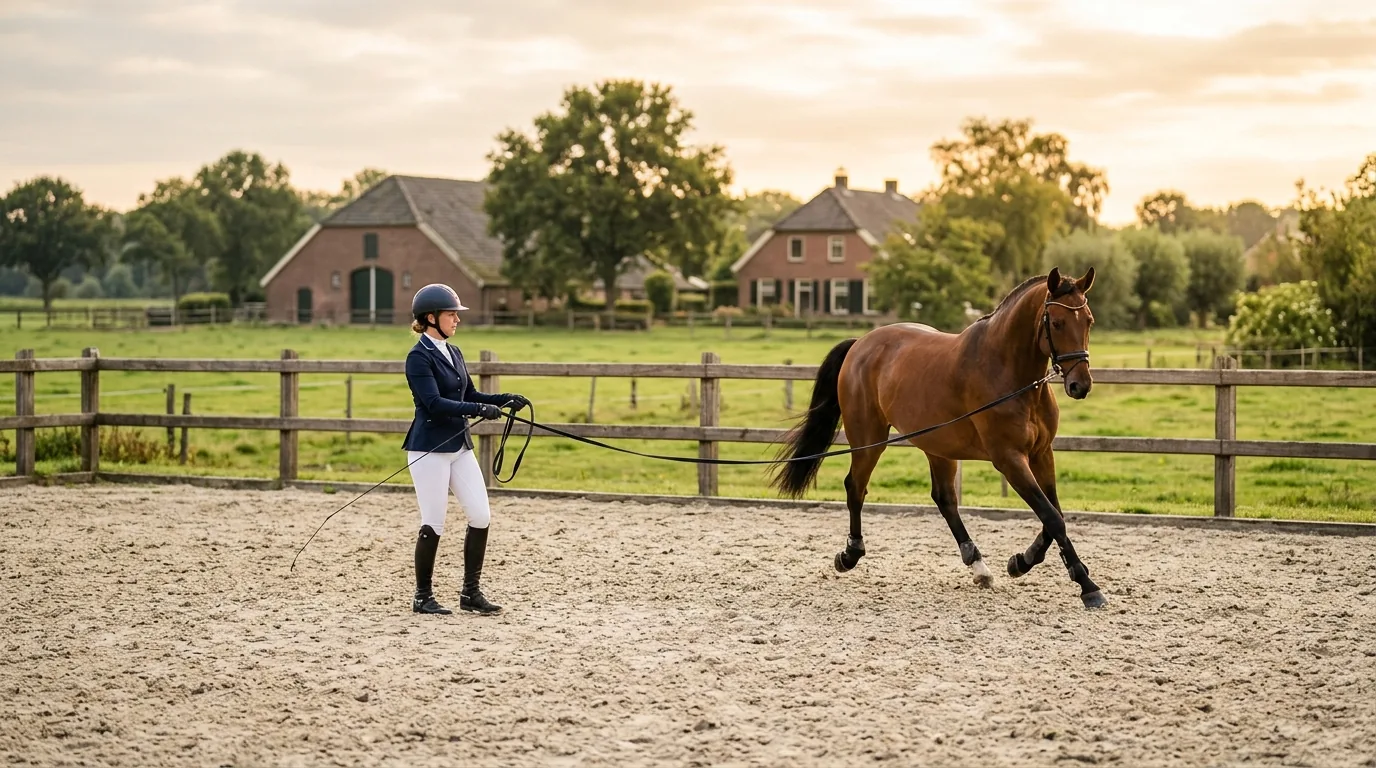
Training
Lungeing: basic principles for beginners
Lungeing is one of the most useful skills you can learn as a horse owner. You train your horse in hand, improve its balance and build a solid bond of trust — without getting in the saddle straight away. For beginners it can sometimes feel overwhelming: the lunge line swings in all directions, your horse pulls or stands still. But with the right basic principles you can learn an effective way of working from the ground, step by step. This article explains how to get started, what you need and which mistakes to avoid.
Read more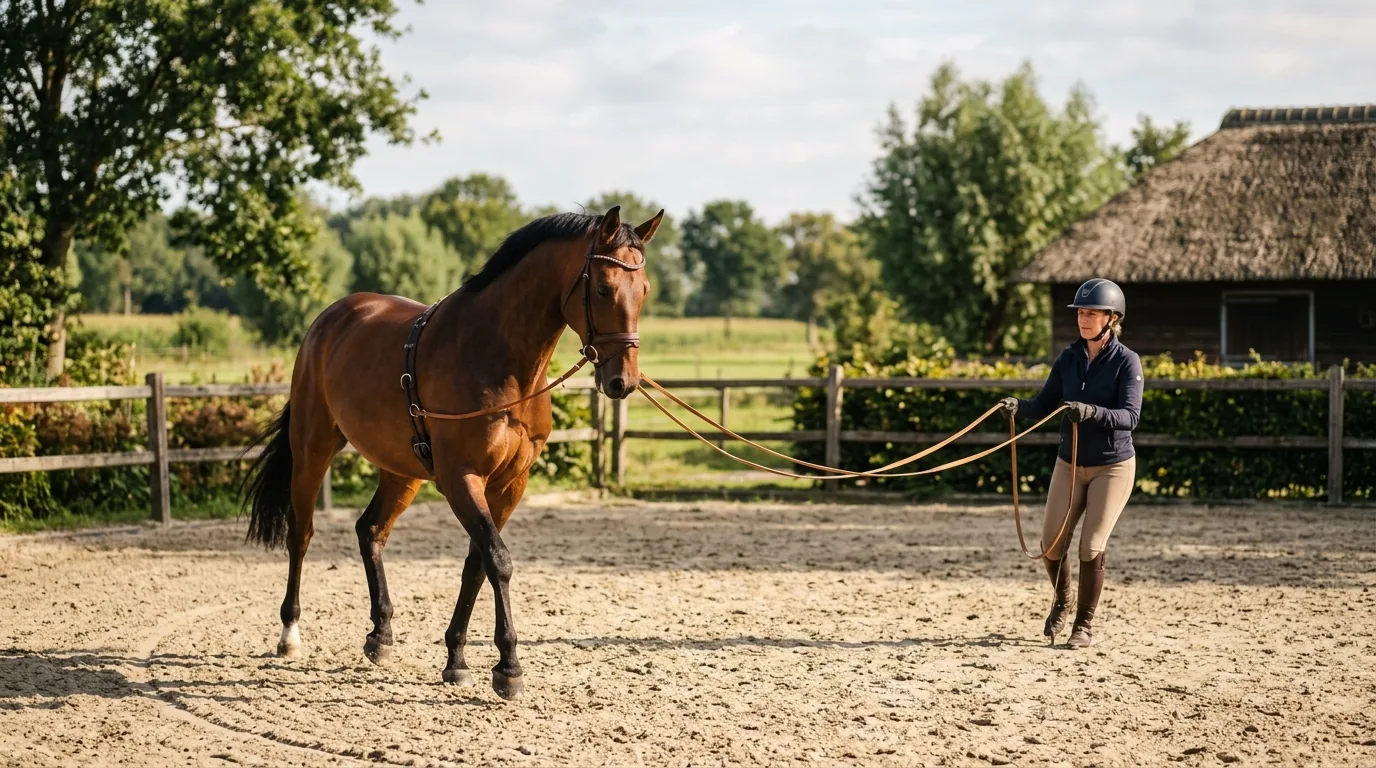
Training
Working with the double lunge: here's how to do it
The double lunge is one of the most valuable tools in groundwork training, yet it's also a technique that many riders overlook. With two lunge lines you can direct the horse far more precisely than with one, you train throughness from back to front, and you lay a solid foundation for ridden work. Whether you're working with a young three-year-old or an older horse that has become tight in its back — the double lunge offers concrete solutions. In this article you'll find out how to start safely, which mistakes to avoid, and how to track your progress.
Read more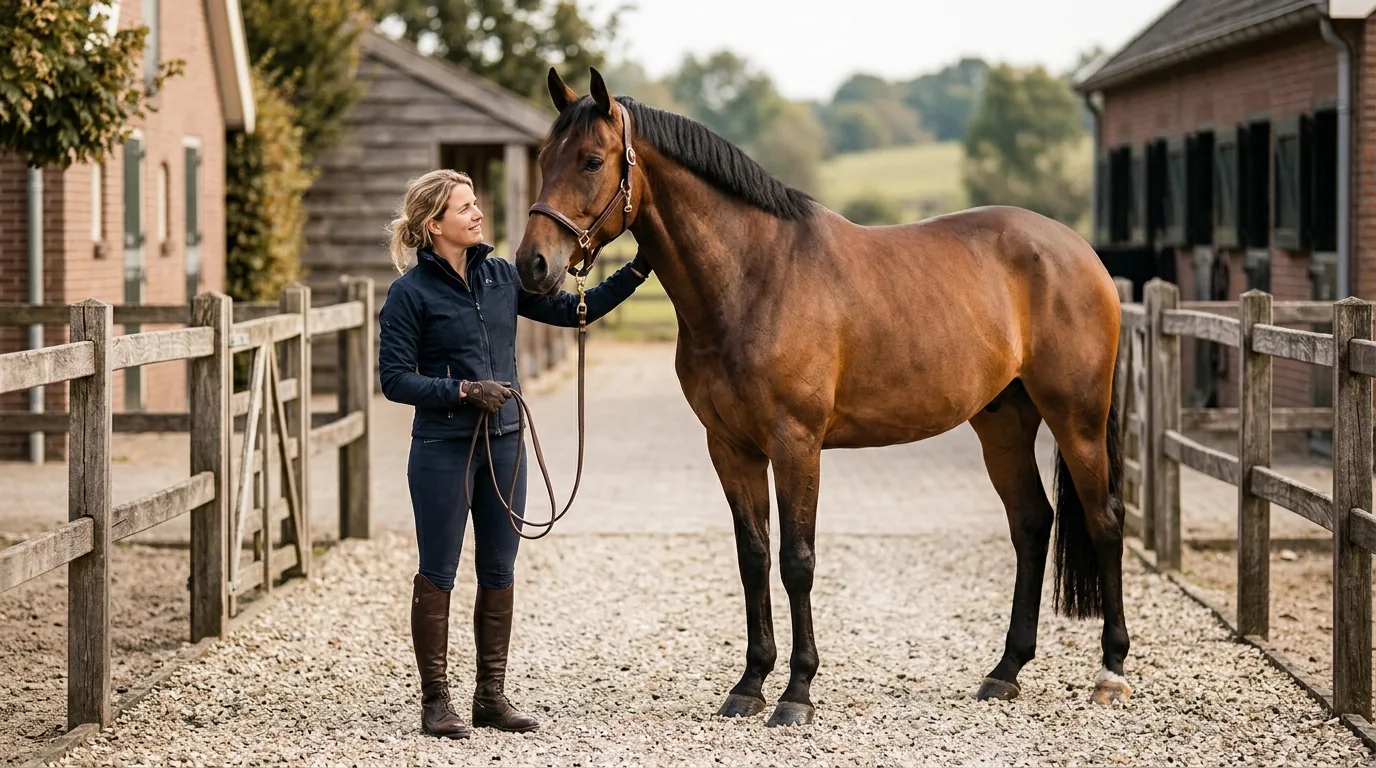
Training
Teaching your horse to lead in hand: here's how
A horse that walks calmly and respectfully on the lead makes every day at the stable much more pleasant — and safer. Yet leading is something many horses have never been taught systematically. They pull, walk on your heels or suddenly stop dead. In this article you'll learn how to teach leading step by step, what equipment you need and how to avoid common mistakes. Whether you have a young horse or an older giant who always did things his own way: with the right approach, you'll go far.
Read more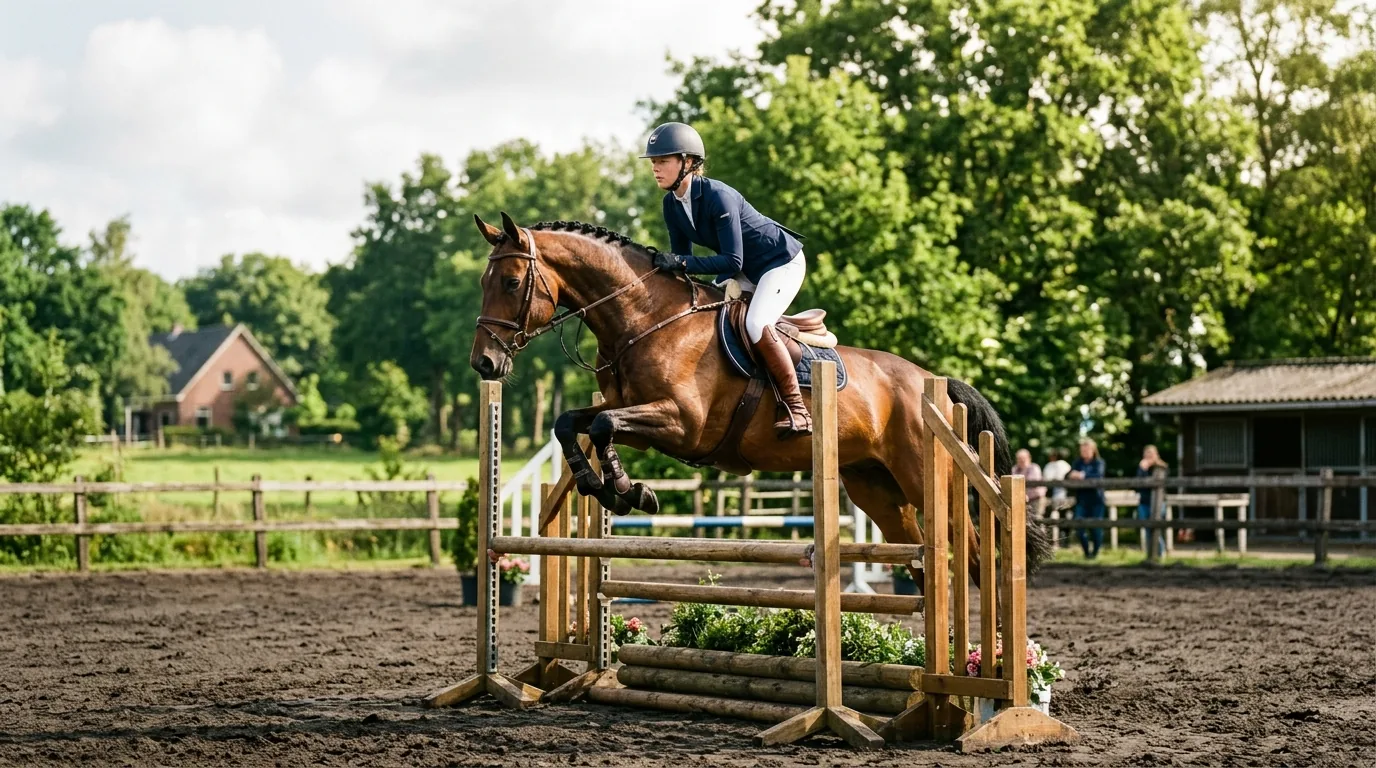
Training
Jump training for a young horse: how to get started
Teaching a young horse to jump takes patience, a gradual build-up, and a solid plan. Push too hard too soon and you risk physical damage as well as a horse that mentally checks out. But take it step by step and you lay a foundation that will serve you for years. In this article you'll find out how to start jump training responsibly, which exercises work in the first year, and how to track progress so nothing slips through the cracks.
Read more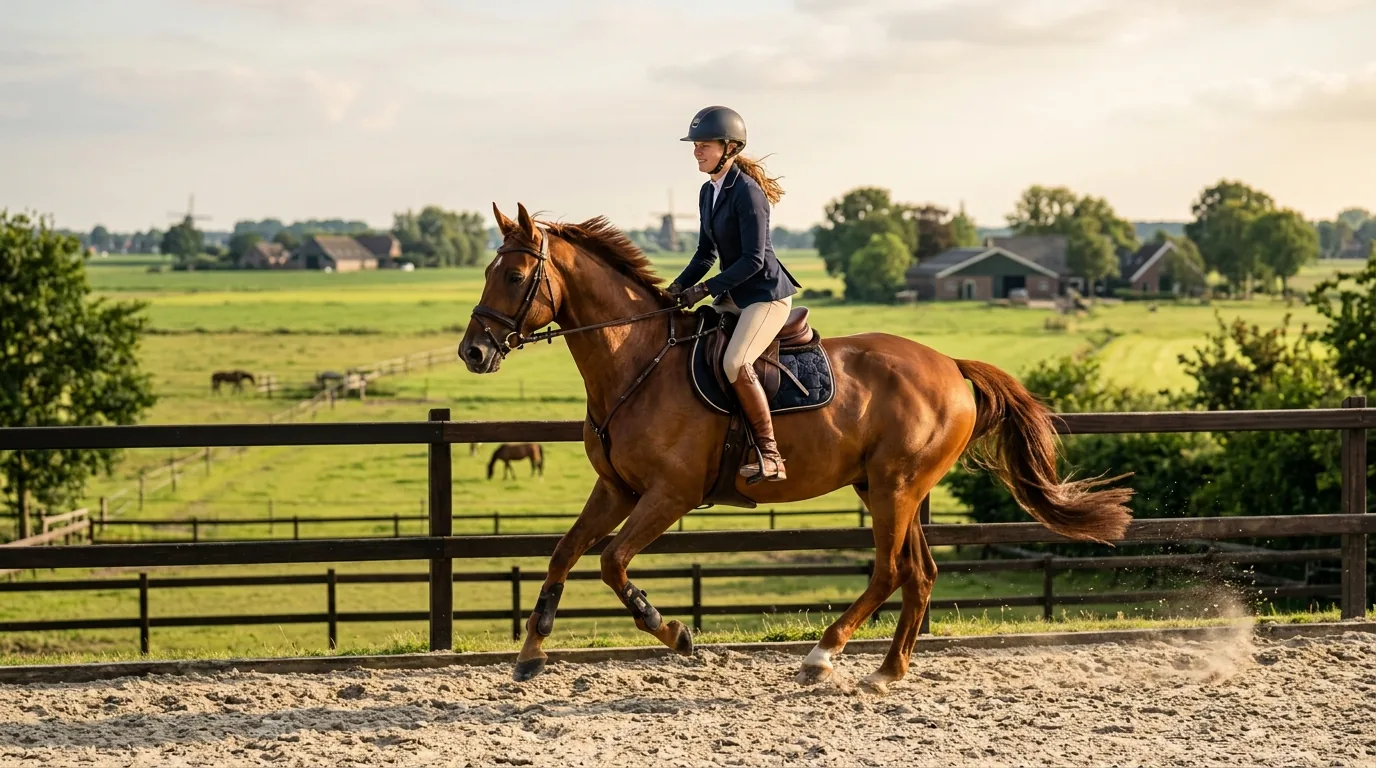
Training
Teaching canter to young horses: here's how to approach it
The canter is a big step for many young horses. It demands balance, strength, and trust — from both the horse and the rider. With the right progressive build-up, you can prevent tension and unwanted habits. In this article, you'll learn when to start, how to structure the exercises, and what to watch for when things don't go smoothly right away. Whether you're starting a three-year-old under saddle for the first time or developing a four-year-old further: a thoughtful approach always pays off.
Read more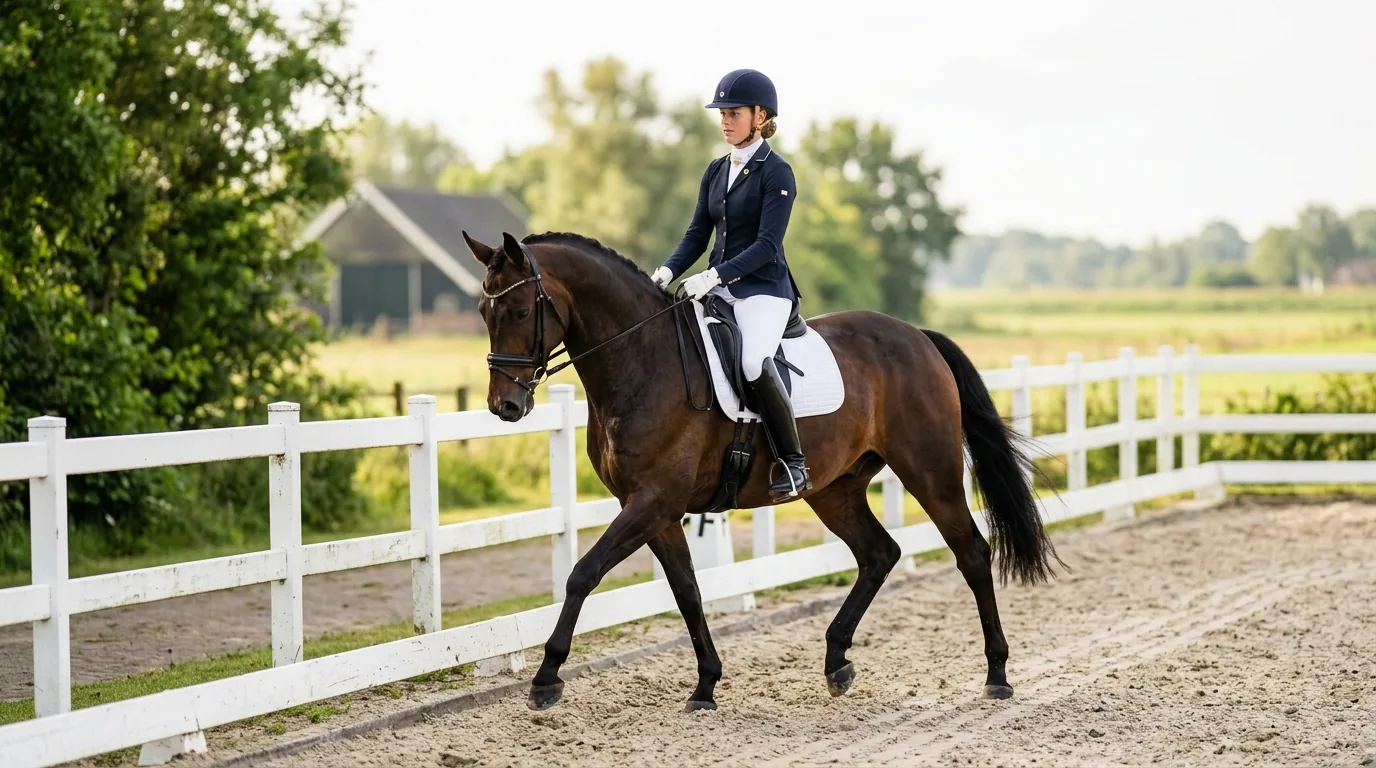
Dressage
Teaching lateral movements: shoulder-in and travers
Lateral movements are the building blocks of advanced dressage, but they are also excellent for making your horse more supple, stronger and better balanced. Shoulder-in and travers look similar, but each requires a different combination of aids and a different body posture from the horse. Once you understand the difference and how to build the exercises step by step, you can train them systematically. In this article you will learn how to teach both lateral movements, which mistakes are most common and how to track your progress.
Read more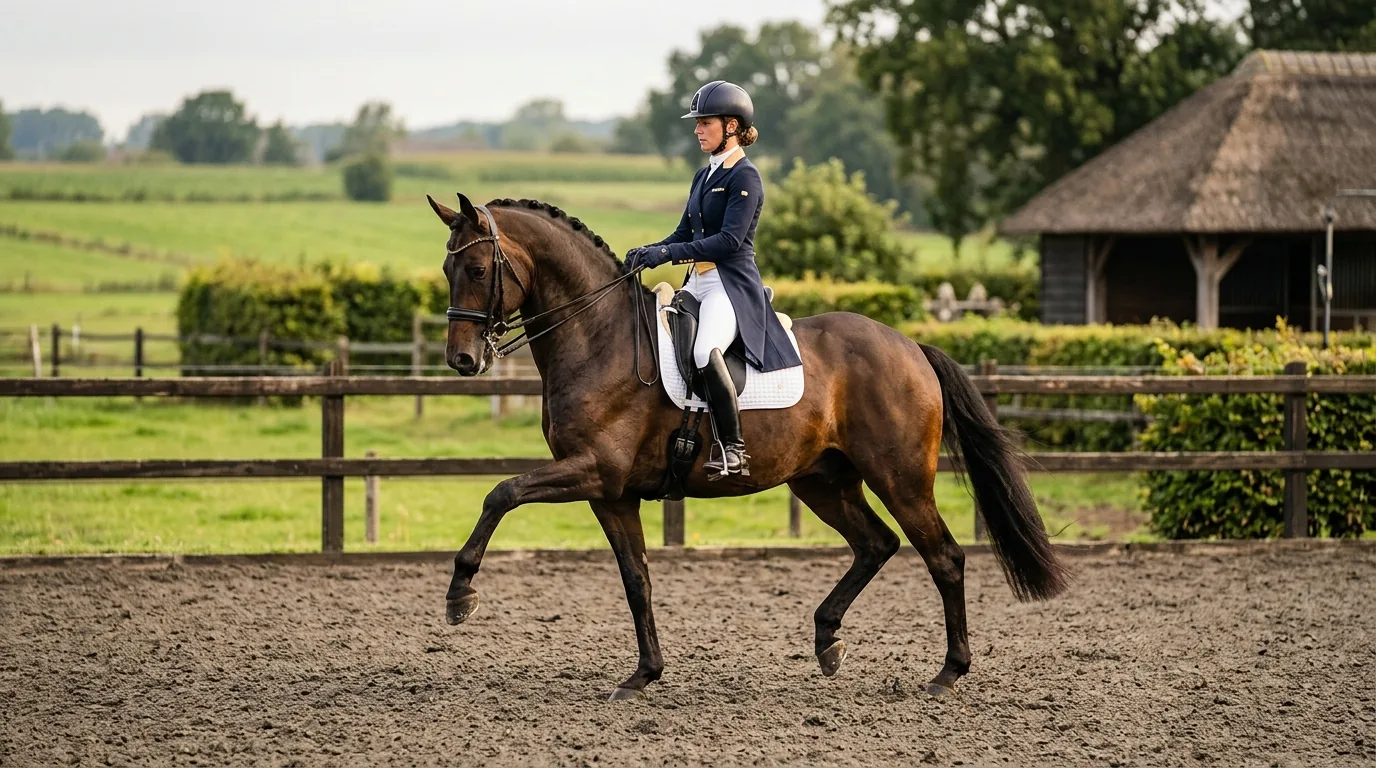
Dressage
Piaffe and passage: building the foundations
Piaffe and passage are considered the crowning achievements of dressage training, but the journey towards them begins much earlier than you might think. Both movements build on the same foundations: impulsion, balance, and suppleness. In this article you will discover which foundational steps you and your horse need to master first, how to develop the initial aids, and which pitfalls to watch out for along the way.
Read more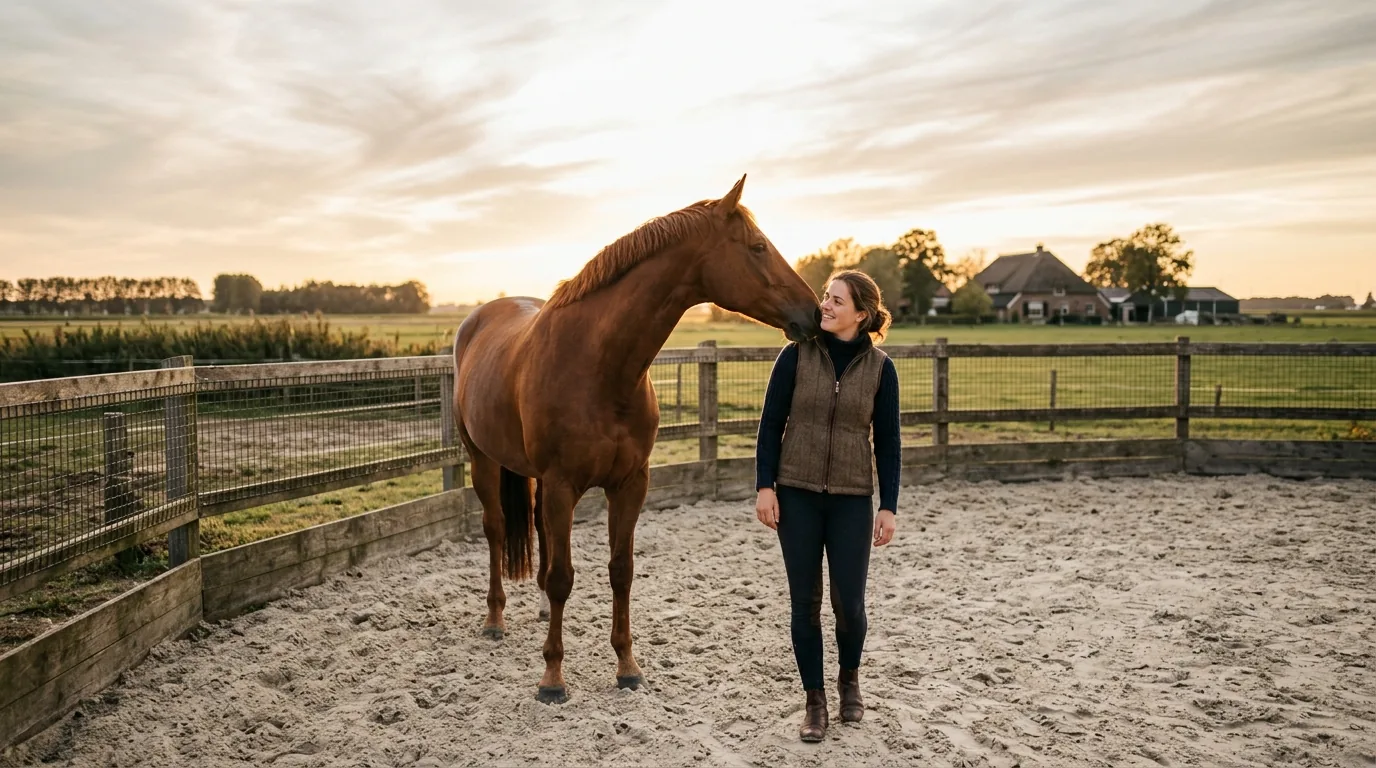
Training
Free work: how to build a genuine connection
Free work and natural horsemanship are not tricks — they are a way to fundamentally improve communication with your horse. You work without a halter or rope, purely on the basis of body language and mutual trust. For many horse owners, this is both the greatest challenge and the most rewarding experience. In this article you will learn exactly what free work involves, how to get started, and which pitfalls to avoid.
Read more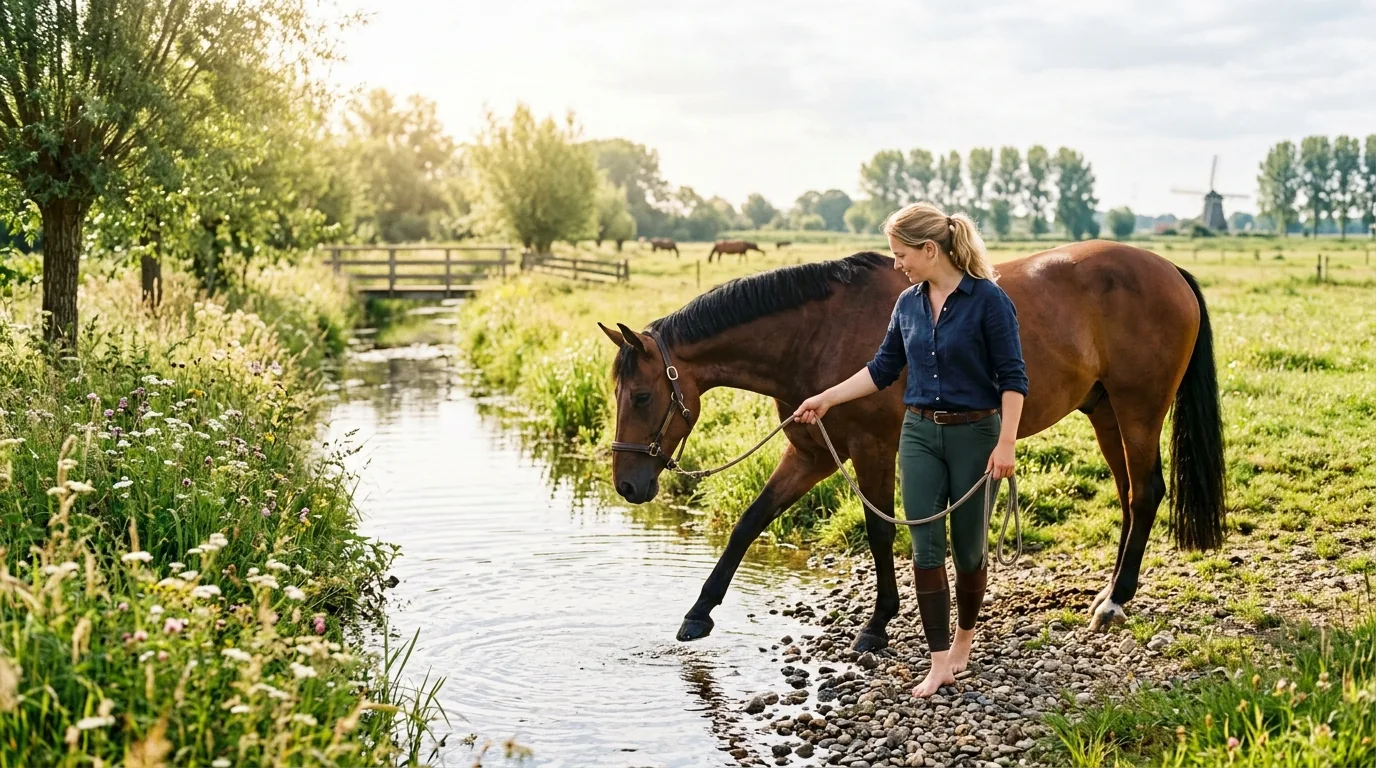
Training
Horse afraid of water: training step by step
Many horses hesitate at puddles, wet ground, or even a garden hose. This is completely normal: in the wild, murky water is a potential danger. With a structured desensitisation approach, you can resolve this in most cases — without force and without stress. In this article you'll learn exactly how to go about it, from the first introduction to a dripping bucket to calmly wading through a ditch. Give yourself and your horse the time — on average four to eight weeks is realistic for solid results.
Read more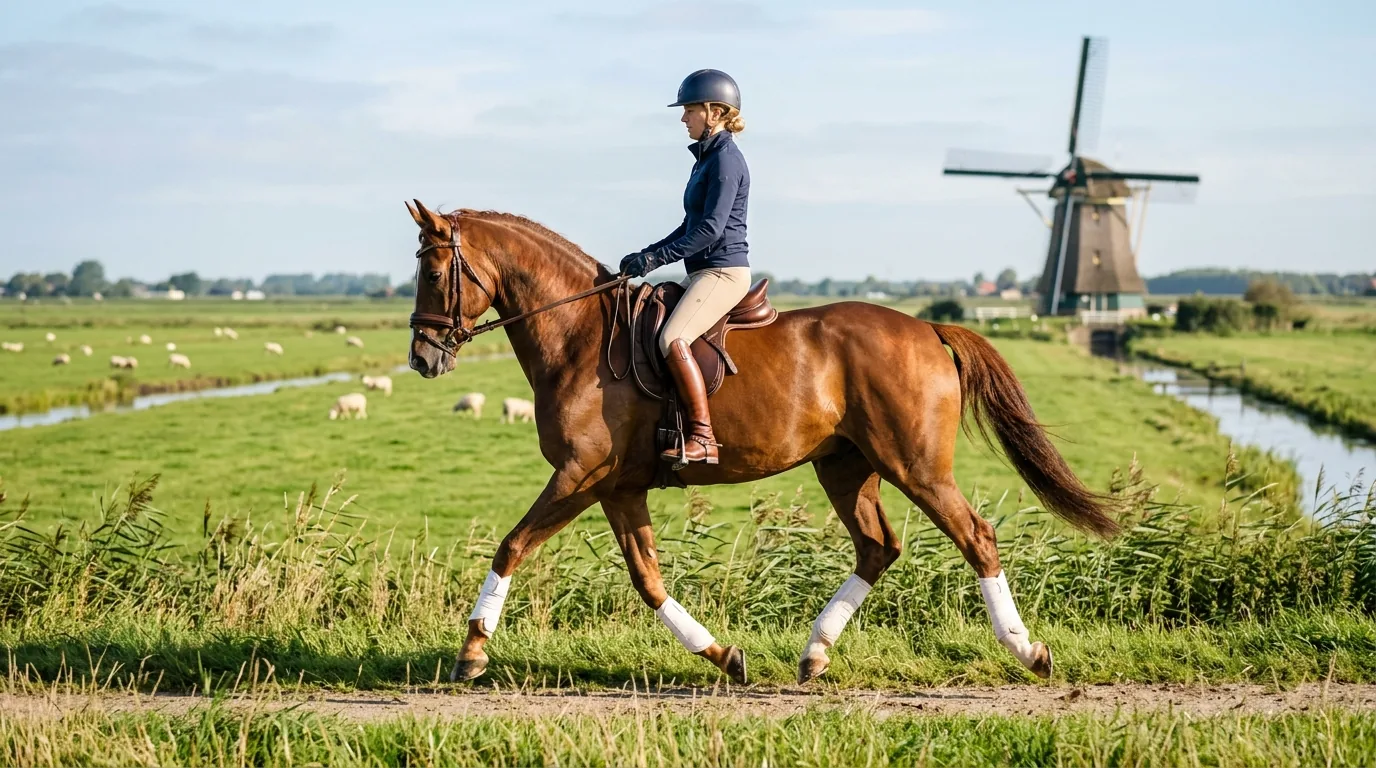
Training
Walk or trot: what really builds fitness?
When it comes to fitness building, many riders immediately think of long trot sessions. That makes sense — trotting feels intense and active. But the walk plays an equally important role in a well-structured training programme. The question isn't which gait is better, but when to use each one for the desired effect. This article explains how walk and trot each contribute to your horse's physical fitness in different ways, and how to combine both effectively.
Read more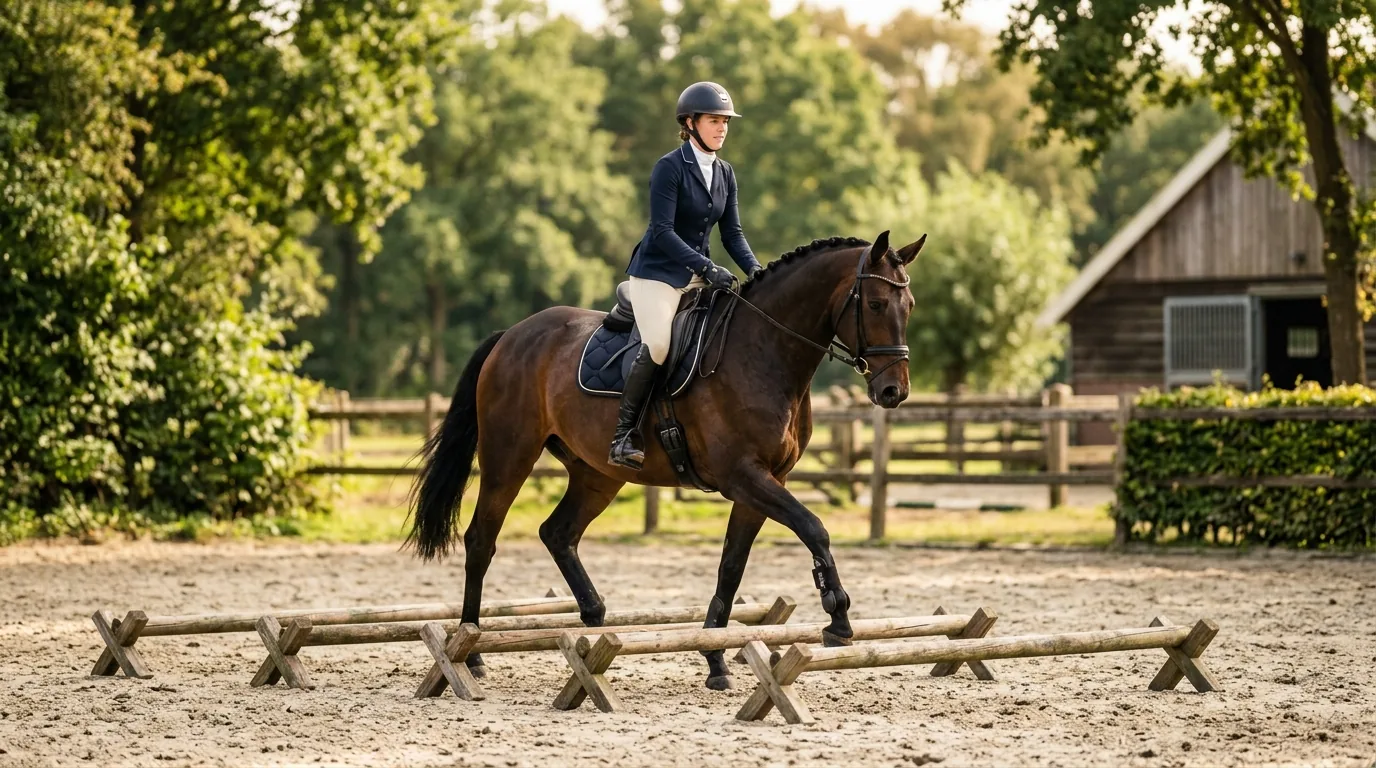
Training
Cavaletti training: purpose, structure and frequency
Cavalettis may look simple, but they do more than you might think. By regularly working your horse over low poles or rails, you improve coordination, rhythm and hindleg activity without putting heavy strain on the joints. Whether you're a young rider building the basics or looking to further refine a more advanced horse: cavaletti training is suitable for almost every level. In this article you'll find out exactly what cavalettis train, how to build up the exercises and how often to best include them in your schedule.
Read more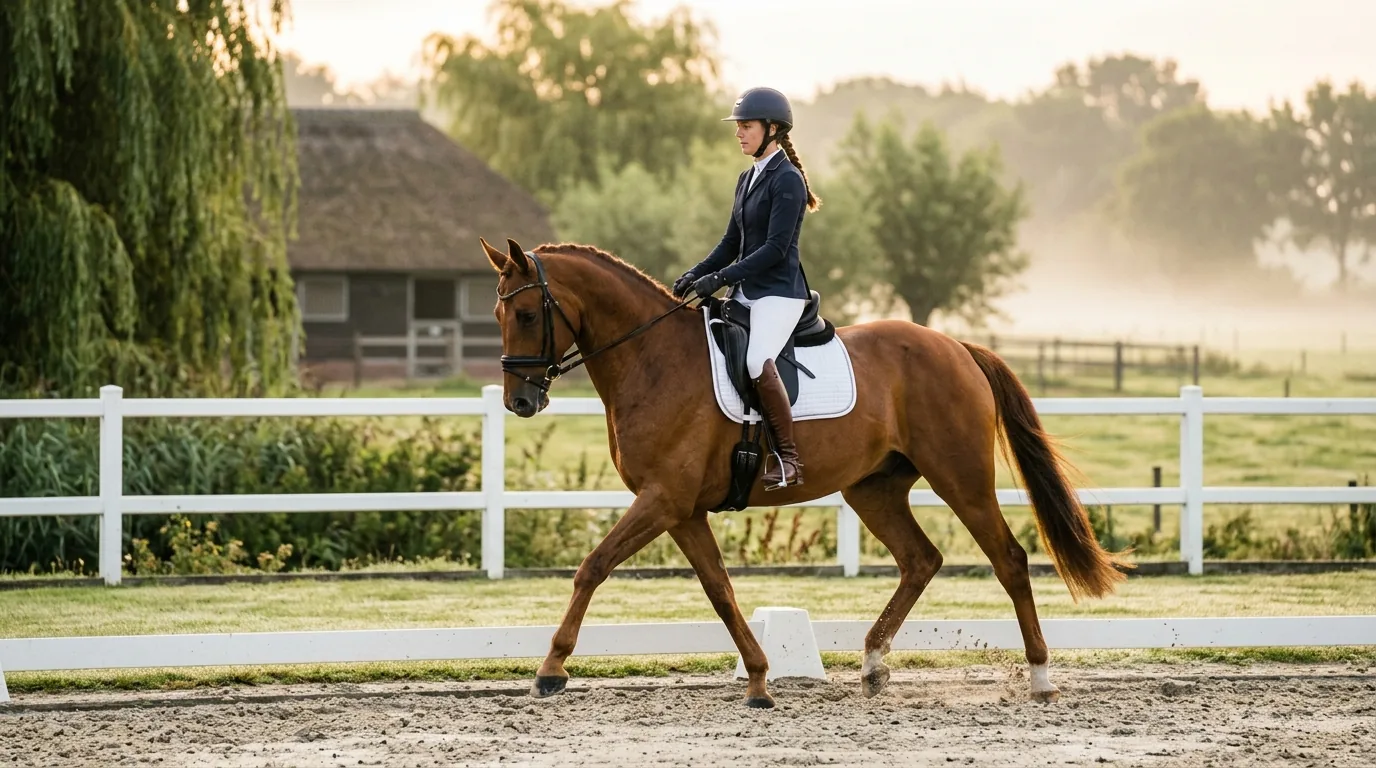
Training
Mental training: sharpen your focus at competitions
You know the feeling: you train brilliantly at home, but the moment you set foot on a competition ground, things start to go wrong. Your horse senses your tension, you forget your test, or you react too slowly to what is happening around you. Mental training helps you deliver the same quality under pressure as you do at your home yard. With the right techniques you build a routine that gives both you and your horse a sense of calm when it matters most.
Read more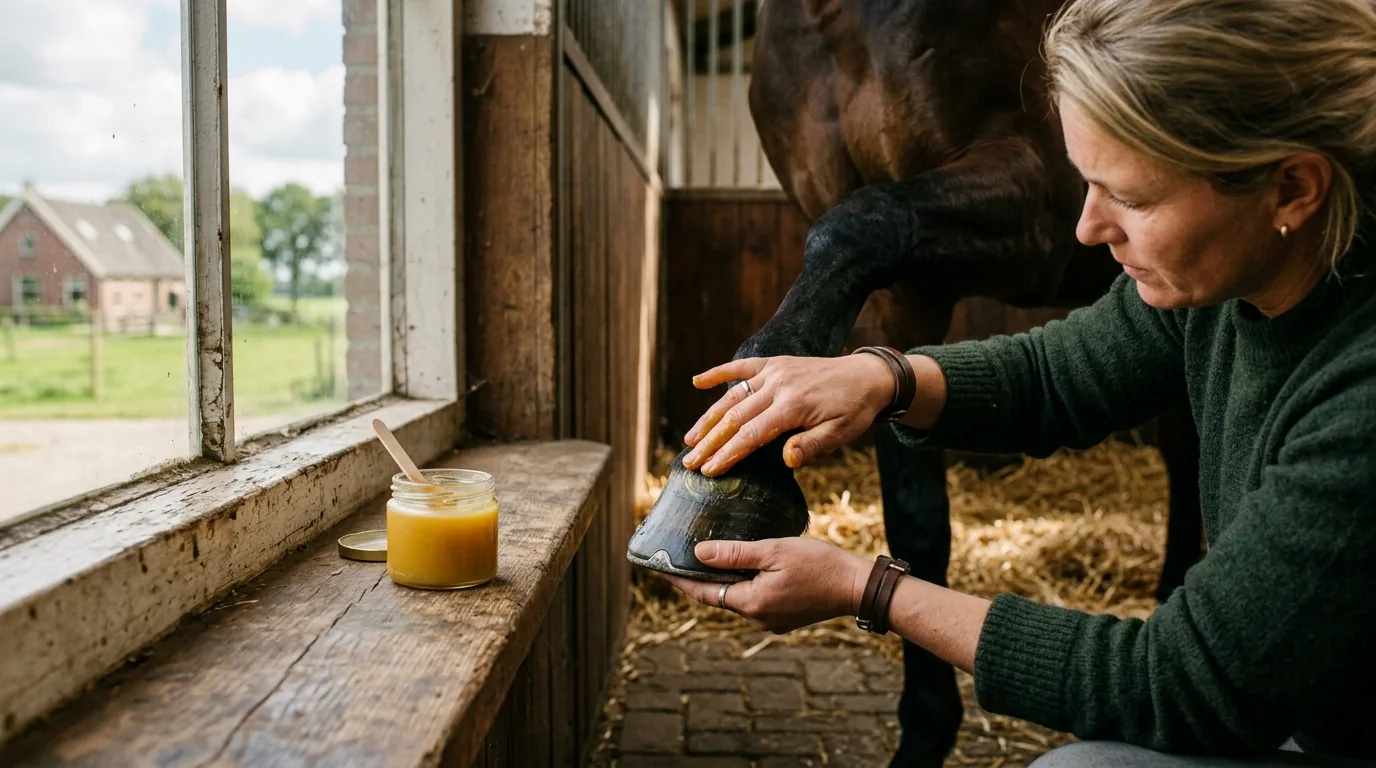
Hoof Care
Make your own hoof balm: 3 tried-and-tested recipes
Commercial hoof balms work well, but making your own is cheaper, more transparent, and you know exactly what goes into it. With a handful of ingredients from a pharmacy or online shop, you can have a pot ready within half an hour that is every bit as good. In this article you'll find three recipes: a basic beeswax balm, a deeply nourishing variant with fish oil, and a light summer balm based on coconut oil. We explain which recipe to use when and how to track the quality of your horse's hooves in the EquiSight horse profile.
Read more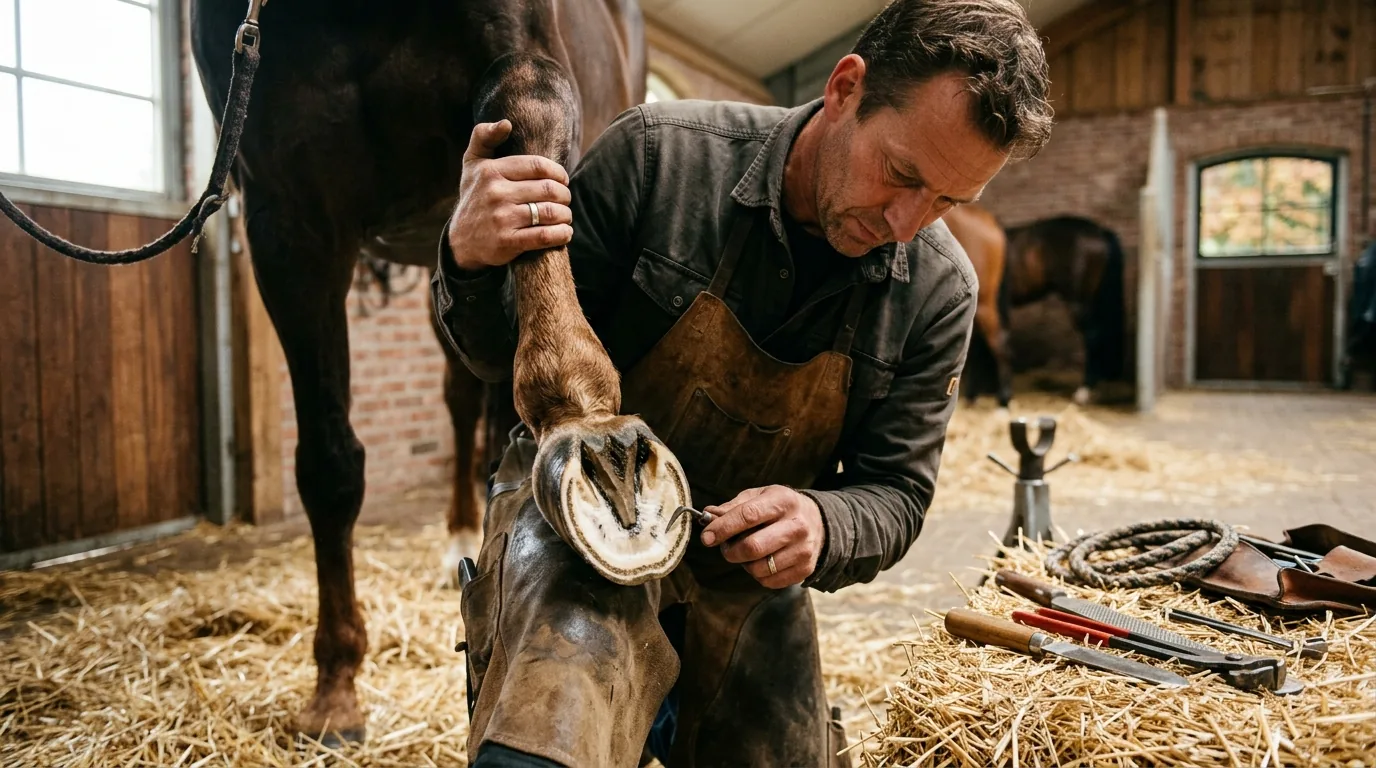
Hoof Care
White line disease: recognise and treat it in time
White line disease is a fungal and bacterial infection that attacks the white line of the hoof from the inside. It starts small — a dark spot or some crumbly material when picking out the hoof — but if left untreated, the infection can spread over several centimetres and seriously weaken the hoof wall. Fortunately, white line disease responds well to treatment when caught early. In this article you will learn how to recognise the condition, what causes it, and what steps to take to get your horse clear of it quickly.
Read more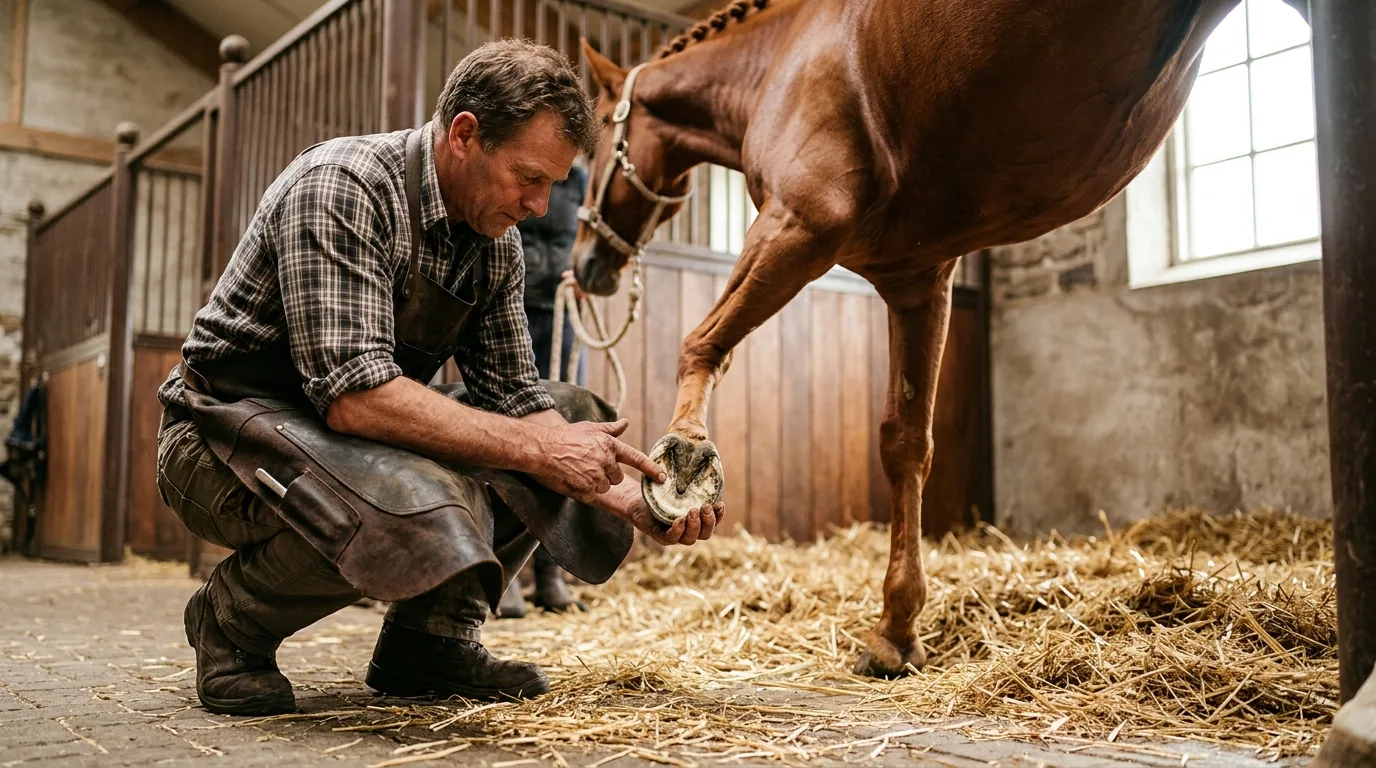
Hoof Care
Hoof rotation in laminitis: what happens?
Laminitis is one of the most feared conditions in horses, and hoof rotation is its most serious complication. When the lamellae inside the hoof become inflamed and fail, the coffin bone can literally shift position. Understanding what happens anatomically helps you as an owner to recognise the signs earlier and work more effectively with your farrier and vet.
Read more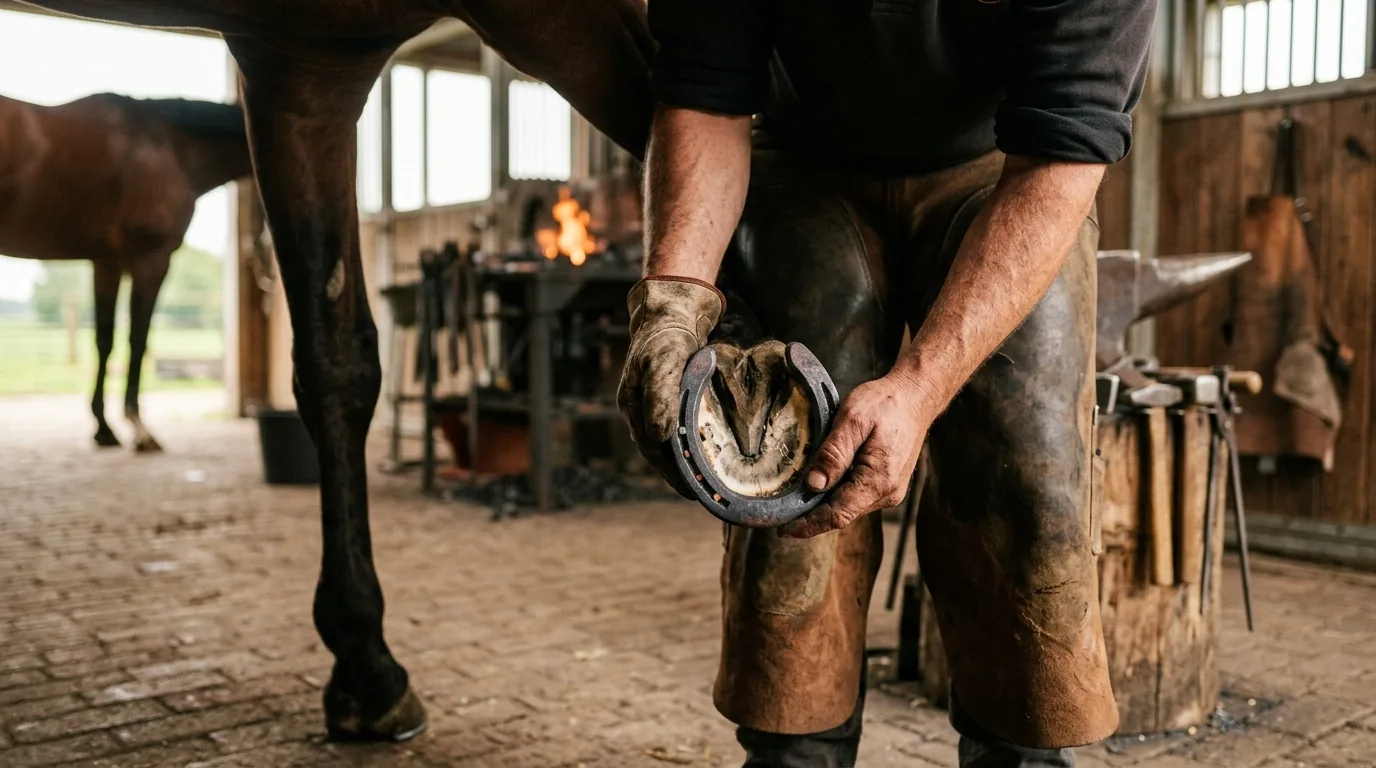
Hoof Care
Horseshoe types: which type suits your horse?
Not all horseshoes are the same. From a standard steel front shoe to an orthopaedic aluminium model with a relief cut — the choice depends on the discipline, hoof quality, and any existing hoof problems. Knowing which types exist and what they are used for helps you consult more effectively with your farrier and better understand why a particular choice is made. In this article, we outline the most common horseshoe types, including their applications and key considerations.
Read more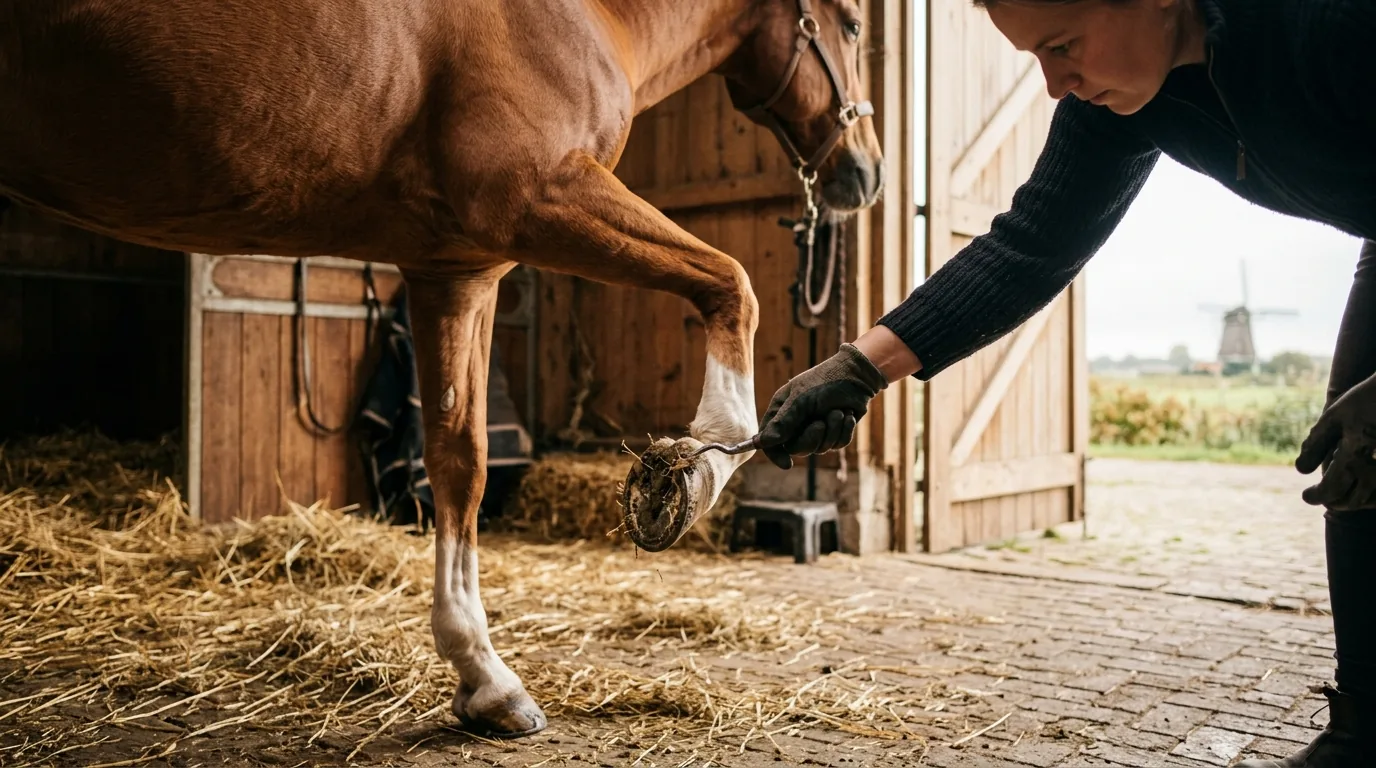
Hoof Care
How often should you pick out hooves?
Picking out hooves may seem straightforward, but the frequency makes more of a difference than you might think. Dirt, manure, and moisture left in the hoof for too long increases the risk of thrush and other hoof problems. How often you need to pick out your horse's hooves depends on the stable situation, the season, and the horse's level of activity. In this article, you'll find exactly what the guidelines are and why daily inspection forms the foundation of good hoof care.
Read more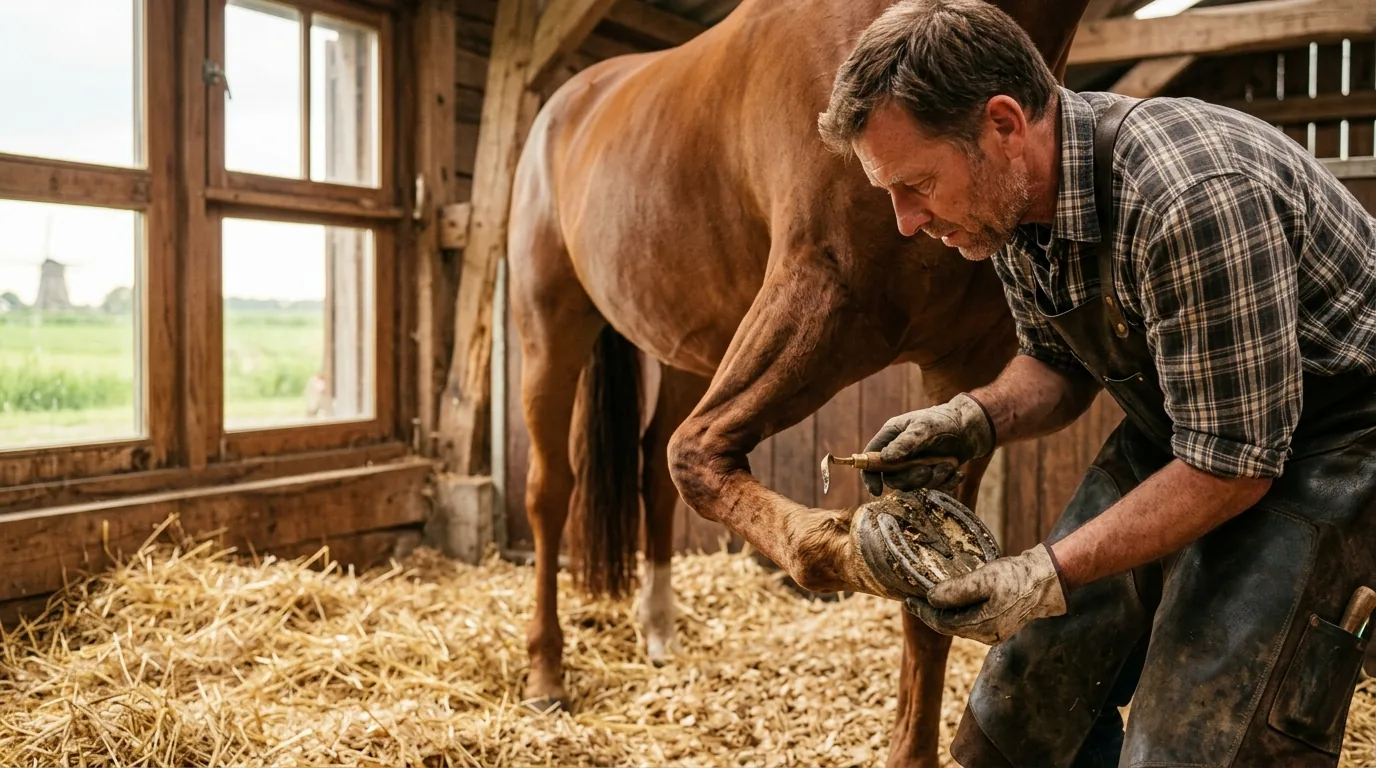
Hoof Care
Thrush in horses: recognising and treating it
Thrush is one of the most common hoof problems in horses. The bacterial condition affects the frog and is immediately recognisable by a sour, penetrating odour. Fortunately, thrush can be treated effectively when caught early — provided you know what to look for and act quickly. In this article you will learn how to recognise thrush, what causes it, and what steps to take to restore the hoof to health.
Read more
Competitions
Reading and Riding a Dressage Test Sheet in 5 Steps
Riding a dressage test without properly knowing the test sheet is asking for a forgotten movement or the wrong figure at the wrong moment. Yet you don't need to spend hours memorising it: with the right approach you can read a test sheet in 20 minutes and ride it confidently the next day. In this article you'll learn how to quickly decode a test sheet, how to recognise the logic behind it, and how to use EquiSight to streamline your preparation.
Read more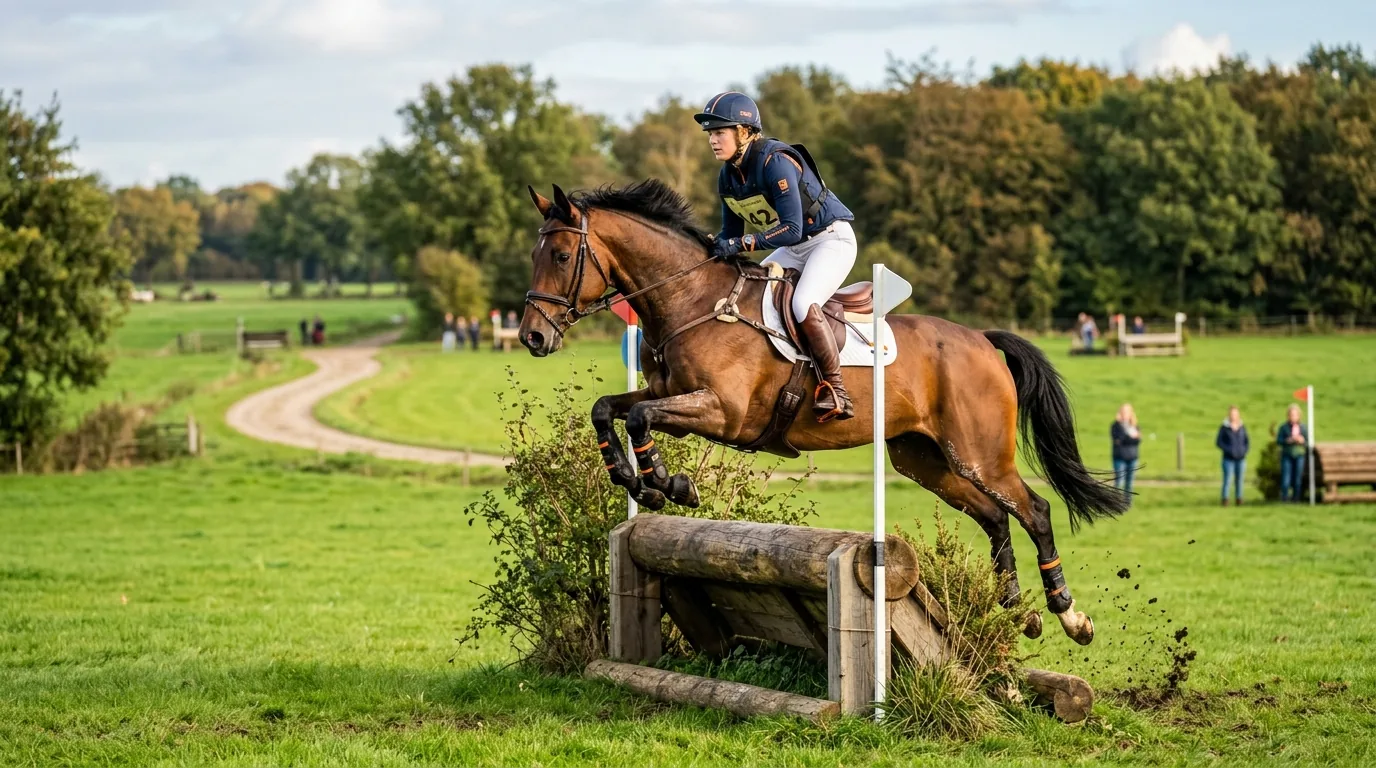
Competitions
Cross-country in eventing: how to get off to a great start
Cross-country is the heart of eventing: galloping across open terrain over fixed obstacles such as logs, ditches, and banks. For beginners, it is an intensive discipline that demands both technical riding skill and thorough preparation. In this article you will find everything you need to know before riding your first cross-country course, which mistakes to avoid, and how to prepare yourself and your horse step by step for a safe round.
Read more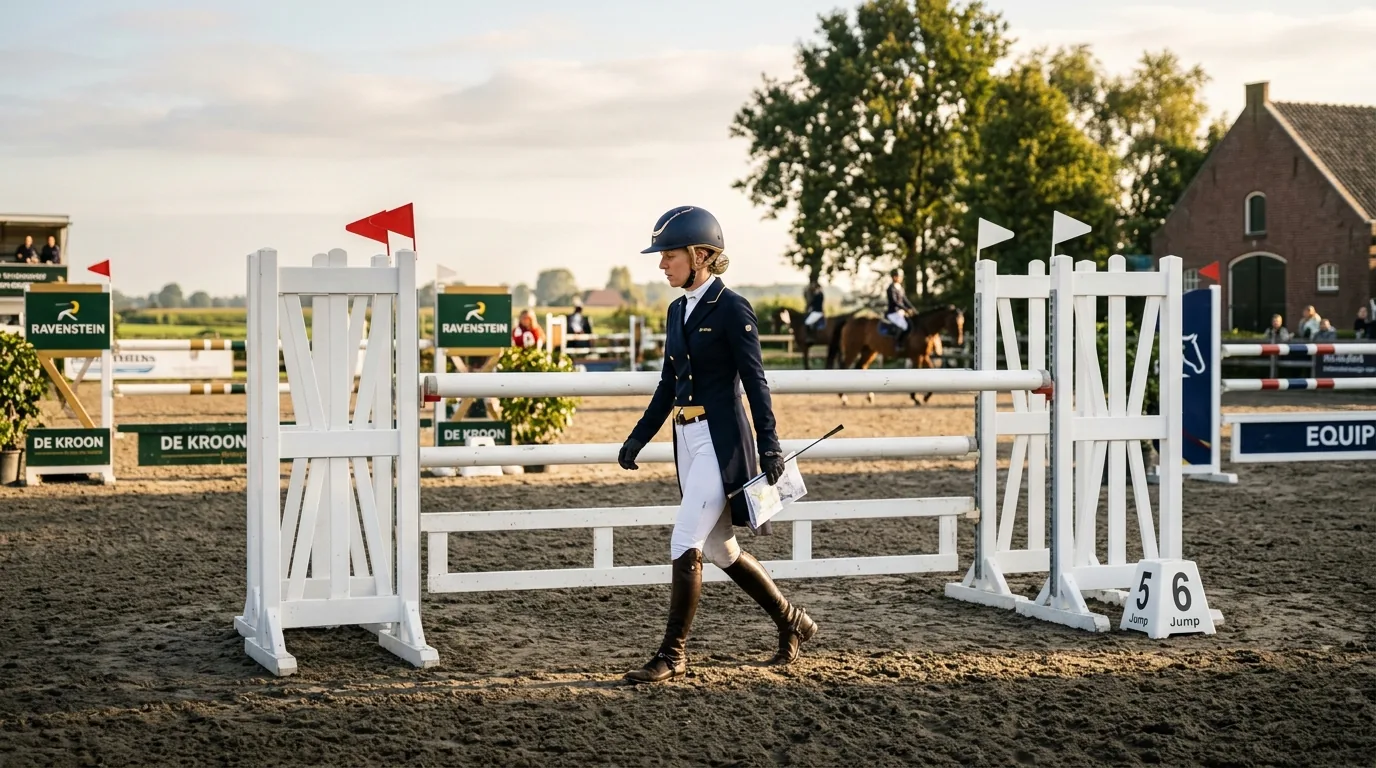
Competitions
Walking the course: how to save time and faults
Walking a course well is no formality — it is the moment where you already half win or lose the competition. Riders who simply count the fences and walk the lines by feel alone miss opportunities. With a well-thought-out approach to course walking, you learn to choose the smartest route, take turns more efficiently, and collect your horse at exactly the right moments. In this article you will find out how to analyse a show jumping course step by step, and which tactical choices make the difference.
Read more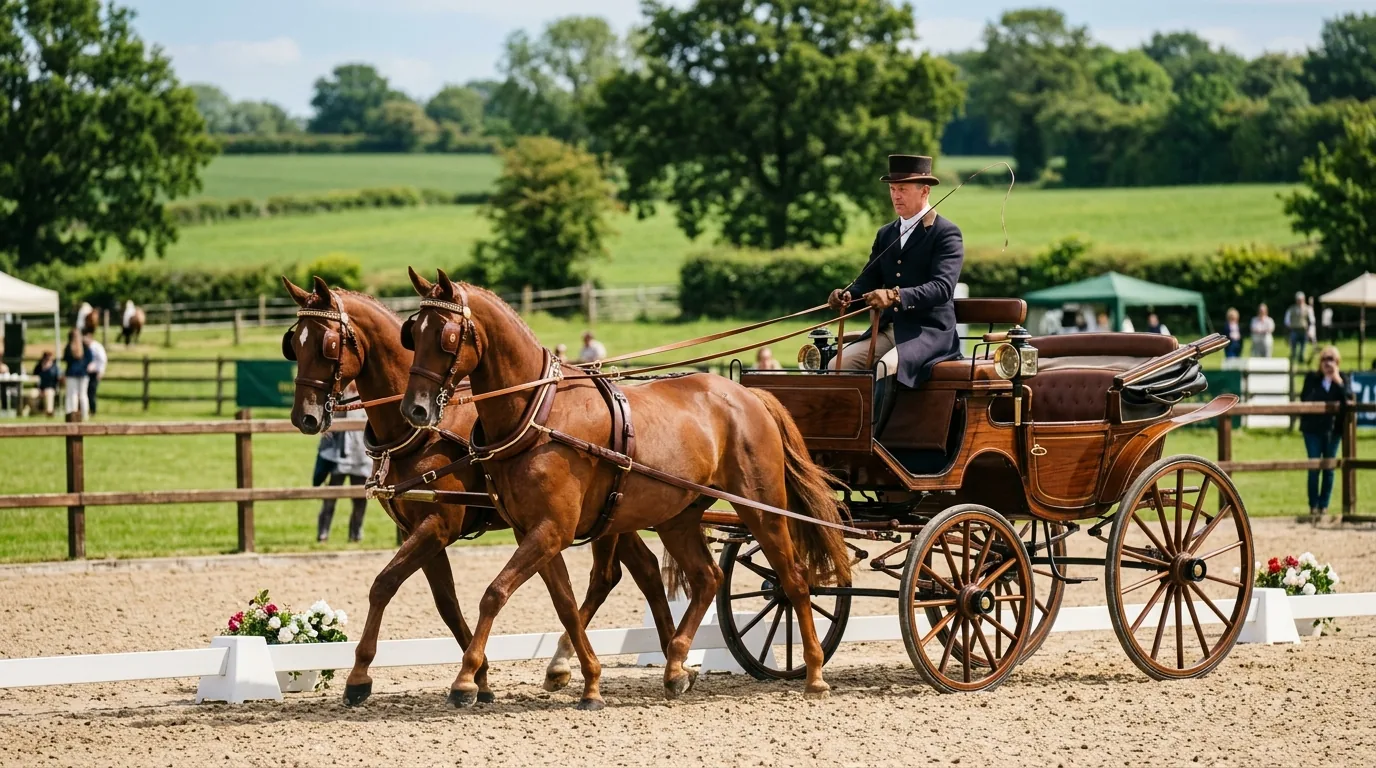
Competitions
KNHS driving competition: how to handle your registration
Competing in a KNHS driving competition takes more preparation than you might expect. From the right licences to registering on time via MijnKNHS: every step counts. Whether you're entering your first driving competition or have already been active for several seasons, this article guides you through the registration process so you won't be caught off guard.
Read more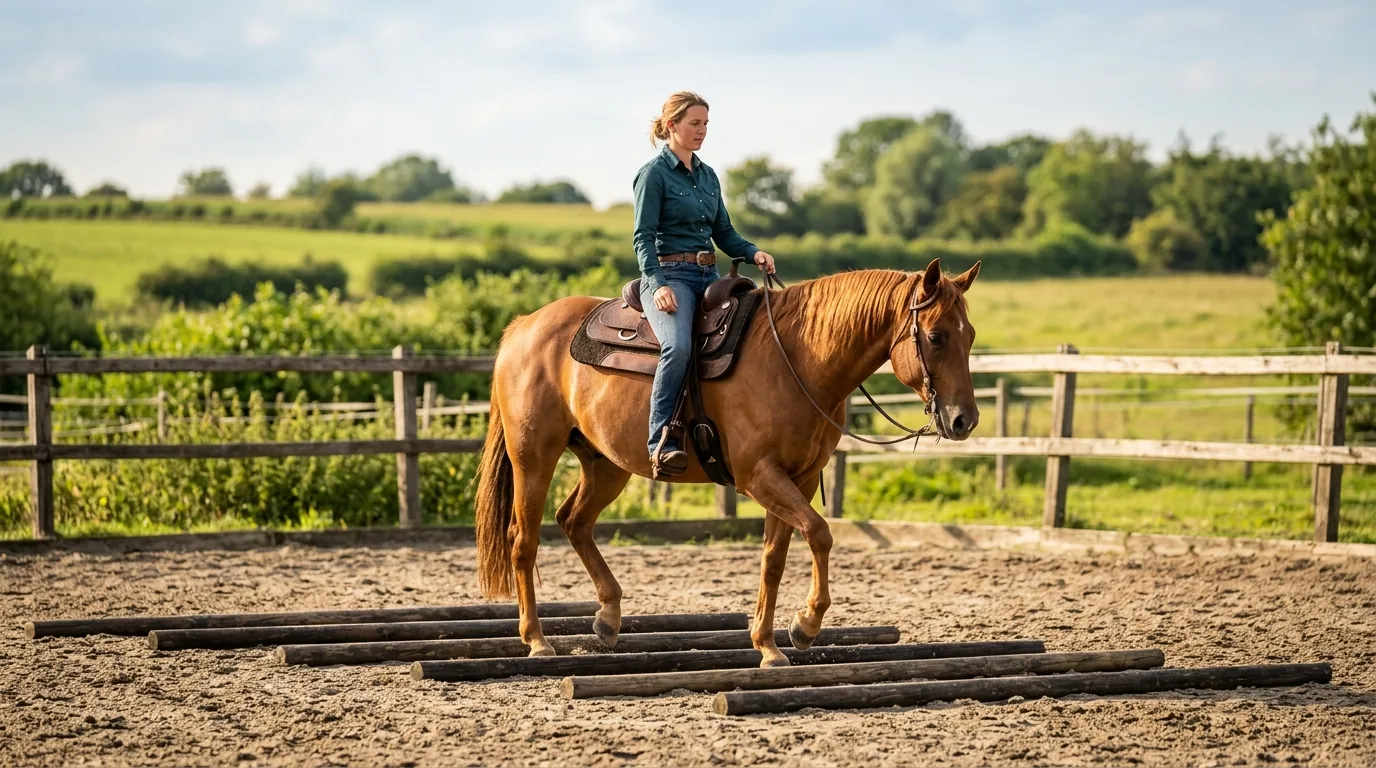
Competitions
Western trail class: how to prepare
The trail class is one of the most technical disciplines in western competition. Your horse must navigate a course of obstacles calmly and obediently — from opening a gate to stepping over logs and backing between cones. What sounds simple on paper requires a confident horse, a precise rider, and a great deal of focused training. This article explains how a trail class works, what the judges evaluate, and which exercises you can incorporate at home or at the stable to make real progress.
Read more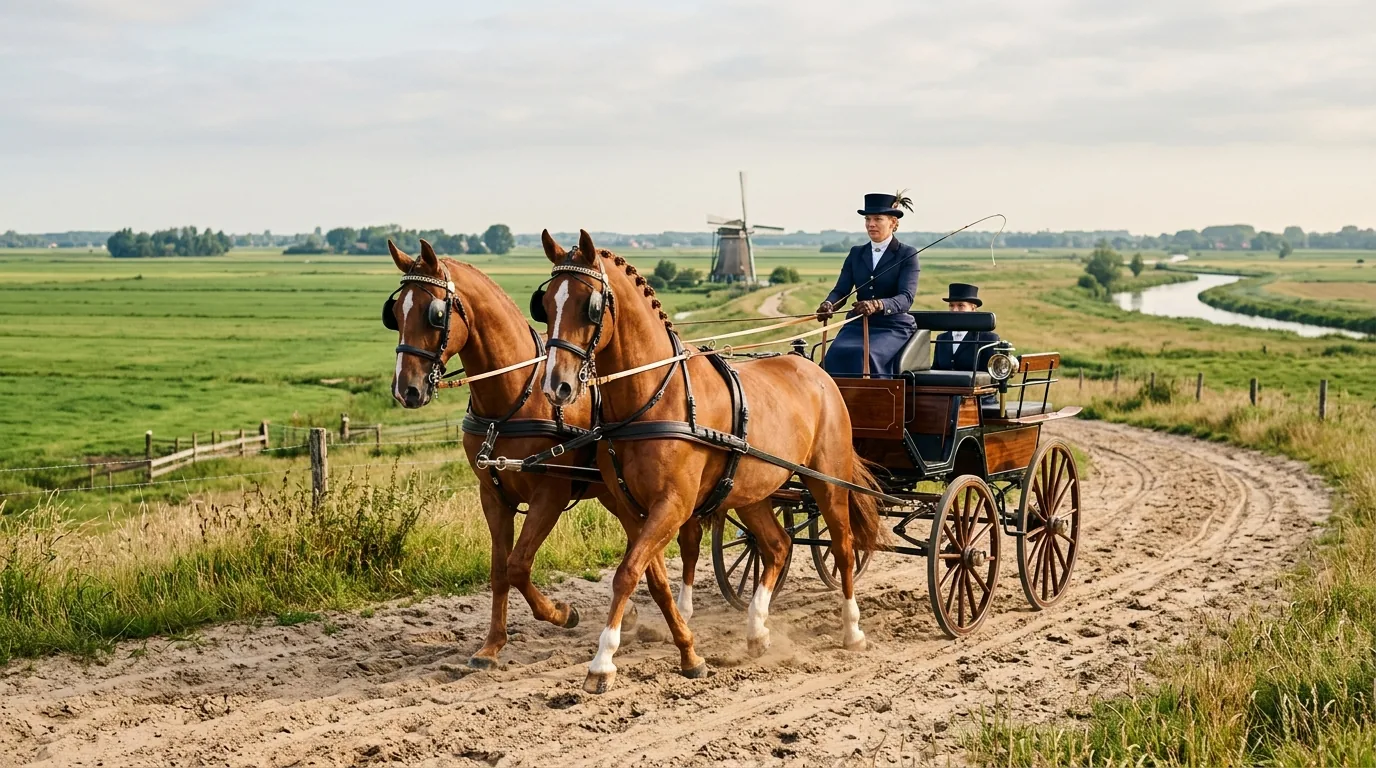
Competitions
Driving a pair: how to build a solid foundation
Driving a pair is one of the most fascinating disciplines in the equestrian world. You steer two horses simultaneously, coordinate their movement, and build an incredibly strong team together with them. But before you head to the arena, the basics need to be right: proper training, the correct equipment, and a clear understanding of rein technique. In this article you'll read what you need to know as a beginner about driving a pair — from the first exercises to preparing for competition level.
Read more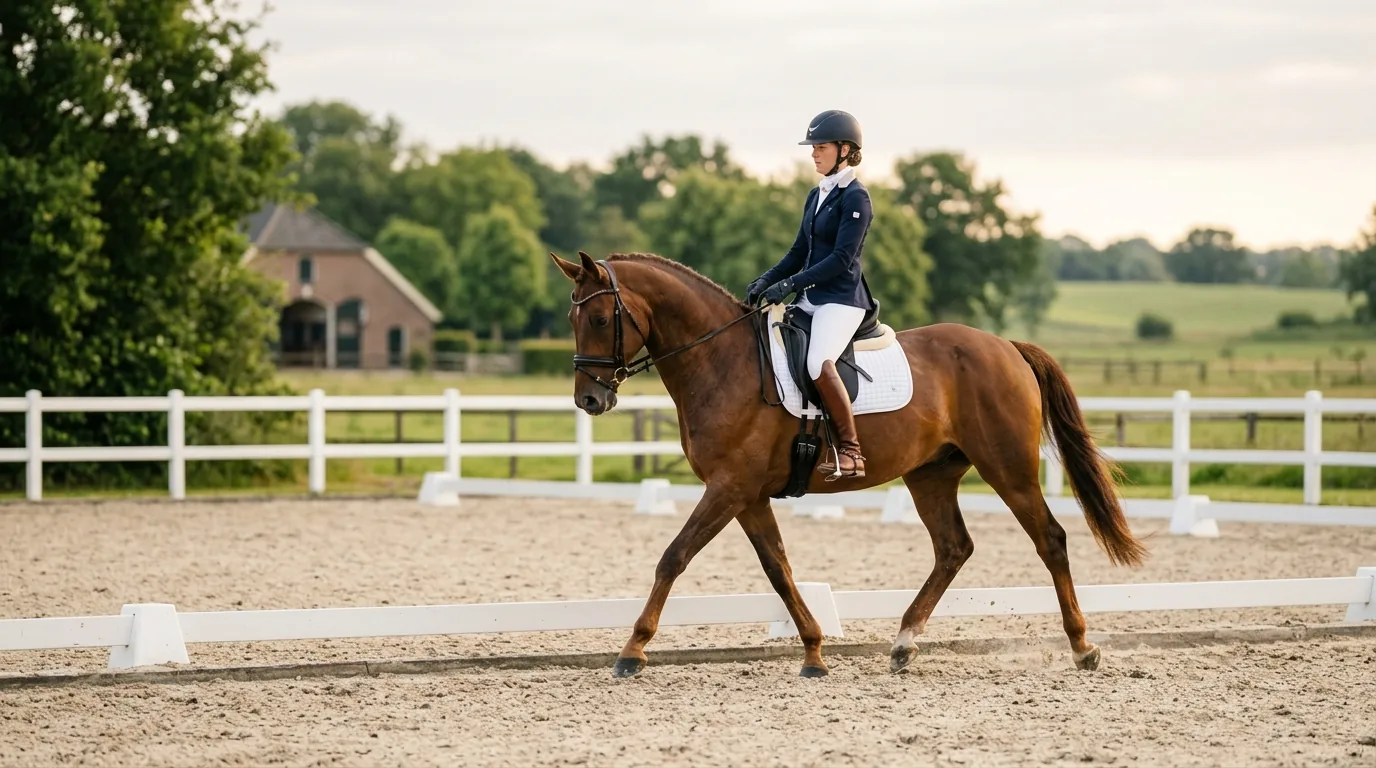
Competitions
Competition rhythm: how to prepare the week before
A strong competition performance doesn't start on the day itself, but at least seven days earlier. Riders who take their horse and themselves seriously taper the week before a competition deliberately: less intense training, extra attention to recovery, and a consistent routine that promotes calm. In this article you'll find out how to fill that final week step by step, from Monday through to the morning of the competition.
Read more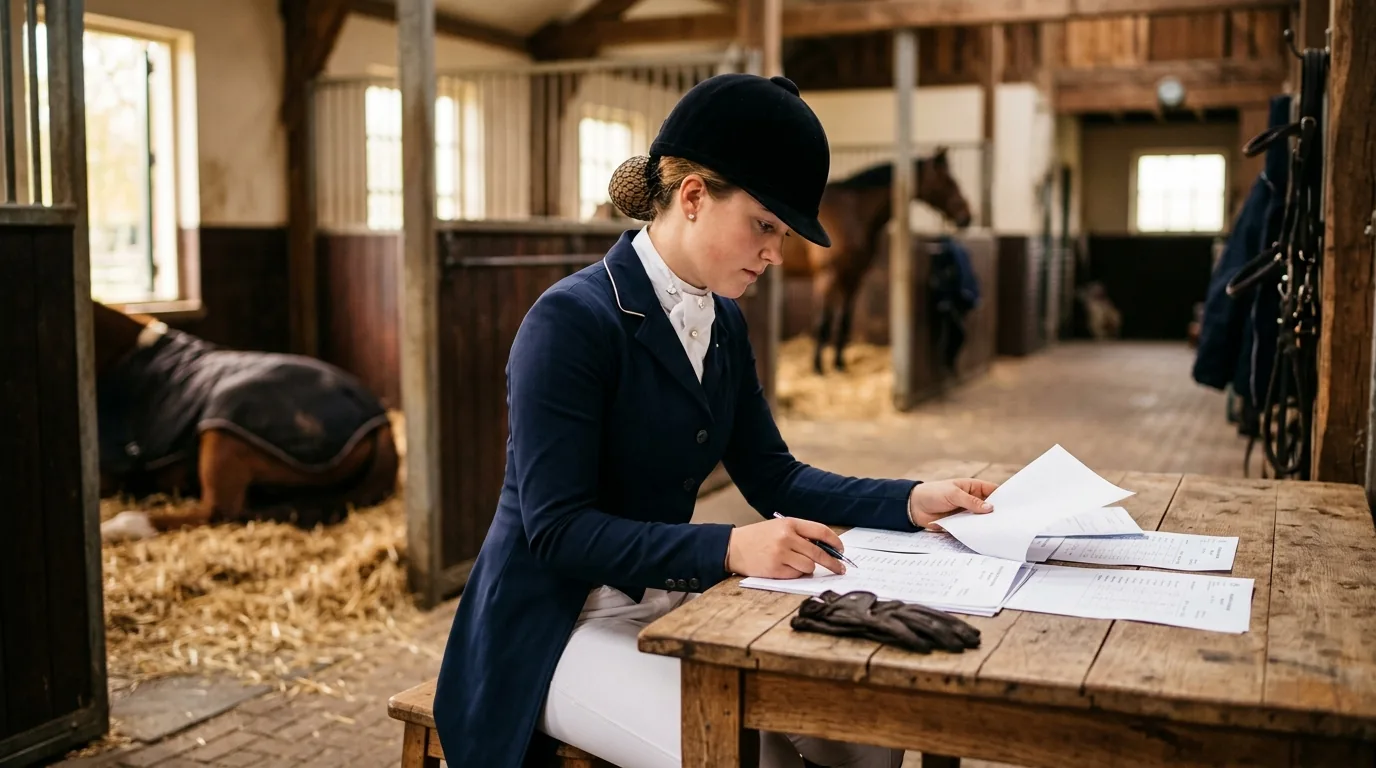
Apps
KNHS results database: how to search it smartly
The KNHS results database contains tens of thousands of competition results for Dutch horses and riders. Want to know how a potential purchase has performed over the past two years, or are you tracking your own progress over time? Then it pays to know how to search that database quickly and efficiently. In this article you'll find out which search options are available, exactly what you can look up, and how to link the results you find to the horse profile in EquiSight.
Read more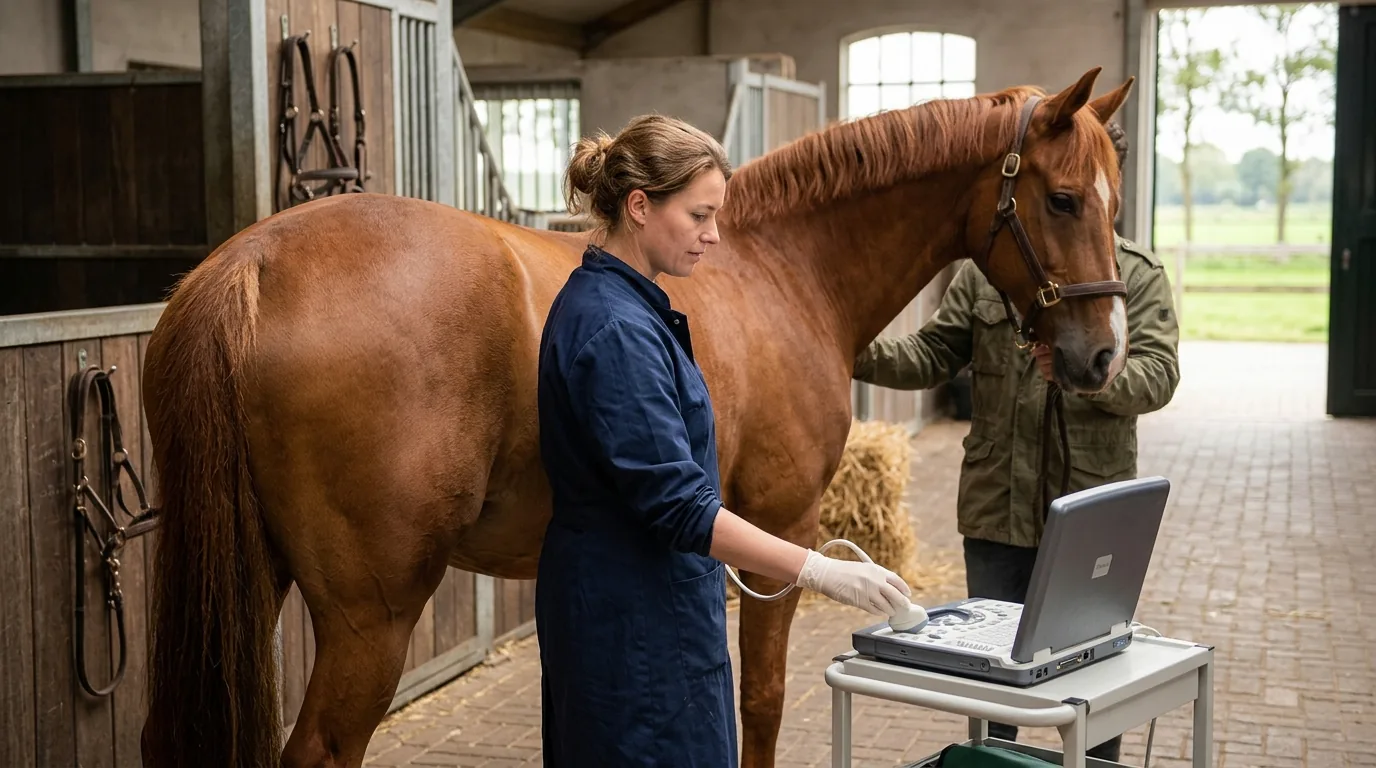
Breeding
Getting your mare checked for pregnancy: how and when?
Your mare has been covered or inseminated — now what? The anticipation starts immediately. A pregnancy check provides clarity and is crucial for the health of both your mare and the foal. In this article you will learn at which points to schedule a check, which methods the vet uses, and what to watch for yourself. That way you are fully prepared and know exactly what needs to happen and when.
Read more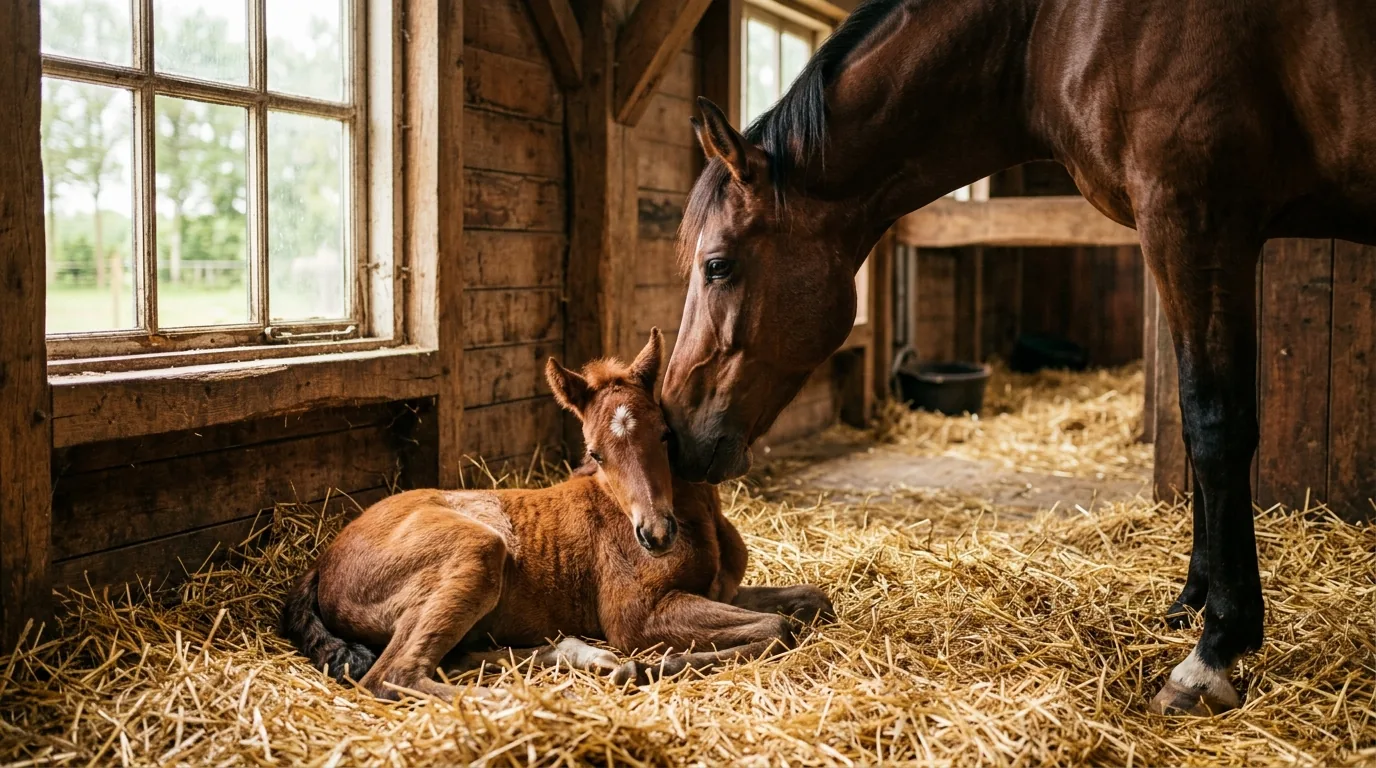
Breeding
Foal birth: what to do in the first hour
The first sixty minutes after a foal is born are crucial. In that short time, your foal lays the foundation for a healthy start: it stands up, drinks colostrum, and gets to know its mother. As a breeder or owner, you want to know exactly what is normal, when to intervene, and how to stay calm yet alert. This article gives you a practical guide for the first hour — from the first breath to the first sip of colostrum.
Read more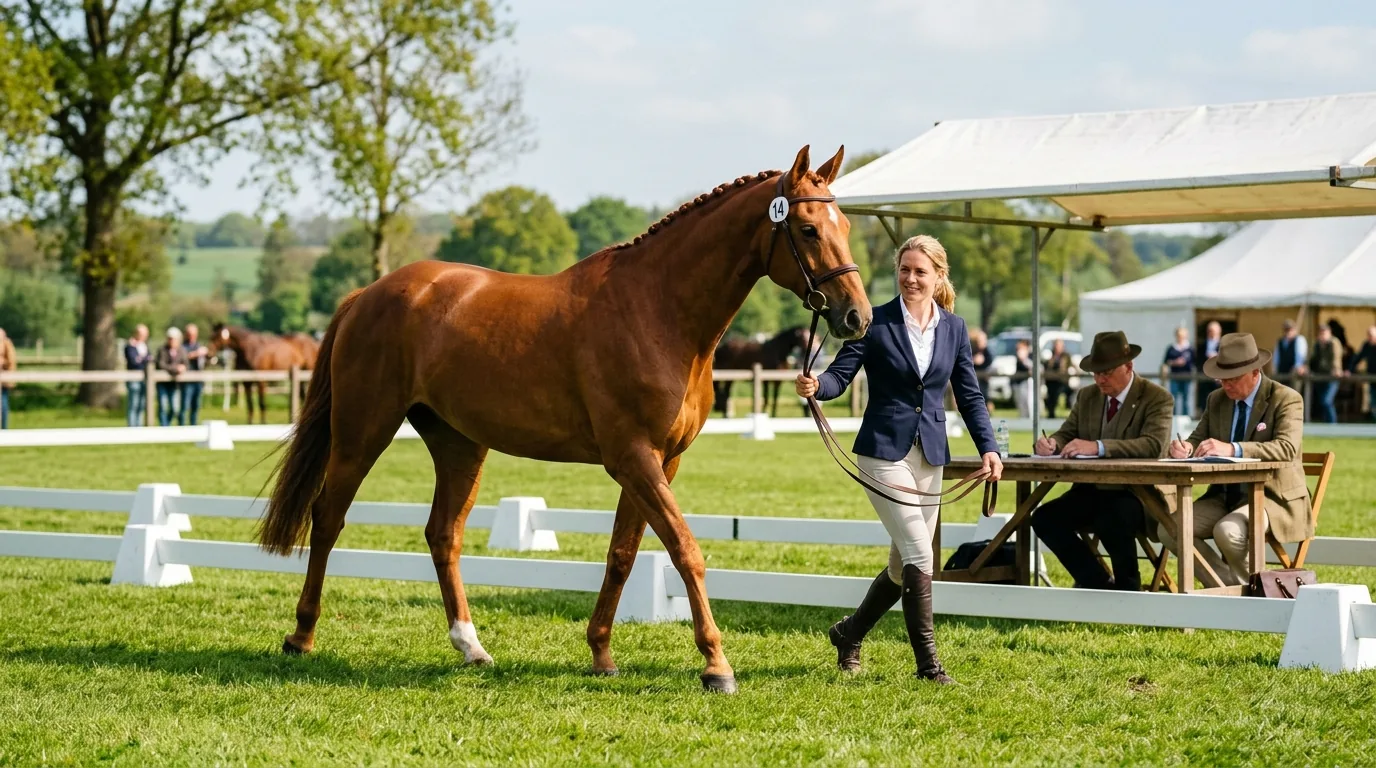
Breeding
Broodmare inspection at the KNHS: how to prepare
A broodmare inspection at the KNHS is an important step if you are serious about breeding. Your mare is assessed on conformation, movement and type — and a good result opens doors to star or premium mare status. But how does such an inspection actually work, what is assessed, and how do you ensure your mare appears at her best? In this article you will find everything you need to know, from registration to presentation.
Read more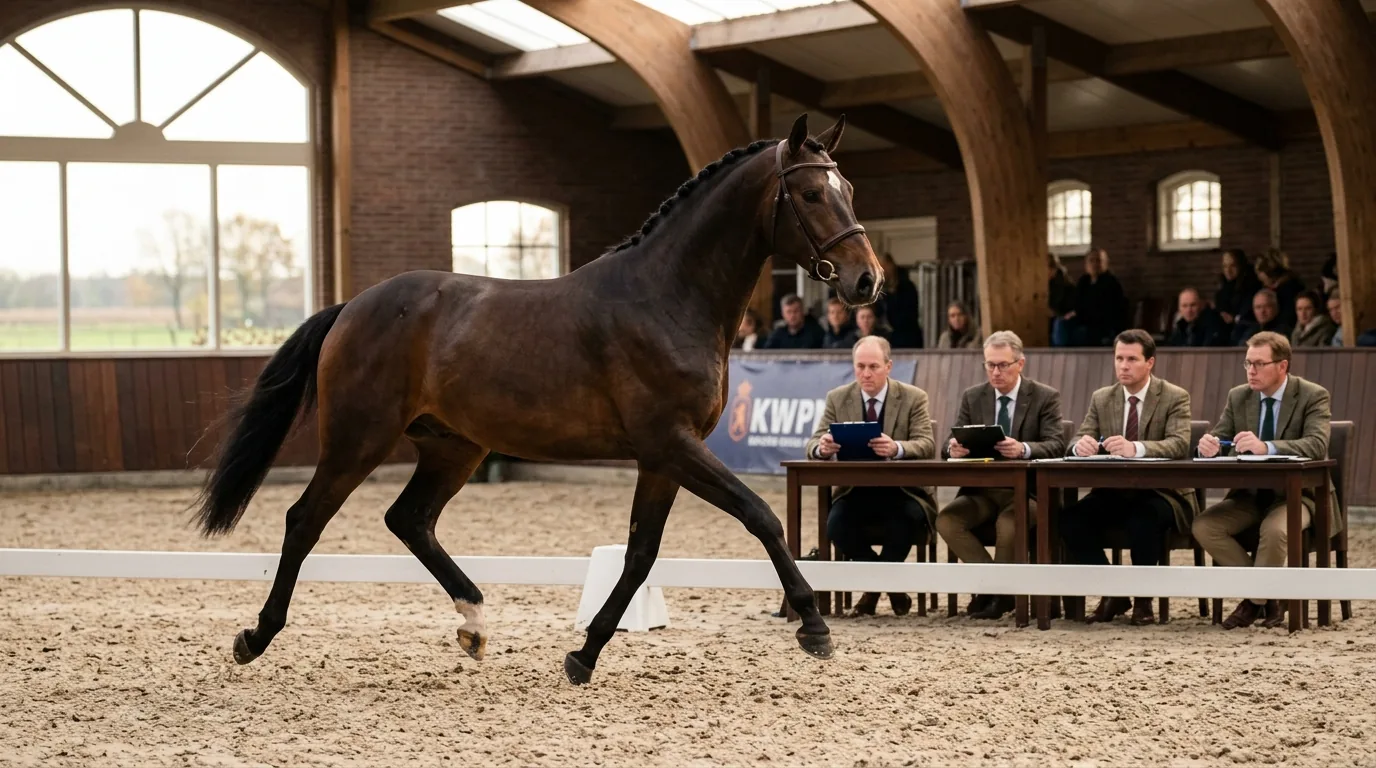
Breeding
Stallion inspection: how it works in the Netherlands
A stallion inspection determines whether a stallion is approved for breeding. For many breeders it is an exciting moment, but also a complex process if you are encountering it for the first time. In this article we explain step by step what happens during an inspection, which aspects are assessed, and what approval concretely means for you as an owner.
Read more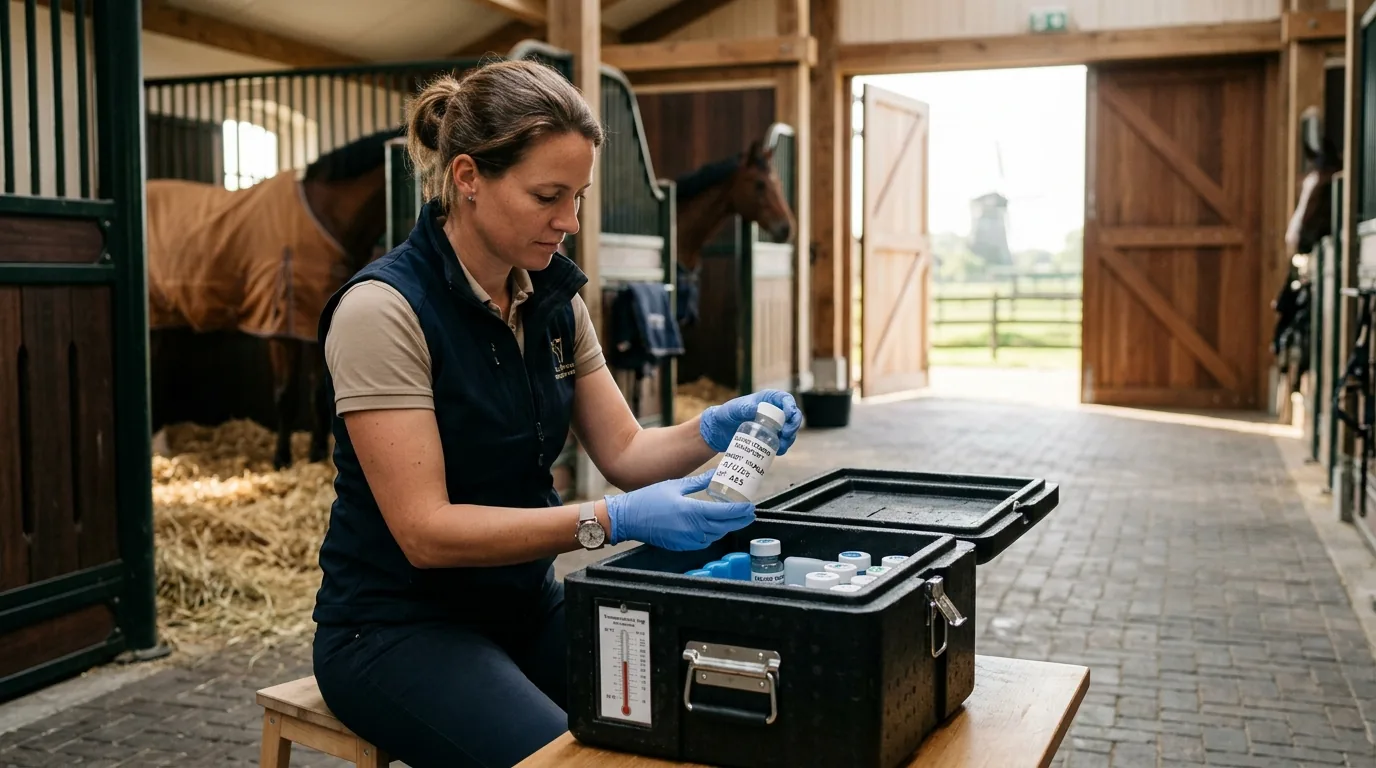
Breeding
Shipping semen: chilled or frozen?
When inseminating a mare, you broadly have two options: chilled semen shipped fresh, or frozen material that can be used at any time you choose. Both methods have their own logistics, storage requirements, and impact on conception rates. Which approach suits your situation depends on the stallion, the mare, and the timing of the cycle. In this article we outline the key differences, so you can make a well-informed decision together with your vet and AI technician.
Read more
Breeding
Weaning a foal: how to do it calmly and correctly
Weaning a foal is one of the most significant moments in its first year of life. Done too early or too abruptly, it can cause stress that negatively affects the foal's development. With the right preparation, good timing and a clear approach, you can ensure that both foal and mare get through the transition as calmly as possible. In this article you will find out when to start, how to go about it and what to watch for in the days that follow.
Read more
Management
Manure management plan for your stable: rules and permits
If you keep horses in the Netherlands, you have to deal with manure regulations. Whether you run a small home stable with two horses or a professional operation with twenty animals: the legislation on manure storage, manure disposal, and permits applies to everyone. The rules stem from the Environment and Planning Act, the Activities Decree, and the manure legislation from RVO. Anyone unfamiliar with the rules risks fines or complications when applying for a permit. This article outlines the most important obligations so you know exactly what to look out for.
Read more
Management
Pasture rotation: how to prevent overgrazing
A bare, churned-up pasture is not only an eyesore — it also harms your horse's health. Overgrazing happens faster than you might think: horses graze selectively, cropping their favourite spots bare while leaving other areas completely untouched. By applying pasture rotation, you give the grass time to recover, keep parasite pressure low, and ensure better grass intake throughout the entire season.
Read more
Management
Building permits for stables in the Netherlands: how to tackle it
Building a new stable is a major step, and permit procedures were tightened again in 2026. Between the environmental plan, nitrogen regulations and local authority policy, it is easy to lose track of everything. In this article you will read which permits you need, where most applications get stuck and how to organise your preparation as efficiently as possible.
Read more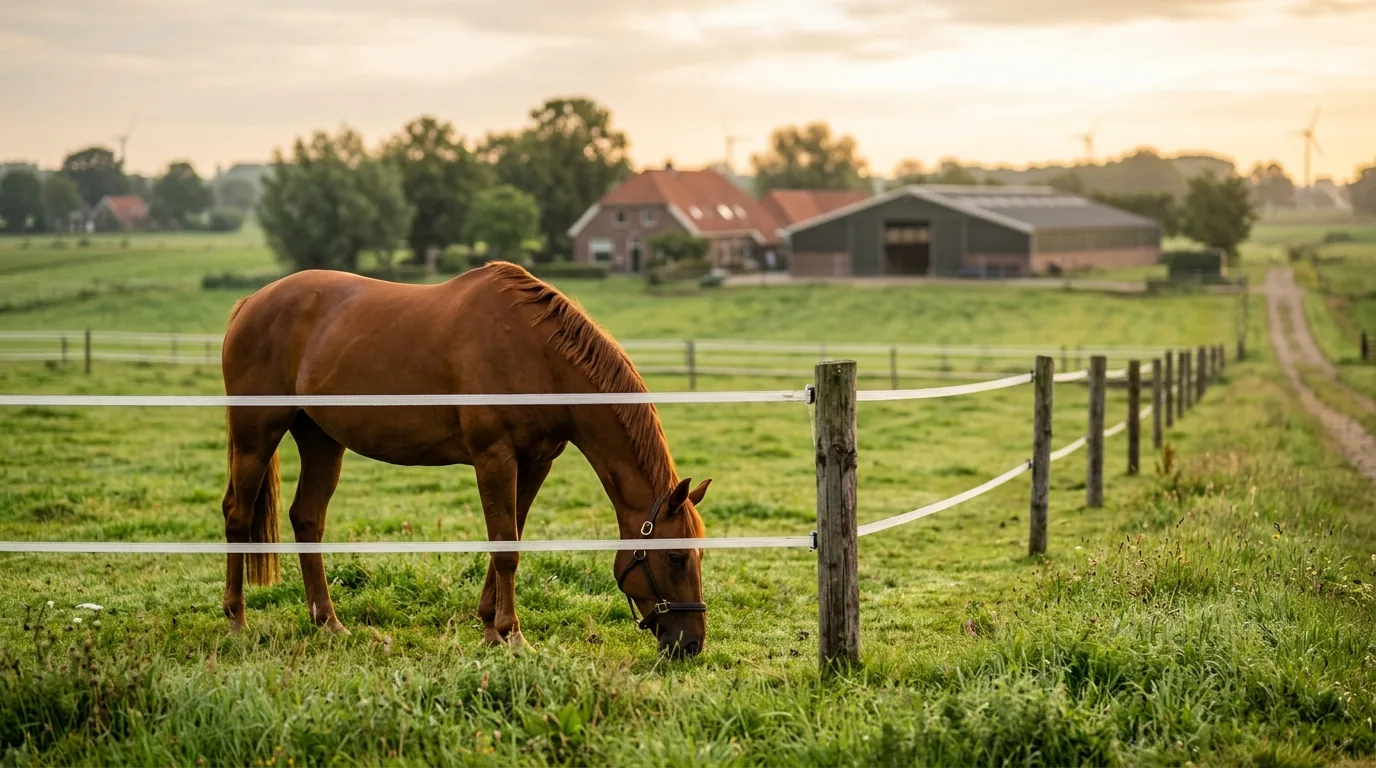
Management
Installing an electric fence for horses
A properly installed electric fence keeps your horses safely inside the pasture and prevents costly escapes. Whether you are setting up a temporary paddock or installing a permanent pasture fence, the choice of materials, voltage and earthing determines whether the system actually works. In this article you will find a step-by-step guide to building a reliable electric fence, the mistakes to avoid, and how to keep up with maintenance.
Read more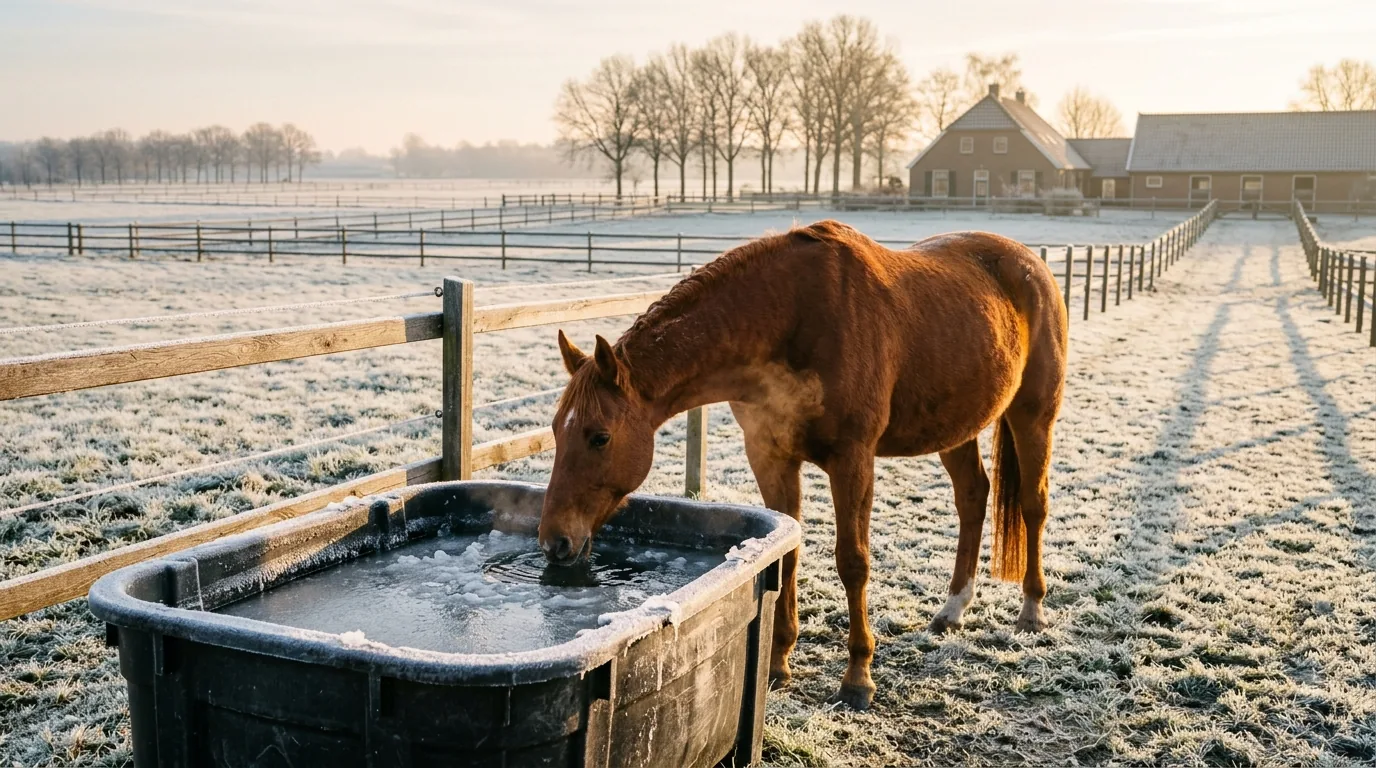
Management
Keeping water points in the pasture frost-free
As soon as the temperature drops below zero, a drinking trough freezes faster than you might think. A horse needs 25 to 50 litres of water every day — in winter at least as much as in summer, because dry roughage demands extra moisture. Frozen water points therefore pose a direct health risk: dehydration and colic are never far away. In this article you will find out what measures you can take to keep your water points frost-free, from simple tricks to smart installations.
Read more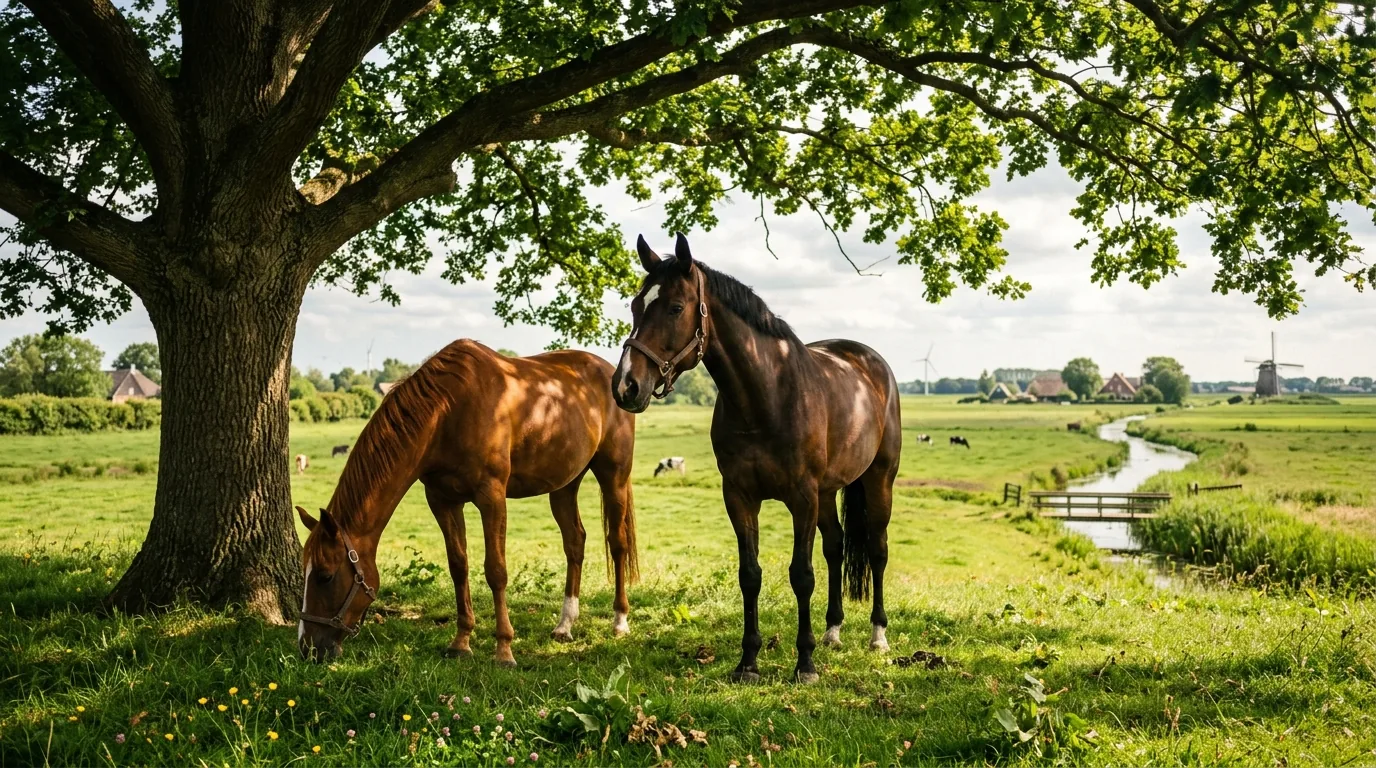
Management
Shade in the pasture: why it's indispensable
A sunny pasture sounds ideal, but for horses, full exposure to the sun in summer is downright dangerous. Without shade, a horse can overheat, suffer from sunburn, and build up chronic stress. In this article, you'll learn why shade is a basic necessity, what requirements it must meet, and how to arrange this practically for your situation.
Read more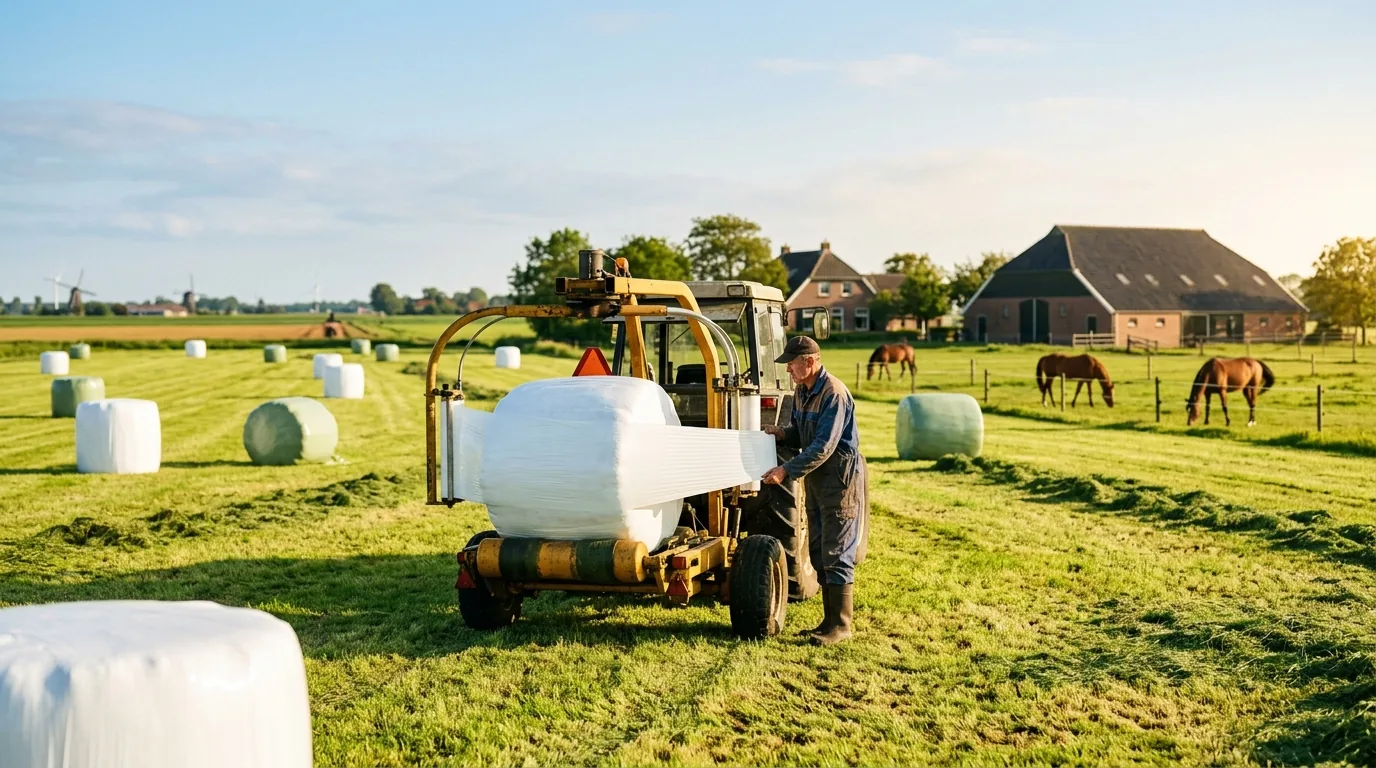
Nutrition
Making silage yourself: how to do it right
Silage is a popular alternative to hay, especially if you have many horses to feed or are dealing with mouldy dry roughage. By ensiling grass or alfalfa yourself, you have more control over quality and can save on feed costs. In this article, we explain step by step how to make silage safely and successfully for your horses, what to watch out for, and which mistakes to avoid.
Read more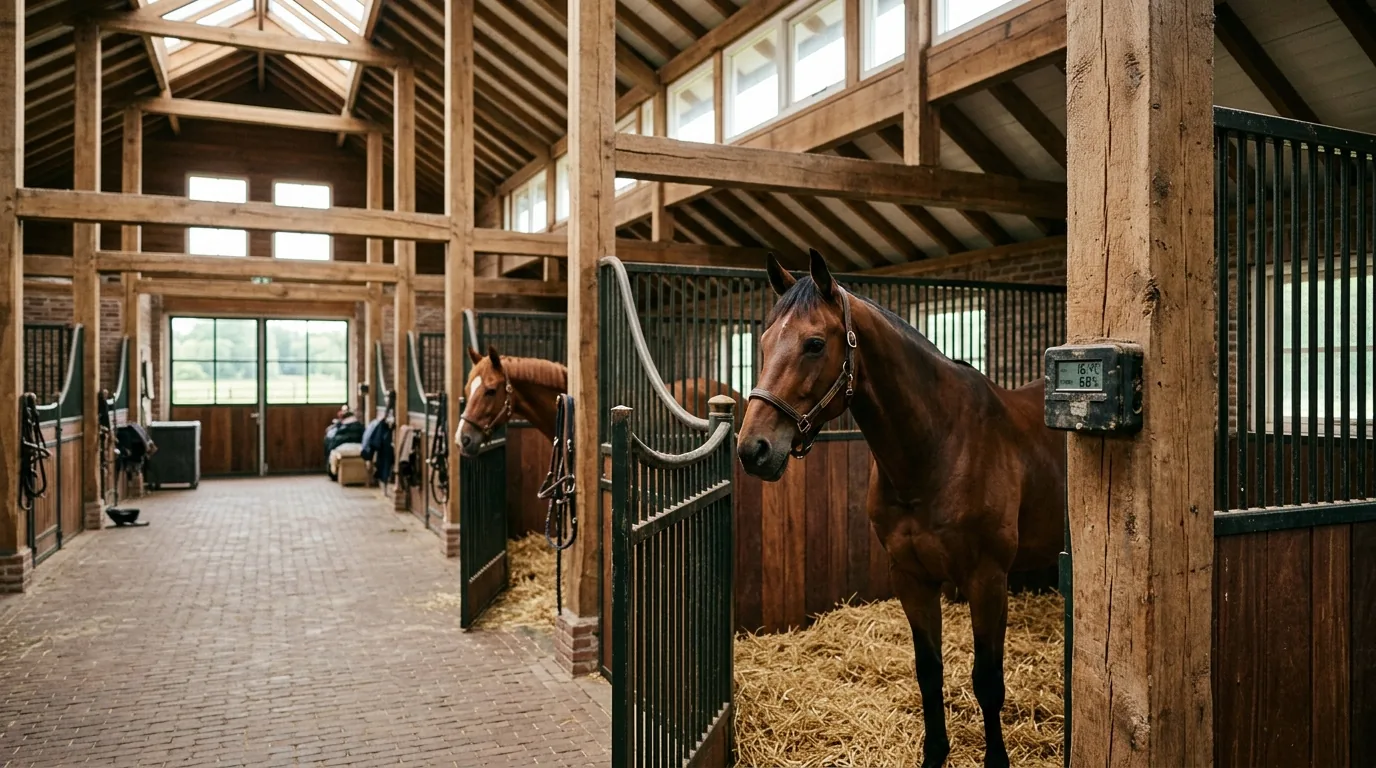
Management
Stable ventilation: how to measure air quality
Poor stable air is one of the most underestimated risks to your horse's health. Ammonia, dust, and excessive humidity damage the airways — often before you can smell or notice anything yourself. By actively measuring air quality, you know exactly when to intervene, rather than waiting until your horse coughs or performs poorly. In this article you'll learn which values to know, which measurement methods are available, and how to structurally improve ventilation in your stable.
Read more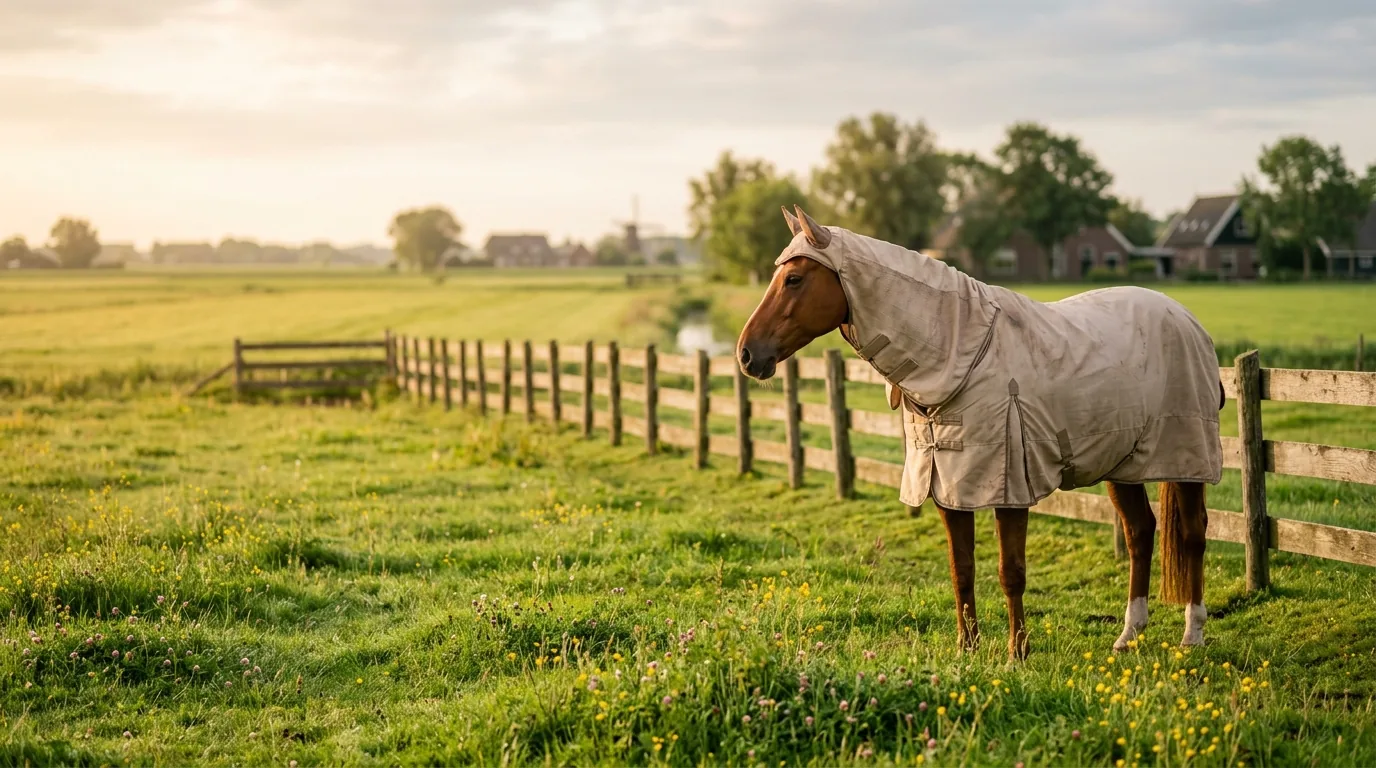
Conditions
Sweet itch: how to draw up a treatment plan
Sweet itch is one of the most common skin conditions in horses in the Netherlands. It is caused by an allergic reaction to the salivary proteins of the Culicoides midge, also known as the biting midge or no-see-um. Every year, thousands of horse owners deal with a horse that rubs itself raw, develops bald patches, and experiences visible discomfort from May through October. A good treatment plan combines prevention, environmental management, and targeted treatment — and makes the difference between a horse that gets through summer comfortably and one that suffers for months.
Read more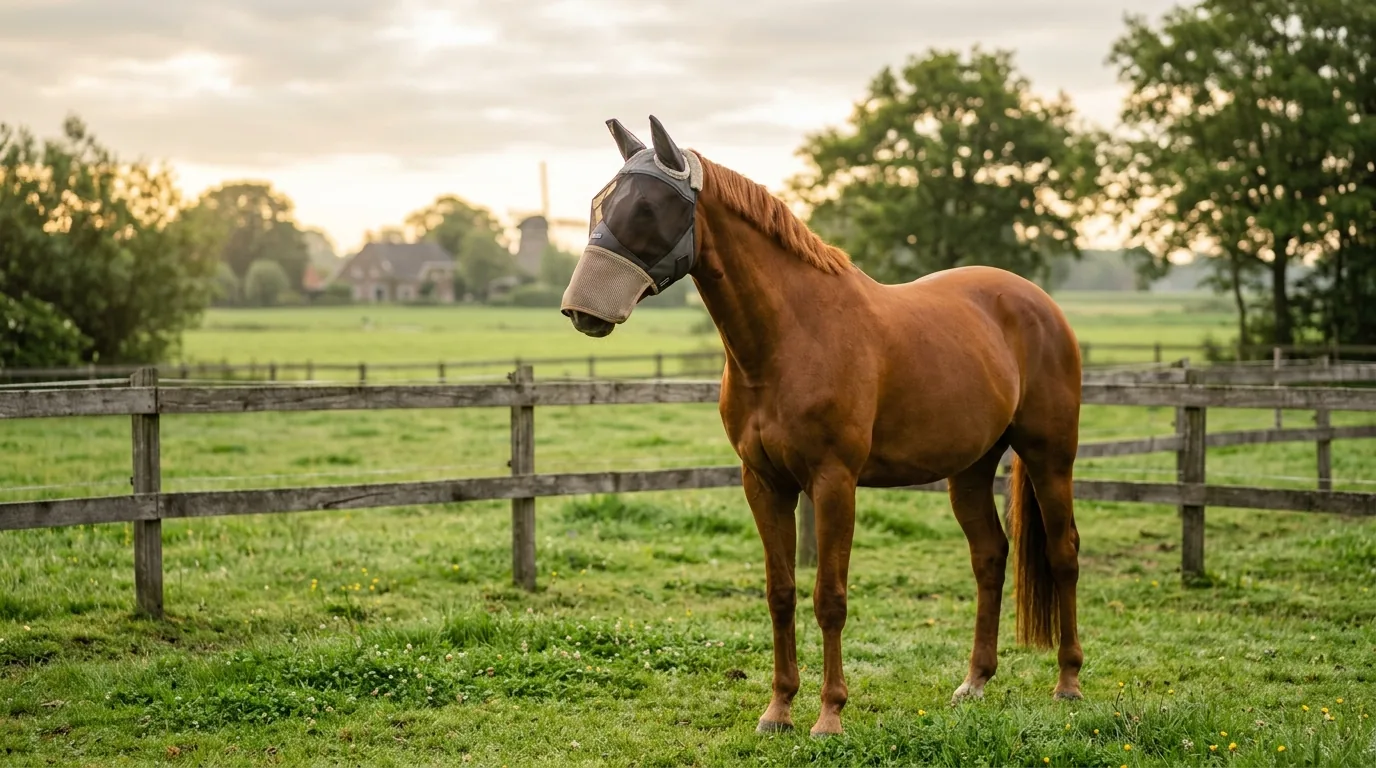
Conditions
Head shaking due to trigeminal irritation in horses
Does your horse suddenly and violently toss its head up or to the side while riding, or even in the field? Trigeminal irritation — also known as headshaking syndrome — could be the cause. This condition affects an estimated 1 in 50 horses and is a significant challenge for both owner and horse. The trigeminal nerve is the fifth cranial nerve and controls sensation in the face, nose, and mouth. When this nerve becomes overstimulated, the horse experiences burning or tingling pain signals that it tries to relieve by shaking. In this article, you will learn how to recognise the condition, what the possible causes are, and what steps you can take.
Read more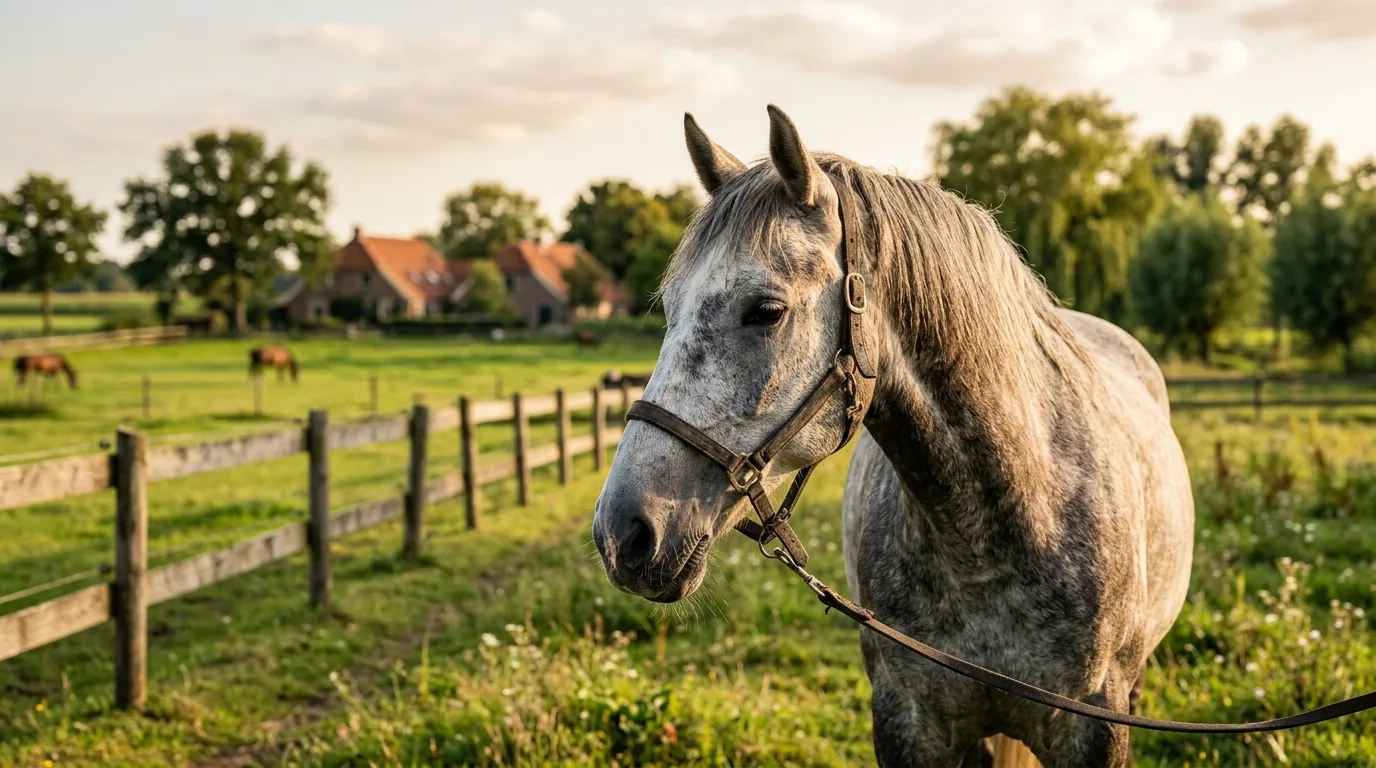
Conditions
Atherosclerosis in older horses: what you need to know
Horses live on average 25 to 30 years, and just like in humans, their blood vessels age along with them. Atherosclerosis — formally known as atherosclerosis or arteriosclerosis — is increasingly common in horses over 15 years of age and can have serious consequences for the heart and the blood supply to organs and limbs. Recognising the early signs in time can prevent a great deal of suffering. In this article you will learn exactly what atherosclerosis in horses involves, what symptoms to expect and how to manage its progression as effectively as possible.
Read more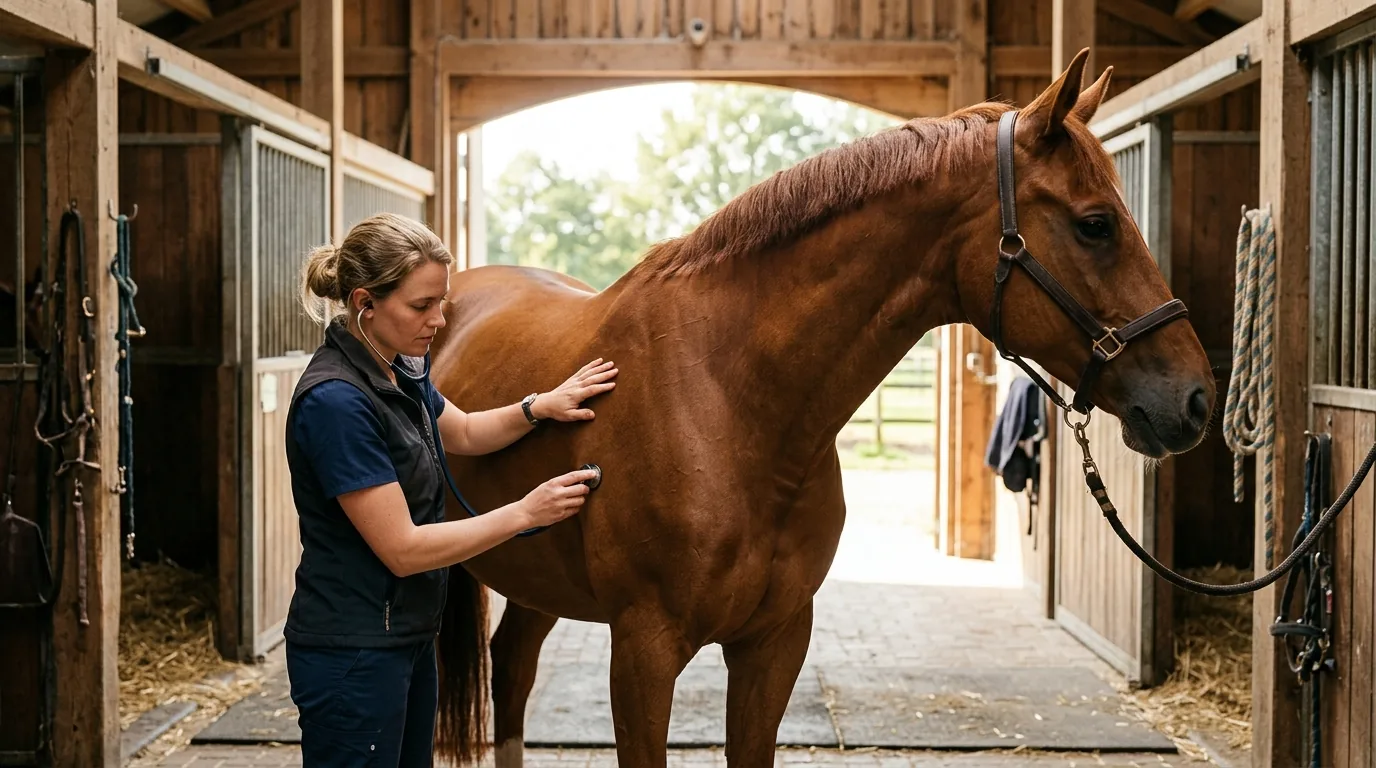
Conditions
Heart murmurs in horses: when should you act?
During a routine check-up, the vet hears a murmuring sound at your horse's heart. Immediate panic? Not always necessary. Heart murmurs are relatively common in horses and are far from always a sign of serious illness. Nevertheless, it is important to understand the difference between an innocent functional murmur and one that points to an underlying heart problem. In this article you can read how heart murmurs develop, what grades exist, when you should be concerned, and what you can do in practice as an owner or rider.
Read more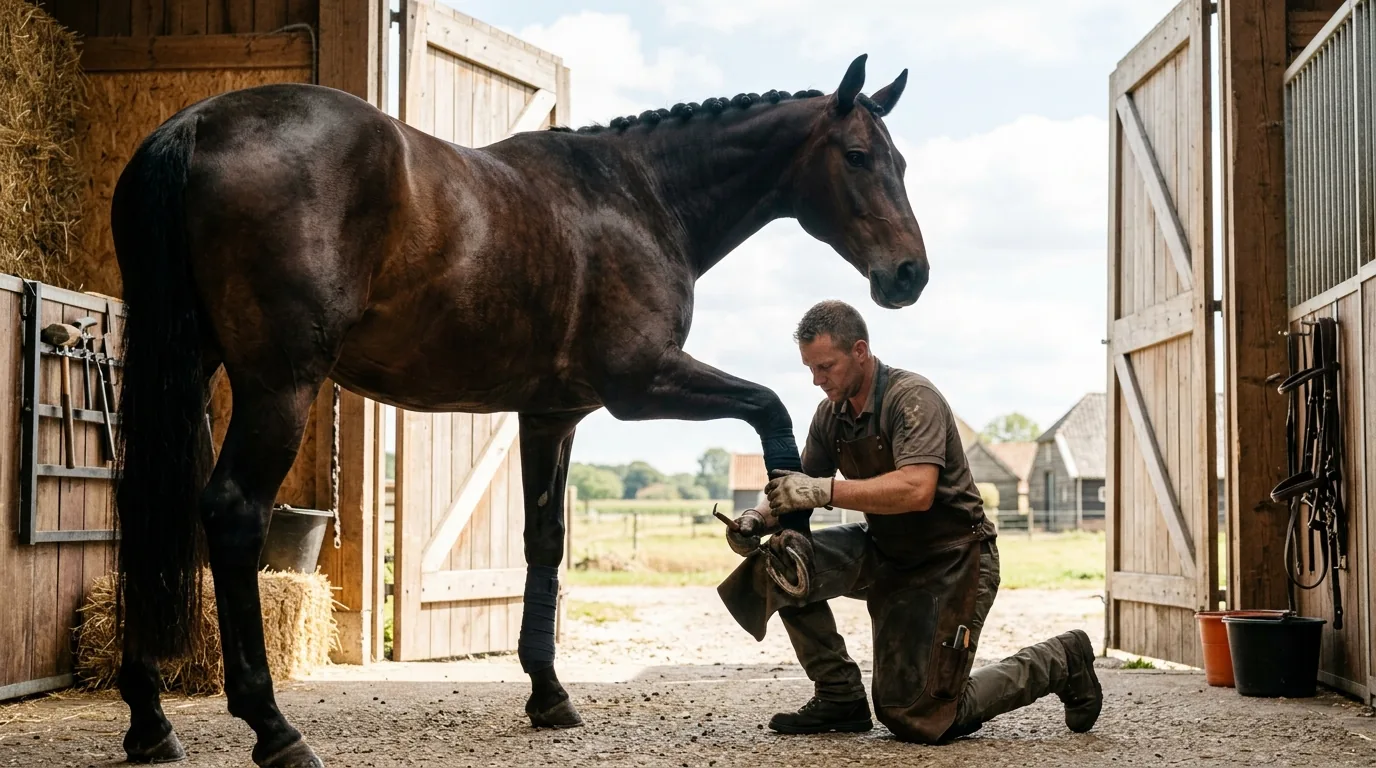
Conditions
Shivers in horses: cause, recognition and management
Shivers is a neuromuscular condition that hinders your horse when lifting its hind legs. It is noticeable by a characteristic trembling or jerking of the leg during lifting, for example when you want to pick out the hooves or when the farrier is working. The condition is more common in large, heavily built breeds such as Warmbloods and Friesians, but can affect any horse. Shivers is chronic and progressive, but with the right approach you can significantly improve your horse's quality of life and slow the progression.
Read more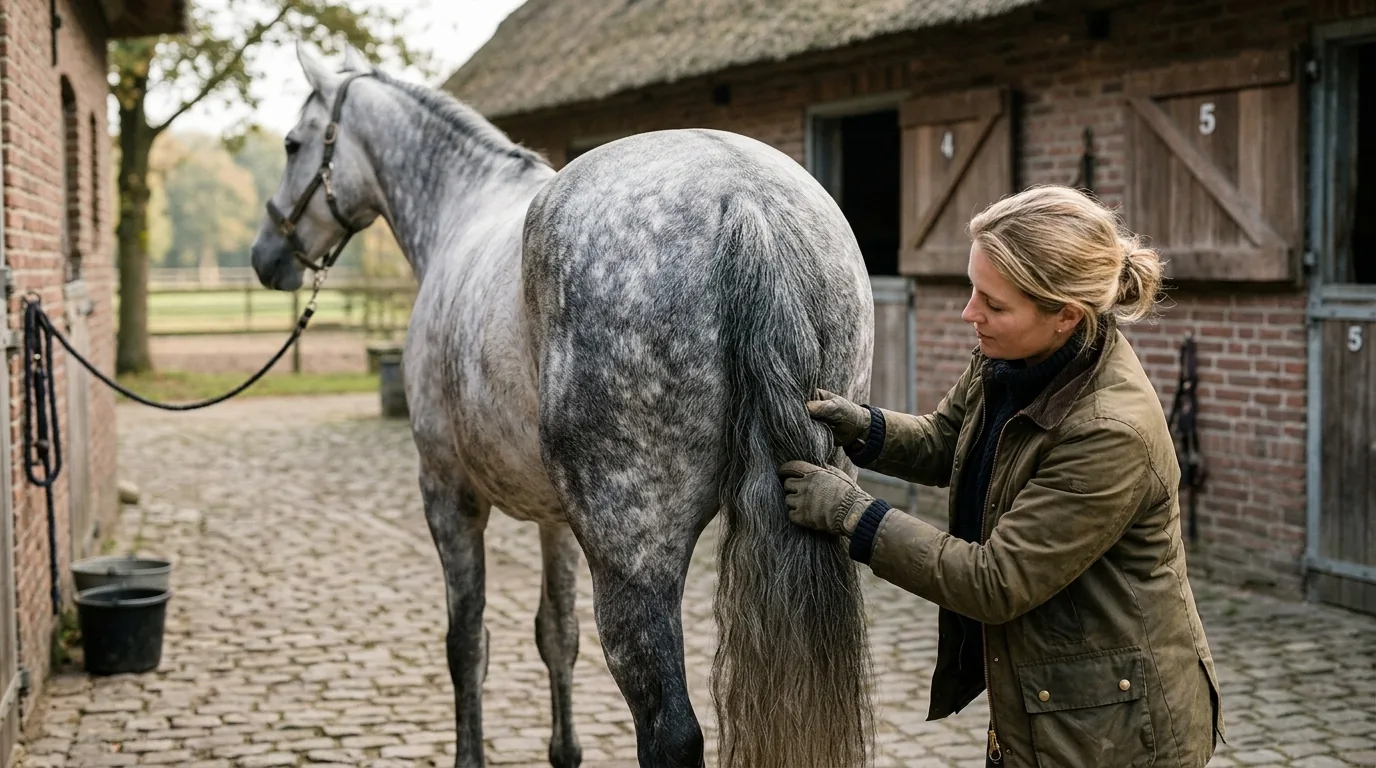
Conditions
Melanoma in grey horses: what you need to know
Nearly 80% of grey horses older than 15 years have one or more melanomas. That sounds alarming, but most cases cause no problems for many years. Still, it is important to know what to look for, when a melanoma becomes dangerous, and how to keep track of the situation properly. In this article you will find everything you need to know as the owner of a grey horse about the development, risks, and management of melanomas.
Read more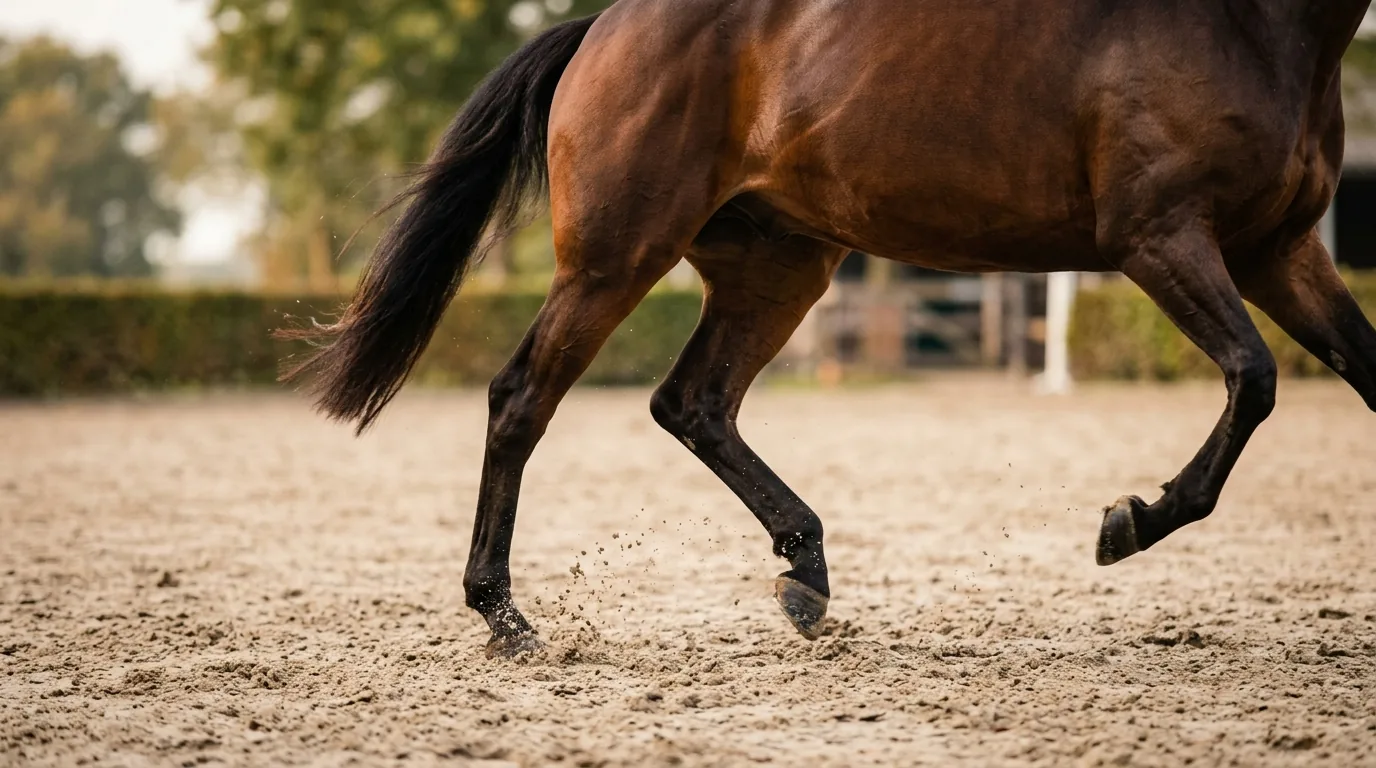
Conditions
Stringhalt in horses: causes and approach
Stringhalt is a movement disorder in which a horse excessively lifts one or both hind legs during walking. It looks striking and can cause considerable concern for horse owners. In this article you will learn exactly what stringhalt is, how to recognise it, what the possible causes are, and which treatment options exist. This way you know what to expect if your vet diagnoses it in your horse.
Read more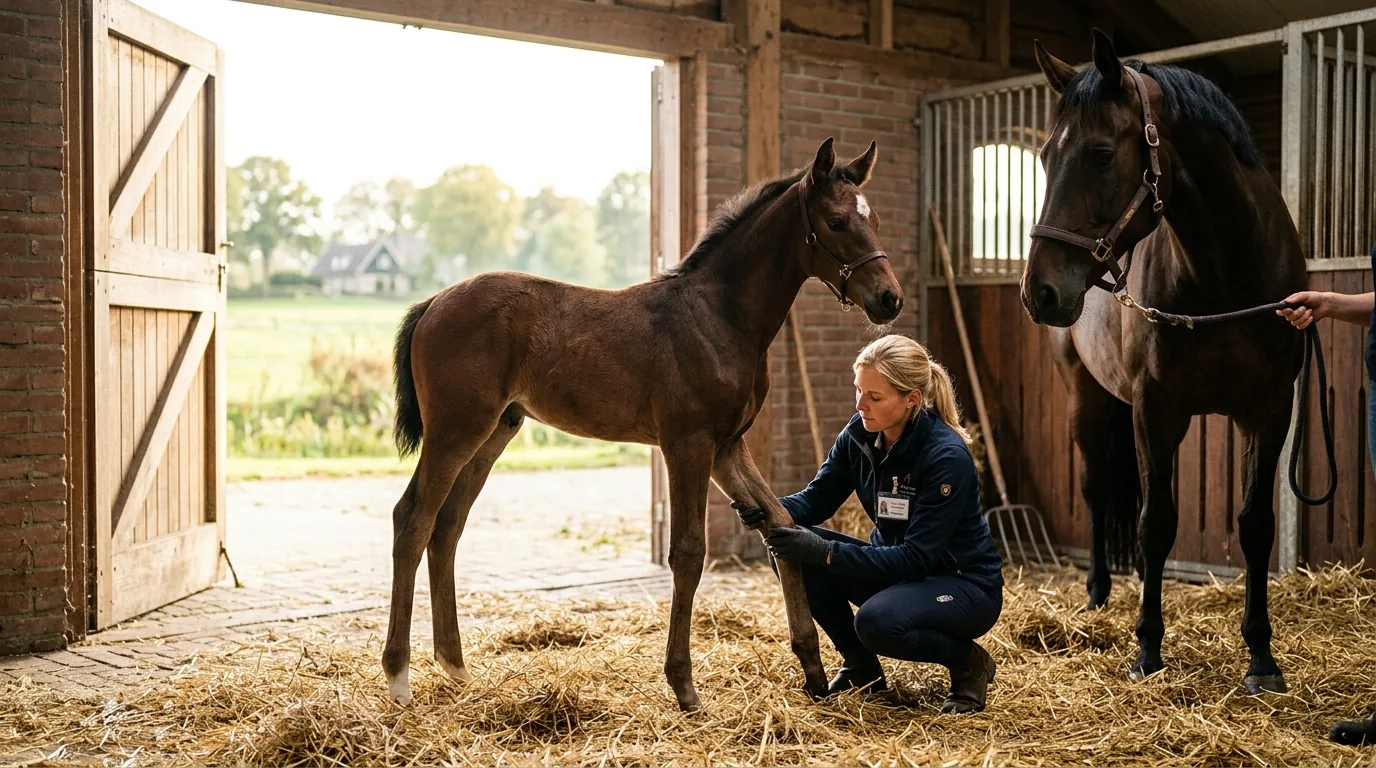
Conditions
Osteochondrosis in young horses: what you need to know
Osteochondrosis (OC) is one of the most common joint conditions in young horses and is caused by a disruption in bone formation during the growth period. The cartilage does not mature properly, which can lead to loose fragments or defects within the joint. Early detection makes a significant difference: horses that are treated in time have a considerably better chance of a full sporting career. In this article you will learn exactly what OC is, which factors play a role, how to recognise early signs, and what treatment options are available.
Read more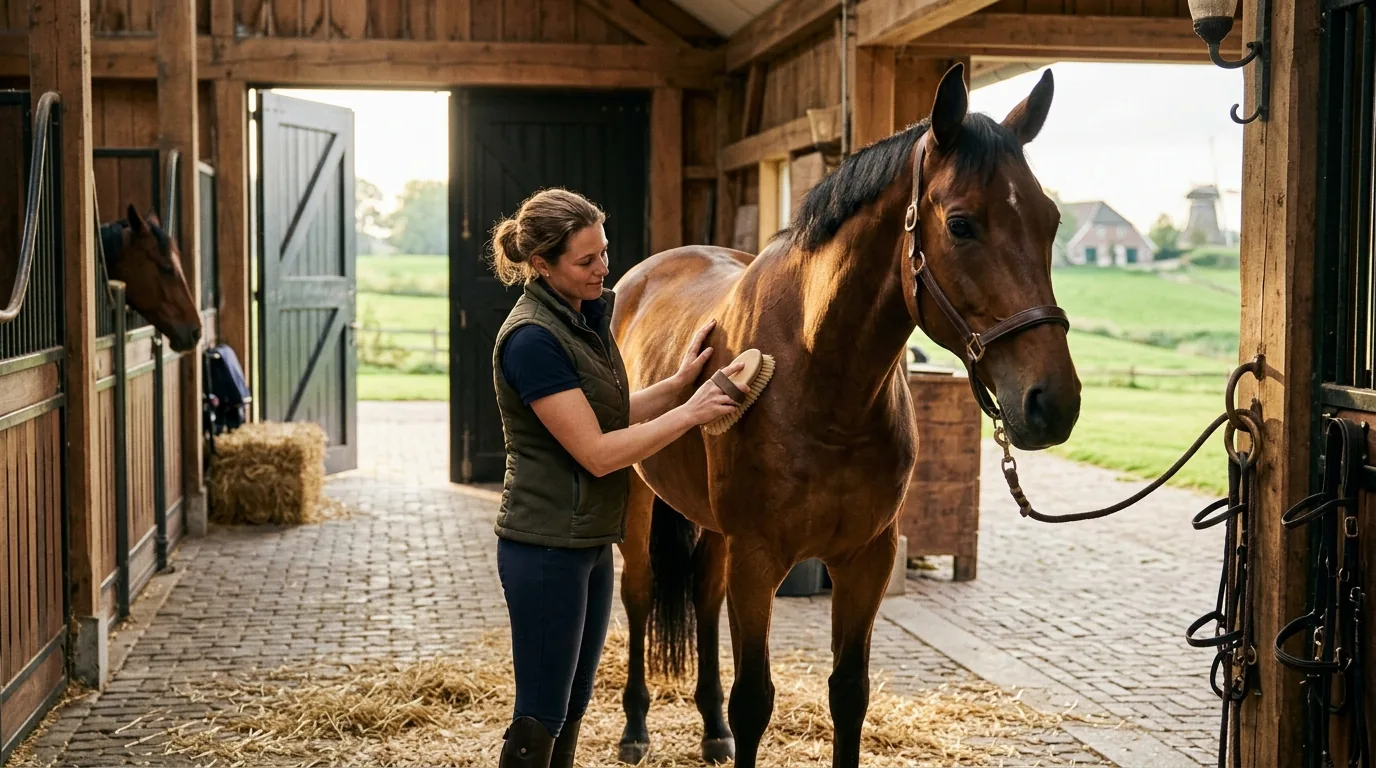
Care
Grooming your horse: how to build the right routine
Grooming is about more than making your horse look tidy. A thorough grooming session stimulates blood circulation, strengthens the bond between you and your horse, and gives you the opportunity to spot minor injuries or skin issues early. With the right order and tools, you work efficiently and miss nothing. In this article you'll find a step-by-step guide to setting up a solid grooming routine, which brushes you really need, and what to watch for across the different seasons.
Read more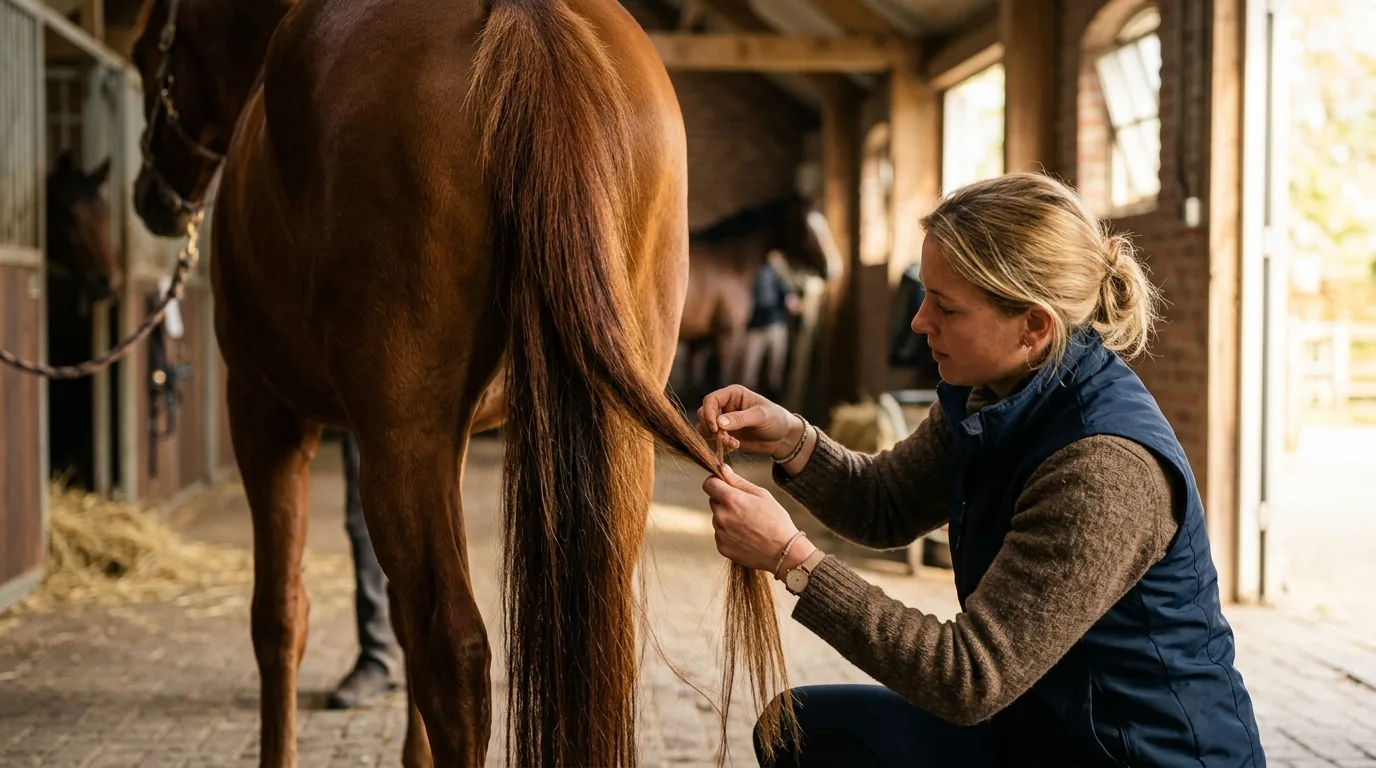
Care
Updating the tail and tail hair: how to do it right
A full, glossy tail is not only beautiful to look at — it also protects your horse against insects and weather conditions. Yet tail care and trimming the tail hair are topics many riders struggle with. How often should you comb the tail? When do you trim the tail hair? And how do you prevent hair breakage? In this article you will find practical answers, based on what works daily in Dutch stables.
Read more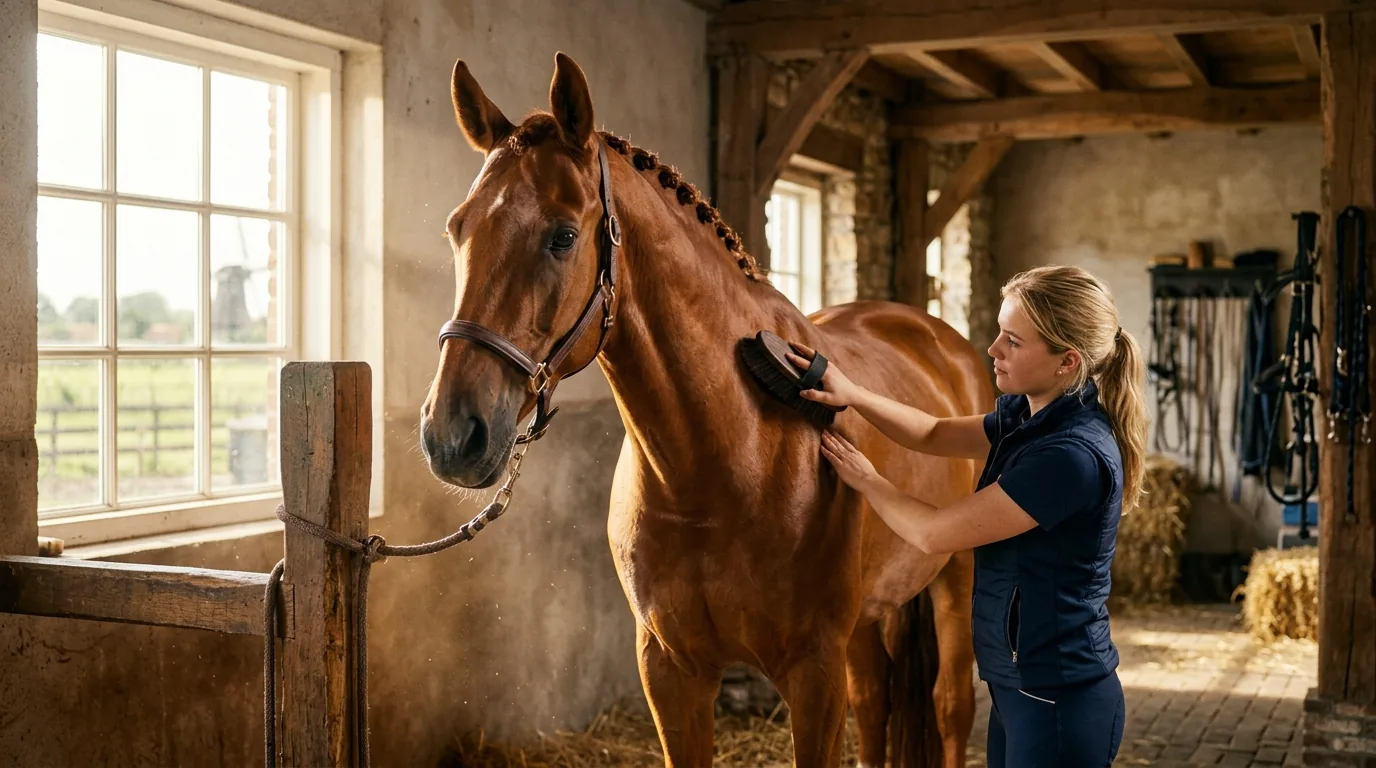
Care
A shiny coat: how to tackle it practically
A beautiful, shiny coat is not just a matter of aesthetics — it is one of the best indicators of your horse's overall health. Nutrition, grooming and stress management all play a role. Whether your horse has a dry summer coat or a thick winter coat, there are concrete steps you can take to improve the condition of the skin and hair. In this article you will find practical tips you can apply straight away, from nutritional supplements to the right brushing routine.
Read more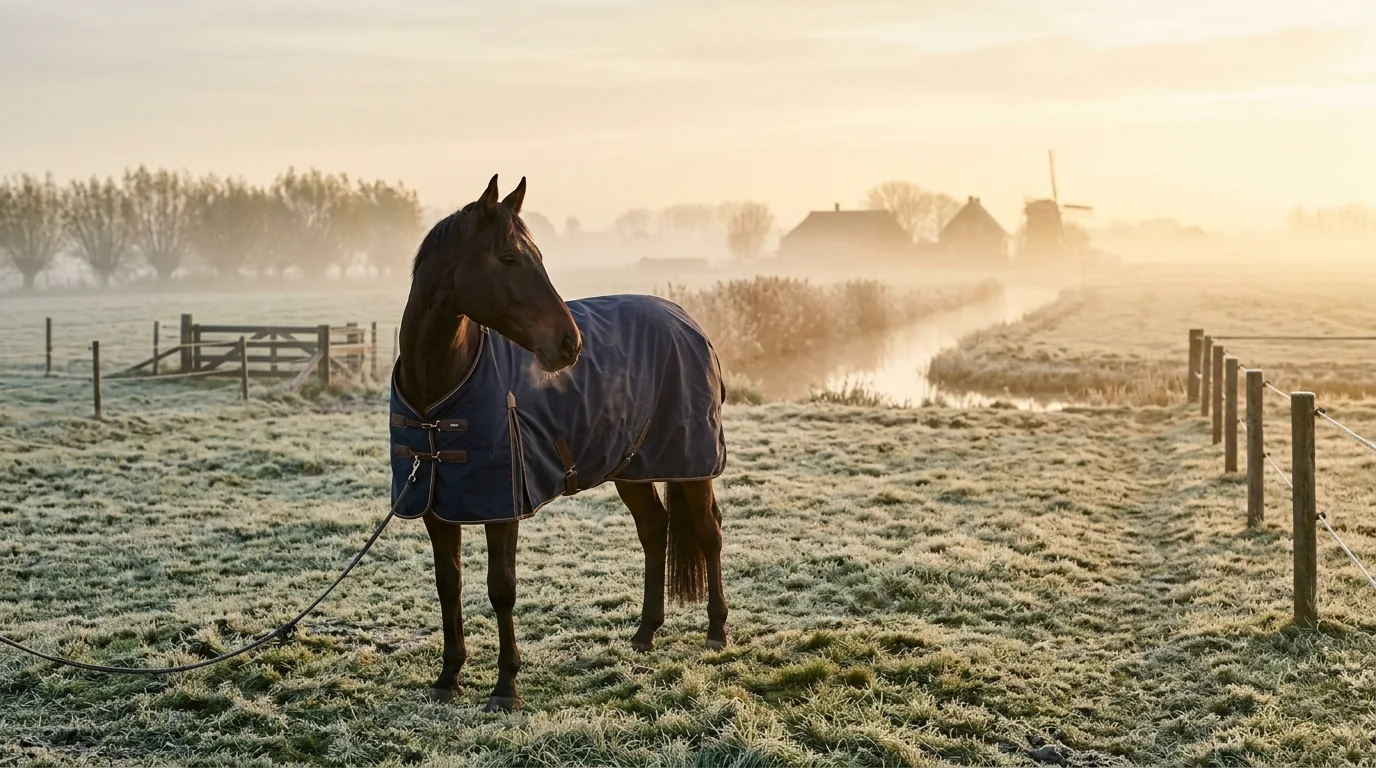
Care
Choosing a horse blanket based on temperature
Throwing a blanket on your horse sounds simple, but the difference between a light fleece and a heavy stable blanket of 400 grams matters more than you might think. Too warm and you risk overheating and skin problems; too light and your horse burns unnecessary energy keeping itself warm. In this article you'll read exactly which fill weight suits which temperature, what else to consider when choosing, and how to use EquiSight to track blanket use per season.
Read more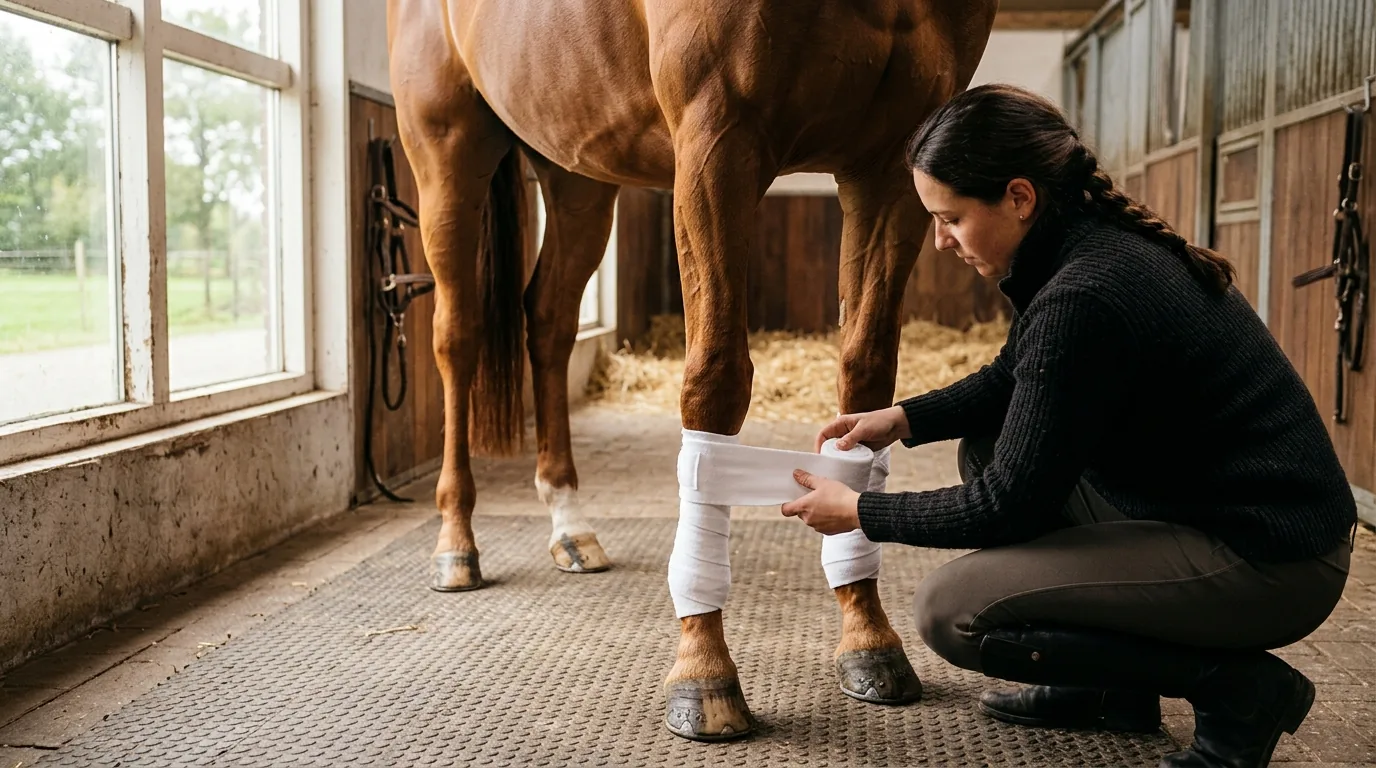
Care
Bandaging legs: explained step by step
Correct bandaging protects your horse's legs during training, transport and recovery. However, a bandage applied incorrectly does more harm than good: too tight can cause tendon damage, too loose provides no support and may come undone. In this article you'll find exactly how to proceed, what materials you need and which signals to watch for. Whether you're bandaging as a precaution or on your vet's advice — with the right technique you'll get it right every time.
Read more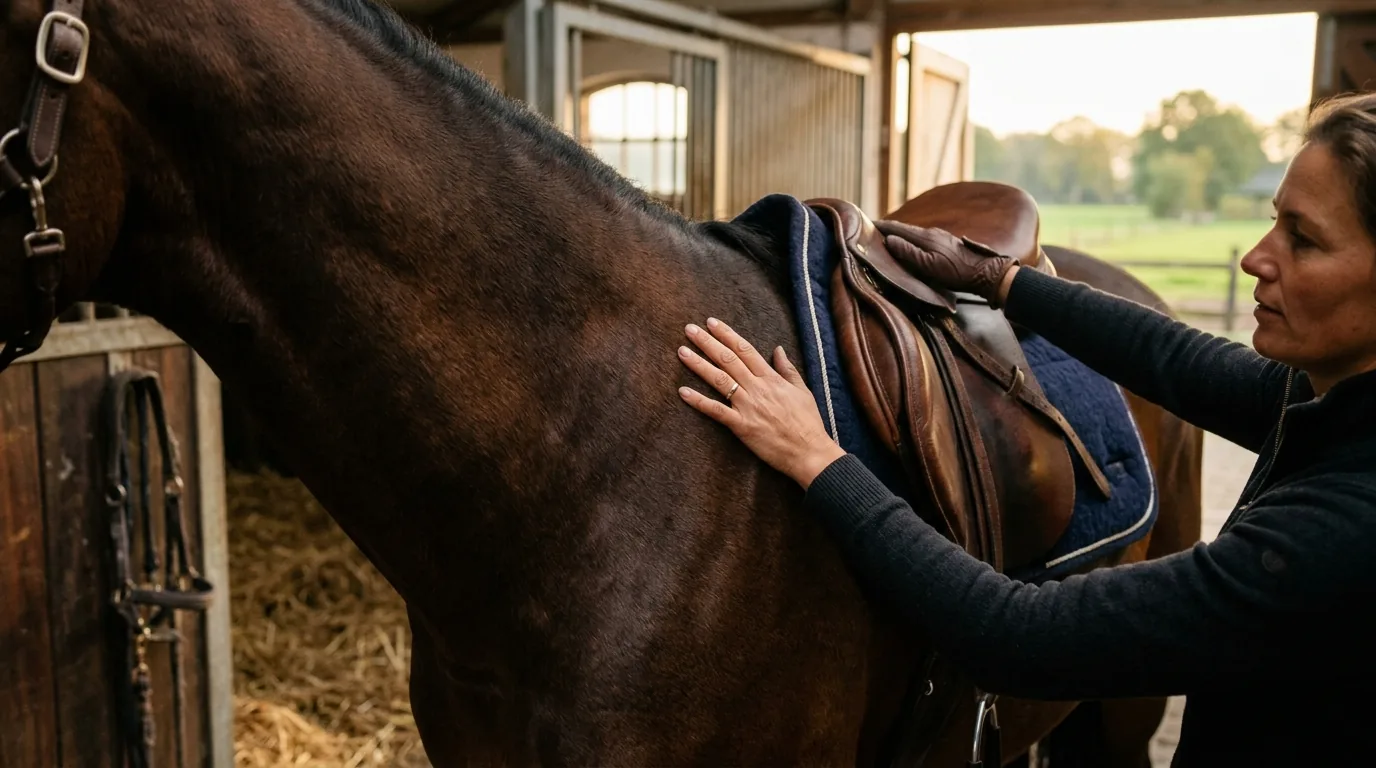
Care
Hair loss on the saddle area: these are the causes
Bald patches or thinning hair on the saddle area are a common signal that something is wrong. Sometimes it is a matter of a poorly fitting saddle, but the cause can also lie with pressure, friction, sweat or an underlying skin condition. In this article we outline the most common causes, so you can take targeted action and prevent further damage.
Read more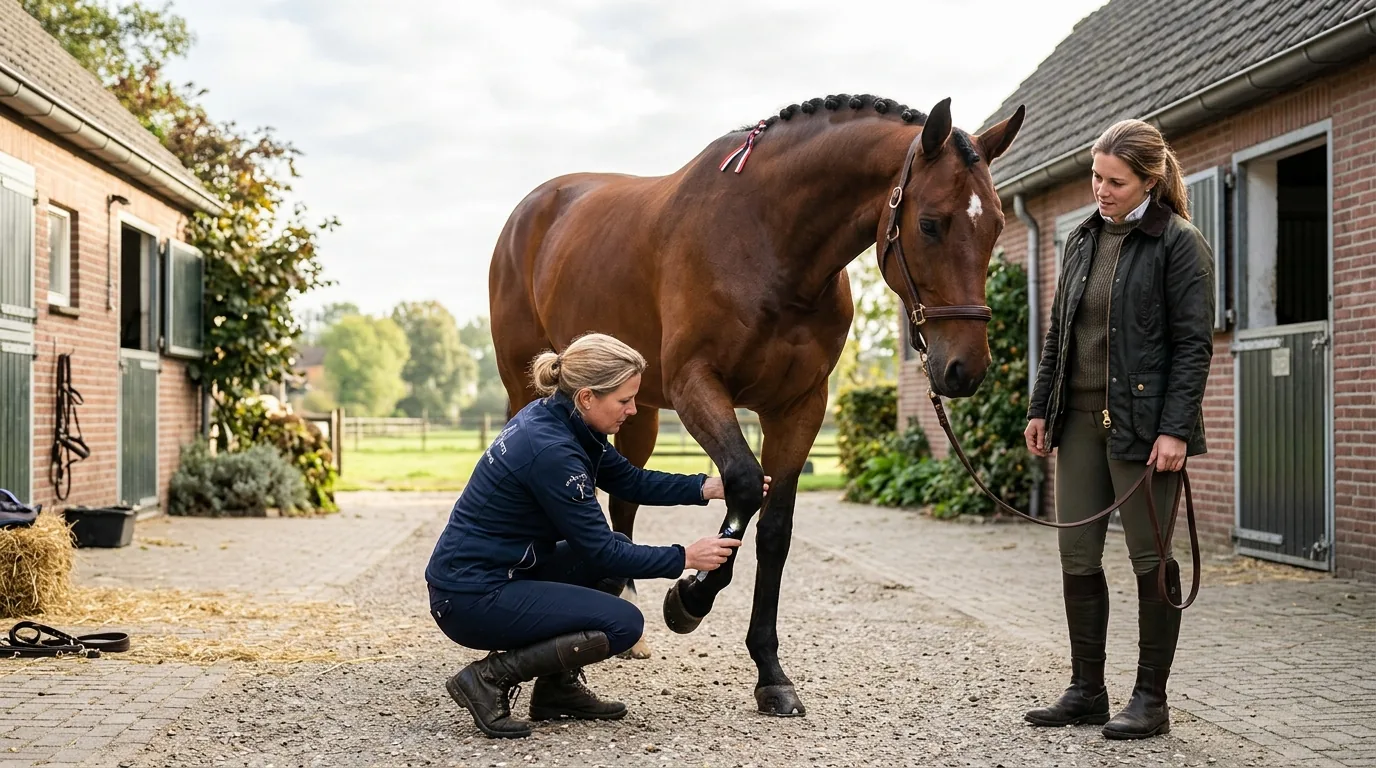
Sales
Pre-purchase examination for horses: complete checklist
Buying a horse is a big step — and a pre-purchase examination can save you thousands of euros in damage. Yet many buyers don't know exactly what happens during such an examination, which questions to ask, or how to interpret the results. This checklist guides you through every step: from the first viewing to the moment you sign on the dotted line. That way you make a well-informed decision and won't be caught off guard later.
Read more
Costs
Comparing Horse Insurance in 2026
Insuring a horse can easily cost several hundred euros per year, but without adequate cover, a serious injury or death could leave you facing a bill of tens of thousands of euros. In 2026, there are more providers and policy types than ever, making comparison both easier and more complex at the same time. In this article, we outline the most important types of insurance, the most common pitfalls, and the criteria for a fair comparison.
Read more
Costs
Horse expenses tax-deductible as a freelancer? Here's what you need to know
As a self-employed professional, you may wonder whether you can deduct horse-related costs from your taxes. The short answer: sometimes yes, but the Tax Authority sets strict requirements. Whether you can deduct stable costs, riding lessons or competition expenses depends entirely on a demonstrable business link to your company. In this article, you'll learn when it is possible, what the pitfalls are, and how to set up your administration so that you're on solid ground during an audit.
Read more
Costs
Leasing or buying a horse: what suits you?
Owning a horse is a dream for many riders, but the choice between leasing and buying has significant financial and practical consequences. With leasing, you pay a fixed monthly amount to use a horse without becoming its owner. Buying gives you full control, but also full responsibility. In this article, we honestly weigh up the pros and cons so you can make a well-considered decision that fits your situation, budget, and ambitions.
Read more
Management
What to do when your horse passes away
Losing your horse is a deeply impactful moment. At the same time, you need to make a number of practical decisions within a short timeframe: from the removal of the body to handling paperwork and insurance. This article guides you through everything step by step, so you know what needs to be arranged and when — while still giving you space to grieve.
Read more
Dressage
Contact in dressage: how to learn it step by step
Contact is one of the most discussed concepts in dressage, but also one of the hardest to truly understand. It is not about the weight in your hand, but about a living, honest connection between you and your horse. A horse that moves with correct contact accepts the bit, carries its own weight, and responds in a relaxed way to your aids. In this article we explain exactly what contact means, how to develop it, and which mistakes are best avoided.
Read more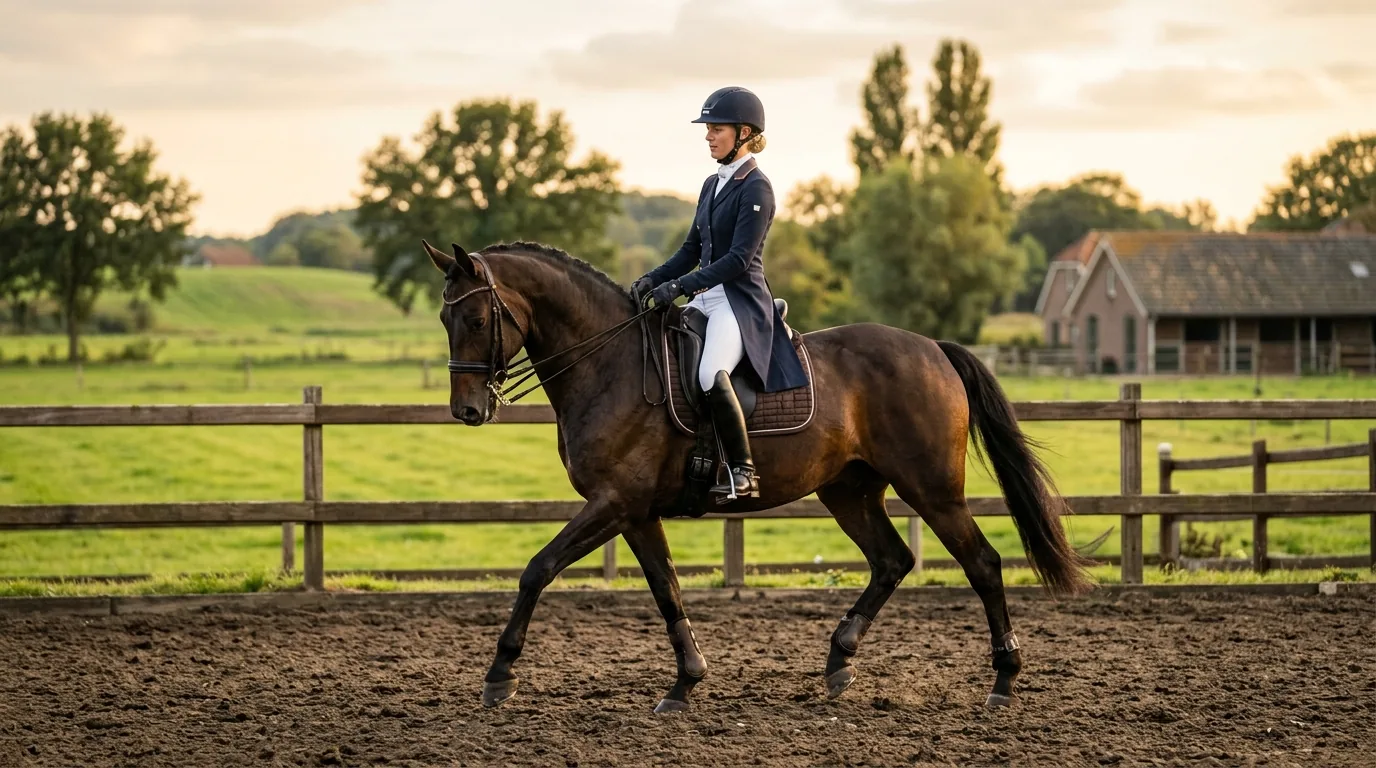
Dressage
Flexion and bend: what is the difference?
Flexion and bend are two terms that are often used interchangeably in dressage, yet they are clearly distinct from one another. Flexion refers to the position of the neck and head, while bend refers to the entire spine of the horse. Understanding this distinction allows you to ride more effectively and prevents one-sidedness in training. In this article we explain exactly what both terms mean, how to recognise and practise them, and why together they form the foundation of throughness and straightness.
Read more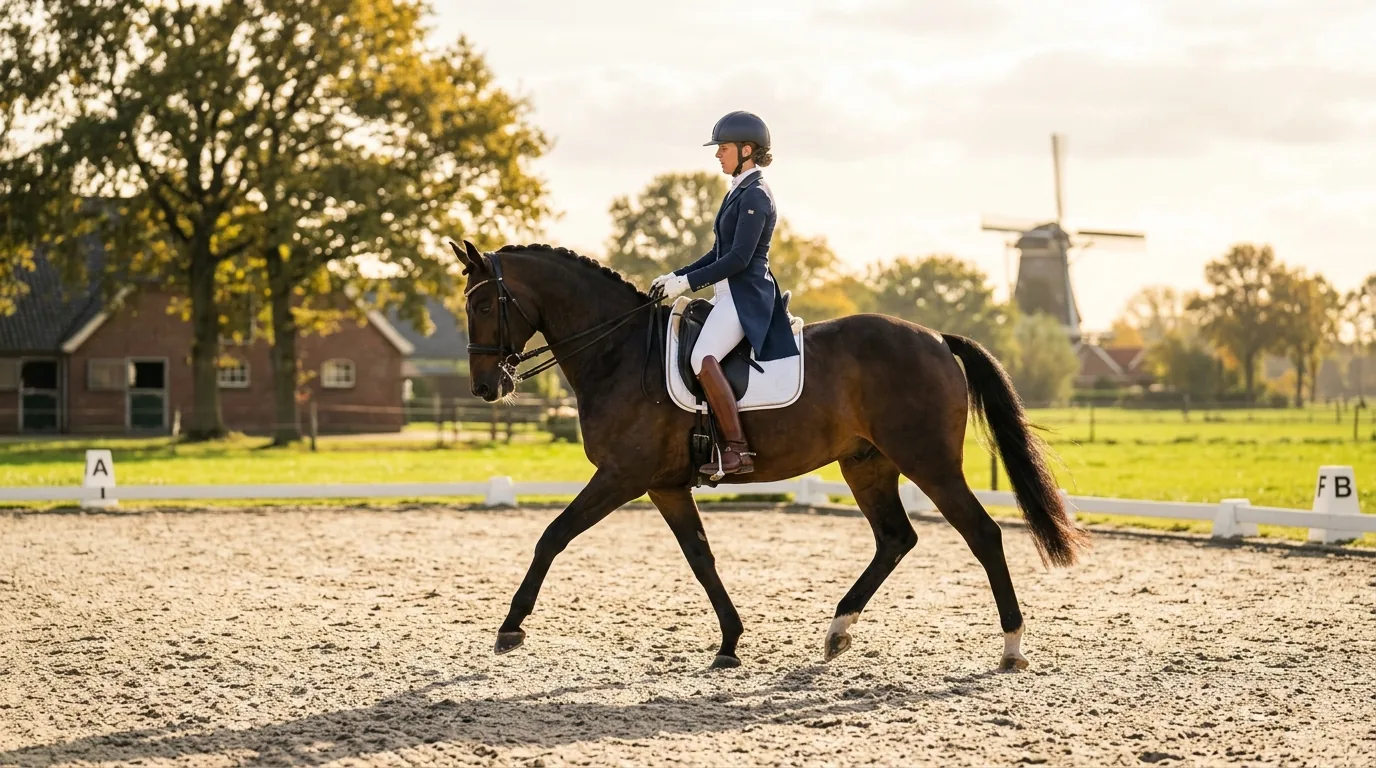
Dressage
Training the back muscles of a dressage horse
A strong, supple back is the foundation of every dressage horse. Without well-developed back muscles, your horse cannot transmit the energy from the hindquarters to the forehand, the stride remains shallow and the risk of injury increases. In this article you will learn how to build your horse's back musculature step by step, which exercises truly work and how to track progress so you always know you are on the right path.
Read more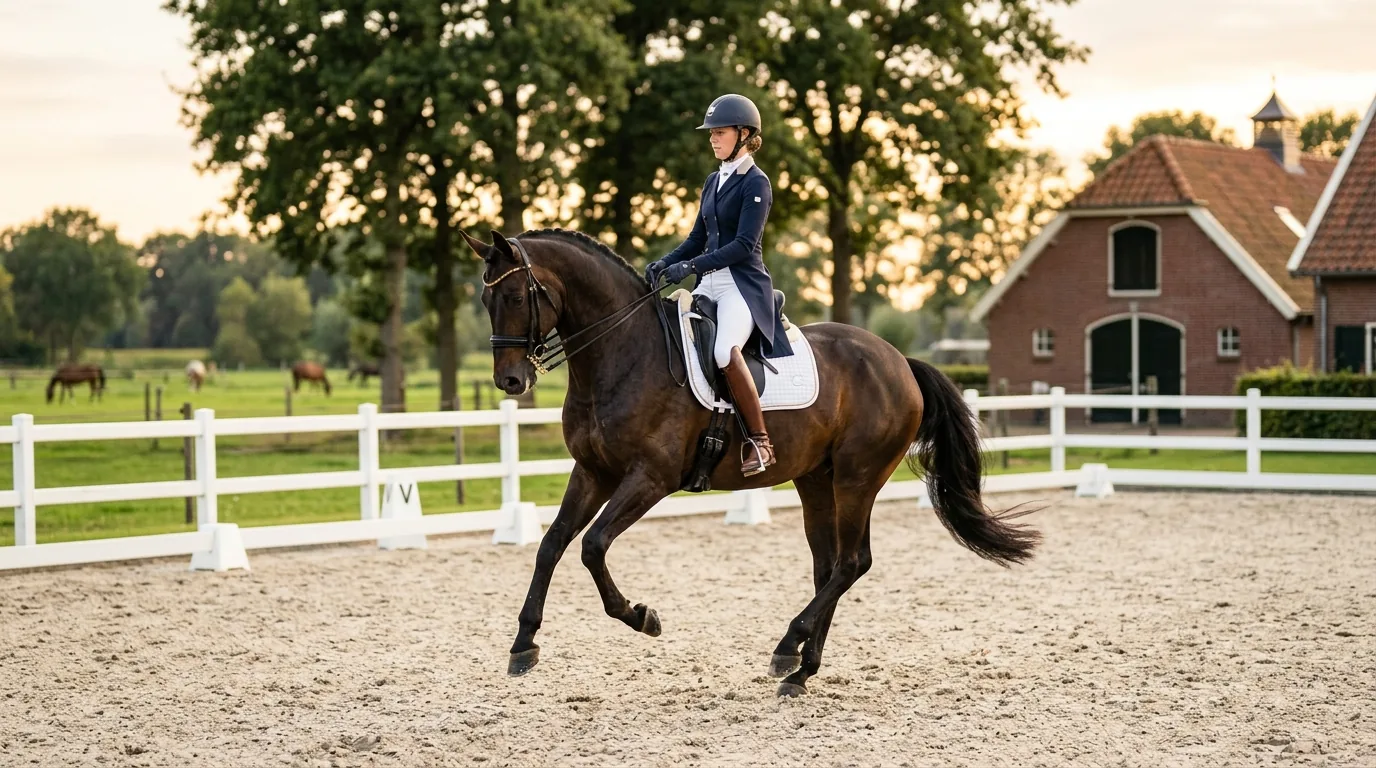
Dressage
Teaching flying changes: step by step
A flying change is one of the most satisfying movements in dressage — when it clicks, it feels effortless. But for many horses and riders, the road to getting there is a puzzle of balance, timing and trust. In this article you'll learn how to systematically prepare a horse for the flying change, which prerequisites truly cannot be skipped, and how to avoid the most common mistakes. Whether you're working towards Novice-level dressage or already competing at Elementary level: with the right progressive build-up, you'll get there.
Read more
Competitions
Building eventing fitness in 12 weeks
Eventing demands a horse that performs dressage with energy, gallops around a cross-country course without fading, and then still delivers a clear showjumping round. That three-dimensional fitness isn't built in two weeks. With a structured 12-week plan you lay the foundation for a horse that is truly in peak condition on competition day. In this article you'll find a concrete schedule, guidelines for interval training, and tips to prevent overtraining.
Read more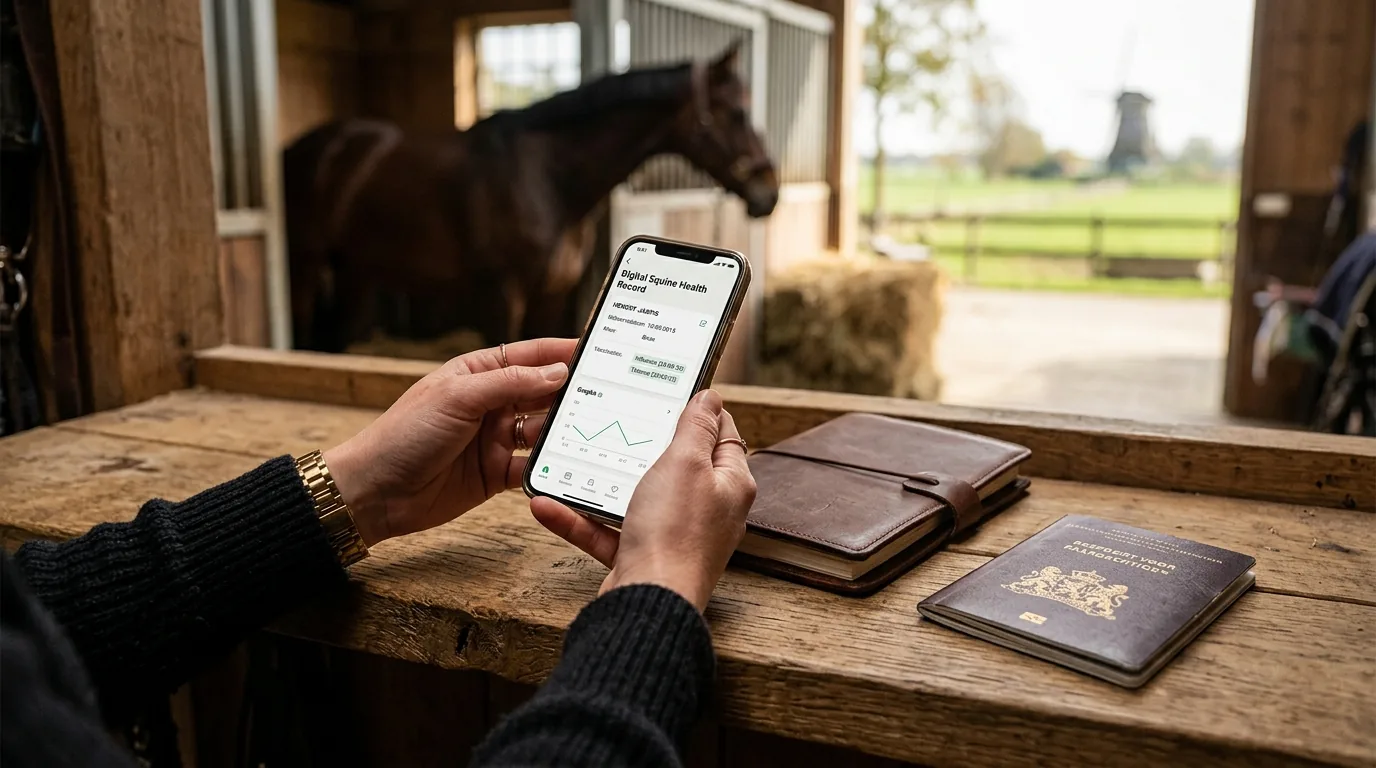
Apps
Horse Dossier: Digital or Paper?
Keeping a horse dossier sounds simple, but anyone who has ever frantically searched for a vaccination certificate right before a competition knows how quickly things can go wrong. More and more horse owners are switching from folders and notebooks to a digital solution. But what does that actually get you in practice, and is making the switch worth it for everyone? In this article we honestly weigh the pros and cons side by side, so you can make a choice that suits your situation.
Read more
Apps
Step counter for your horse: what does it deliver?
A step counter for horses may sound like a gadget, but in practice it gives you valuable insights into the condition and wellbeing of your horse. How much does your horse actually move in a day? Does a horse in a one-hectare pasture get enough steps, or is it less than you'd expect? With a modern fitness tracker on the halter or ankles, you can see at a glance how active your horse has been, how peacefully it sleeps, and whether there are any deviations in its movement pattern. That's not a luxury — picking up on signals early can prevent lameness, colic, or stress.
Read more
Apps
Heart rate monitors for horses: how to use training zones
A heart rate monitor gives you objective data on how hard your horse is really working — independent of how it feels from the saddle. By training in targeted heart rate zones, you build fitness more efficiently, prevent overloading and recover faster from intensive efforts. In this article you will find out which zones are relevant for horses, how to determine them and how to use the data day-to-day to train smarter.
Read more
Apps
GPS tracking for pasture horses: how safe is it?
More and more horse owners are clipping a GPS tracker onto their pasture horse's halter. Understandable: you want to know whether your horse is still grazing quietly or has made a run for it. But how reliable are these trackers, what are the pitfalls, and does such a device actually fit into responsible horse management? In this article we set out the facts so you can make a well-informed choice.
Read more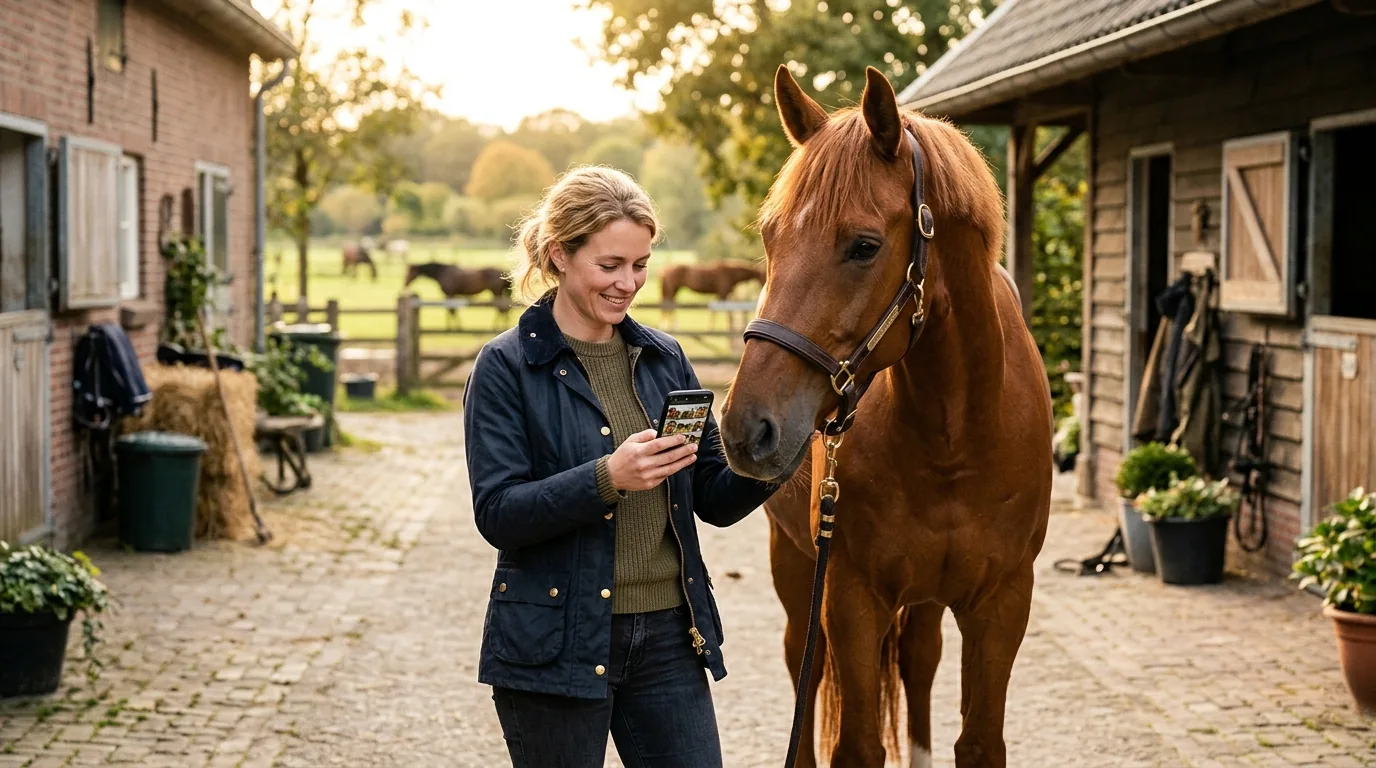
Apps
Smartly managing your horse photo archive digitally
Taking photos of your horse is easy, but after a year you end up with hundreds of loose files scattered across your phone, laptop and WhatsApp. A structured digital archive saves you time and immediately gives you a complete picture of your horse's development. In this article you'll learn how to tackle this — from folder structure to using your horse profile in EquiSight.
Read more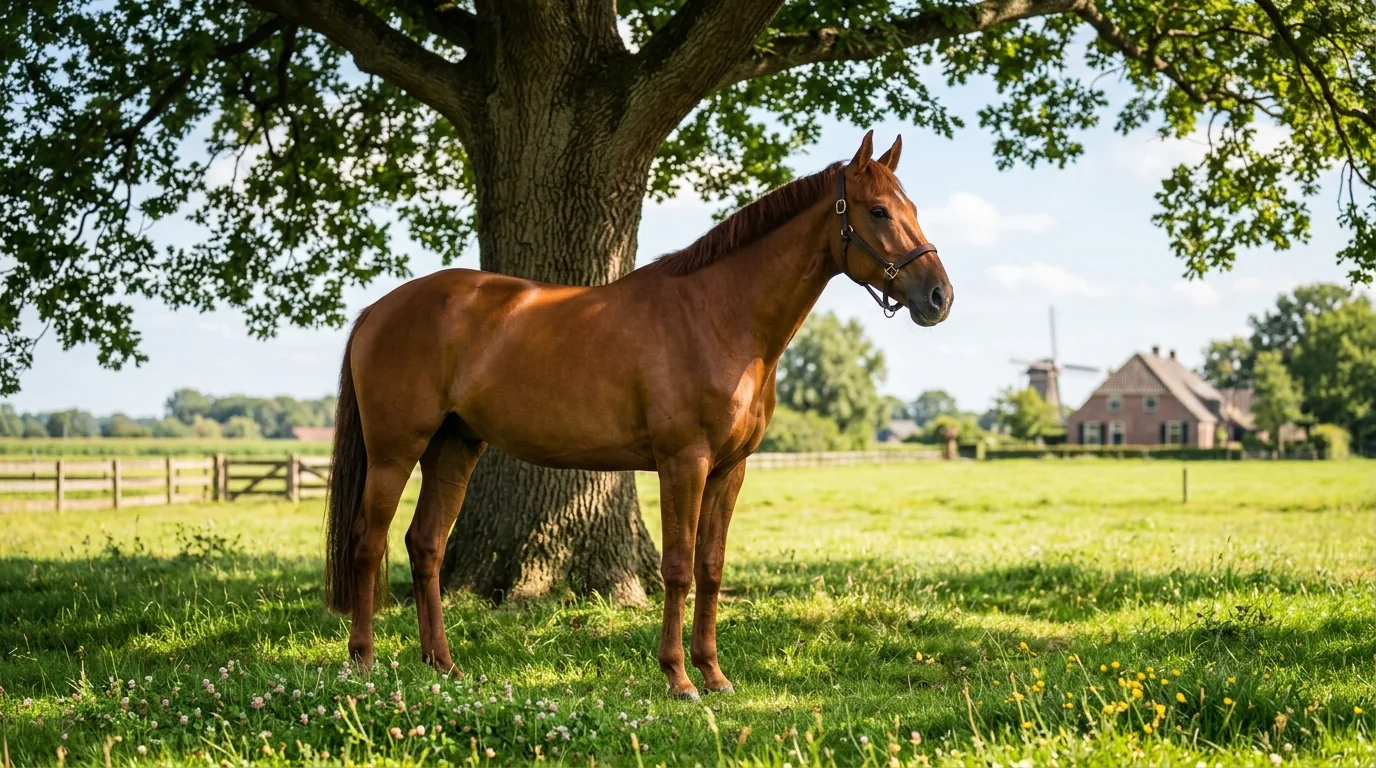
Season
Your horse in warm weather: keeping him fit
As temperatures rise, caring for your horse changes significantly. Overheating, dehydration, and laminitis are lurking dangers — but with a few targeted adjustments you can keep your horse healthy and comfortable during hot days. In this article you'll find the precautions that make the most difference, from water supply to training times.
Read more
Season
Frost periods in the stable: routines and risks
As soon as the temperature drops below zero, the daily stable routine changes significantly. Frozen water troughs, icy paths and a horse that moves less: frost brings specific risks that you as an owner need to be well prepared for. In this article you will find which points of attention are truly important, how to monitor your horse's health and how a smart routine helps you stay ahead of most problems.
Read more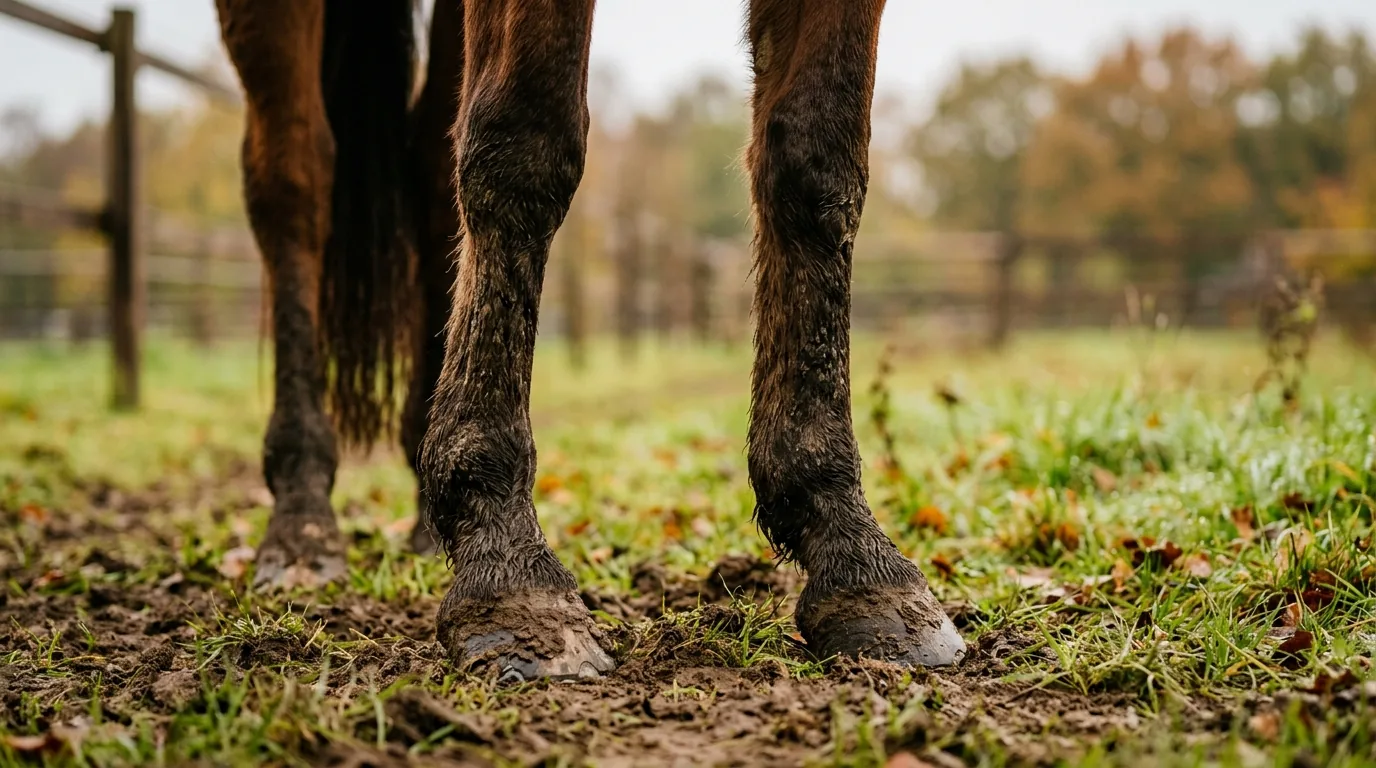
Season
Preventing mud fever in autumn
As soon as the autumn rains set in, pastures and paddocks quickly turn into muddy tracks. For many horses, this is the trigger for mud fever: a painful skin inflammation on the lower legs that can become stubborn if you don't catch it in time. With the right approach — from pasture management to post-ride care — you can keep your horse's legs dry and healthy. In this article, you'll find out exactly what mud fever is, how to recognise it, and what you can do to stay ahead of it this season.
Read more
Season
Horse afraid of thunder: how to help them
Dark skies, rolling rumbles and bright lightning flashes — for many horses, thunderstorms are a genuine source of stress. That's not an exaggeration: horses are flight animals with sharp hearing and an innate alertness to sudden stimuli. Fortunately, as an owner there is a lot you can do to guide your horse more calmly through a storm. In this article you'll learn which signs indicate fear, how to intervene immediately, and how to build your horse's resilience in the long term.
Read more
Season
Preventing autumn grass colic in your horse
In autumn, grass goes into overdrive. After the first overnight frost, fructan levels in the grass rise rapidly — sometimes reaching dangerous levels within 24 hours. For horses accustomed to dry roughage, this is a direct trigger for colic. With a few targeted measures, you can minimise the risk of autumn grass colic and keep your horse healthy heading into winter.
Read more
Season
First spring pasture: how to build up gradually
After a winter in the stable or on a bare winter field, it's tempting to let your horse graze freely the moment the grass turns green again. Yet that's a recipe for problems: fresh spring grass is packed with sugars and proteins that your horse's gut flora isn't yet adapted to. A gradual increase in grazing time protects the digestive system, reduces the risk of colic and laminitis, and gives your horse the chance to truly enjoy the grass without adverse effects. In this article you'll find a practical approach to building up grazing time step by step.
Read moreHealth
Why isn't your horse eating? Causes and what to do
A horse that leaves its feed untouched is always a warning sign. Horses are natural grazers that eat for around 16 to 18 hours a day — when they stop, something is almost always wrong. The causes range from dental problems and stomach issues to stress or an incorrect feeding strategy. In this article I outline the most common reasons and explain when you need to take immediate action. The sooner you know the cause, the better off your horse will be.
Read moreCare
To trim or not to trim: what suits your horse's mane?
Whether you clip your horse's mane short, thin it out, or leave it entirely alone depends on more than personal taste. Breed, discipline, and day-to-day care all play a role. A Friesian owner will make very different choices than someone with a show jumper or a pony at a petting zoo. In this article you'll find out when trimming makes sense, what the alternatives are, and how to choose a maintenance strategy that works in daily practice.
Read moreManagement
Transporting horses in the Netherlands: what you need to arrange
Whether you're heading to a competition, moving your horse to a new stable, or visiting a vet: horse transport regulations in the Netherlands are stricter than many owners realise. European regulations, national legislation, and practical requirements for both vehicle and animal are all layered on top of each other. Setting off unprepared risks a fine — or worse: a sick or stressed horse. In this article we lay out the most important rules clearly, so you can tackle your next journey well organised.
Read moreCare
How to clean a saddle: step by step
A well-maintained saddle can last for decades — a neglected one can crack and dry out within just a few seasons. Regular cleaning extends the life of the leather, prevents sweat-salt build-up, and keeps the saddle supple and safe for your horse. In this article you'll find exactly what you need, how to work through it step by step, and how often you should do it.
Read moreHealth
Lethargic horse: recognising symptoms and addressing causes
A horse that stands listlessly in the corner, barely responds to stimuli or is excessively drowsy is often referred to as a 'lethargic horse'. This can be a temporary occurrence after a busy day, but it can also indicate a serious underlying problem. In this article you will find out which symptoms are typical of a lethargic horse, what the most common causes are and when to call your vet immediately. This allows you to act quickly and decisively when your horse is not feeling well.
Read moreNutrition
How to calculate the right amount of concentrate feed for your horse
How much concentrate feed does your horse actually need? Many owners give too much or too little, often because the calculation seems unclear. Yet it is fairly straightforward once you know what to look for: body weight, workload, and the composition of the roughage are the three key pillars. In this article you will find a step-by-step guide to calculating the correct amount of concentrate feed and how to avoid common mistakes.
Read moreCare
Senior horse care: everything you need to know
A horse is generally considered a senior from roughly 15 to 18 years of age, depending on the breed and condition. Older horses have different requirements for nutrition, exercise and daily care than young or adult horses. With the right approach, your senior can stay fit, comfortable and active for many years to come. In this article you will find the key points that really make a difference and how to keep a close eye on your older horse's health.
Read moreTraining
Choosing the right bit for your horse
The bit is the direct means of communication between you and your horse, and the wrong choice can lead to resistance, pain or behavioural problems. Yet the bit section in an equestrian shop can be overwhelming: snaffles, pelhams, gags, with and without a port, in dozens of sizes and materials. Where do you start? In this article you'll learn which criteria to use when choosing a bit, how to determine the correct size, and when it's better to bring in a specialist. With the practical approach below, you'll make a well-informed decision rather than guessing.
Read moreCompetitions
Entering your horse in KNHS competitions: here's how to do it
Do you want to compete with your horse at a KNHS event but aren't sure where to start? The registration process involves a number of fixed steps that need to be taken in good time — from valid registrations to the correct competition licence. In this article we walk you through the process step by step, so you don't miss a thing and your competition day runs smoothly.
Read moreHealth
How to measure your horse's temperature correctly
Knowing whether your horse has a fever starts with one simple action: taking its temperature. Yet many horse owners skip this step or do it incorrectly, causing them to intervene too late. A horse's normal body temperature is between 37.5 and 38.5 degrees Celsius. Anything above that — especially above 39 degrees — is a signal to take action. In this article you'll find a step-by-step guide on how to take a rectal temperature, which thermometer you need, what normal values are, and when to call the vet.
Read moreBreeding
Foal care in the first month: what you need to know
The first four weeks after birth are crucial for the health and development of a foal. During this period, the foundation is laid for a strong immune system, good leg conformation, and social behaviour. As an owner or stable professional, you want to know exactly what to do and when — from the first colostrum to the first deworming. This article gives you a practical overview of care in the first month, with concrete timelines and key points to watch.
Read moreManagement
Horse alone in the stable: risks and smart solutions
A horse kept alone in the stable is more stressed than you might think. Horses are herd animals and need social contact to feel well — the absence of it leads to elevated stress hormones, stereotypic behaviour and sometimes even health problems within just a few hours. Whether you are temporarily without a stable companion or routinely working with a single horse: there are practical ways to make the situation manageable for your horse. In this article you will read about the consequences of social isolation, which signals to watch for, and how to handle the situation as well as possible.
Read moreHealth
Horse breathing hard after exercise: when is that normal?
After a solid training session you may notice your horse breathing rapidly or even panting. That can sound alarming, but in many cases it is a completely normal physical response. A horse's body needs oxygen to power its muscles, and after exertion the breathing rate temporarily rises significantly. Even so, it is wise to know when heavy breathing is normal and when something more may be going on. In this article you will learn what your horse's breathing tells you, which factors play a role, and how to quickly recognise when extra attention is needed.
Read moreHealth
Worm infection in your horse: symptoms and approach
A worm infection is one of the most common health problems in horses. Yet the symptoms are often vague or resemble other conditions, meaning an infection can easily be overlooked. Knowing what to look for allows you to intervene early and spare your horse a great deal of discomfort. In this article you will learn which signs may indicate worms, which worms are most common in the Netherlands, and how to approach targeted deworming.
Read moreManagement
Choosing stable bedding: which type suits your horse
The right stable bedding makes a big difference to your horse's wellbeing, your workload, and your wallet. Straw, sawdust, wood pellets, flax, or rubber — each material has its own pros and cons. This article sets out the most important options, with concrete information on consumption, costs, and maintenance, so you can make a well-informed choice for your situation.
Read moreHealth
Horse sweating too much: causes and what you can do
A horse that sweats after exercise is completely normal — sweating is the primary way horses regulate their body temperature. But what if your horse sweats excessively, even at rest, or barely sweats at all after intense training? Then something may be wrong. In this article you'll learn when excessive sweating is a warning sign, what the most common causes are, and how you as an owner can act quickly and effectively.
Read moreCare
Washing your horse: practical tips for summer and winter
Washing your horse may seem straightforward, but the timing, water temperature and drying method make a big difference to your horse's wellbeing and coat condition. In summer a wet horse can be dry within fifteen minutes; in winter that same horse can stay cold for hours if you go about it the wrong way. With the right approach you can rinse away dirt, sweat and shampoo residue effectively without chilling your horse or drying out its skin. In this article you will find concrete tips for both seasons, including the right products and drying techniques.
Read moreCare
Clipping your horse: when to do it and how to go about it
A horse with a thick winter coat that is trained intensively sweats quickly and dries slowly — which increases the risk of chilling and skin problems. Clipping is then not a luxury but a practical necessity. Yet there are plenty of questions around it: when do you start, which clipping method suits your horse, and how do you care for a clipped horse afterwards? This article gives you a clear overview of the right timing, the most common clipping methods, and the practical do's and don'ts — so your horse stays comfortable throughout the season.
Read moreCompetitions
Plaiting your horse for dressage: a step-by-step tutorial
Neat, tidy plaits make all the difference in the dressage arena. A well-presented horse looks more polished, and judges genuinely notice — especially at the higher levels. In this tutorial you'll learn exactly how to plait your horse's mane and tail professionally, which materials you need, and how to avoid the most common mistakes. Whether you're heading to your first competition or want to sharpen your technique: after reading this article you'll know exactly what you're doing.
Read moreManagement
Loading a horse into a trailer alone: how to tackle it
A horse that refuses to step into a trailer on its own is one of the most frustrating situations for horse owners. You're ready to leave for a competition or a vet visit, and your horse plants all four feet firmly on the ground. Fortunately, this problem can be solved in most cases with the right approach, patience, and consistent training. In this article, you'll find a step-by-step guide on how to teach your horse to load into a trailer independently and calmly, even without a companion horse present.
Read moreManagement
Stopping riding due to injury: what now?
An injury that forces you to stop riding is one of the toughest situations for a horse owner. Not only do you miss the riding itself, your horse still needs daily care and exercise — regardless of how you feel. Whether it's a broken collarbone, a knee injury, or a chronic back complaint: with the right approach you can keep things running without putting extra strain on yourself. In this article you'll find out how to practically organise your recovery period, keep your horse well cared for, and when you can safely get back in the saddle.
Read moreSales
Buying a horse: what do you really need to look out for?
Buying a horse is a big step — both financially and emotionally. Yet many buyers get swept up by first impressions and forget to carry out crucial checks. Whether you're looking for a leisure horse for €3,000 or a sport horse for €25,000, your preparation determines whether you find a great match or end up dealing with problems for years. In this article, we outline the most important things to consider, from the first phone call to the pre-purchase vetting.
Read moreHealth
Faecal testing in horses: what does the EPG value mean?
A faecal test tells you how many worm eggs are present per gram of dung — the so-called EPG value (Eggs Per Gram). That value determines whether your horse needs to be treated or not. More and more vets and horse owners are moving away from the routine in which every horse automatically receives a worming treatment every three months. Targeted worming based on faecal testing is more effective, prevents resistance, and saves money. In this article you will learn how a faecal test works, what the results mean, and how to keep track of them smartly.
Read moreConditions
Bone spavin in horses: causes, symptoms and treatment
Bone spavin is one of the most common causes of lameness in horses. It involves osteoarthritis of the hock joint, in which the articular cartilage gradually breaks down and bone growths develop. Early recognition and proper management make a significant difference: many horses with spavin can, when treated correctly, remain in sport or recreational work for years to come. In this article you will learn how spavin develops, how to recognise it and what treatment options are available.
Read moreConditions
Tendon sheath inflammation in horses: recognise and treat it
Tendon sheath inflammation is one of the most common injuries in sport horses and can keep a horse out of training for weeks to months. It involves inflammation of the tendon sheath or the tendon itself, with fluid accumulation and warmth being the first signals. The sooner you intervene, the smaller the chance of permanent tendon damage. In this article you will read exactly what tendon sheath inflammation is, which symptoms to recognise, what the treatment options are, and how to prevent recurrence.
Read moreConditions
Allergies in horses: recognising and addressing symptoms
A horse with an allergy sends out signals that you as an owner can easily overlook or mistake for something else. Yet early recognition is important: untreated allergies can significantly erode quality of life and sometimes lead to chronic respiratory problems. In this article you will find out which symptoms point to an allergy, what the most common causes are, and how to take concrete steps to help your horse.
Read moreHealth
Fat lump behind the saddle on your horse: what now?
A soft swelling behind the saddle is quickly noticed during grooming or tacking up. In most cases it is a fat lump, also known as a lipoma or fatty deposit. Although fat lumps in horses are usually benign, they still deserve attention: the location behind the saddle can cause pressure pain, discomfort and behavioural problems under saddle. In this article you can read what a fat lump actually is, how to recognise it, when to call the vet and how to prevent a small swelling from becoming a bigger problem.
Read moreManagement
Composting horse manure: how to do it right
The average horse produces around 8 to 10 tonnes of manure per year. If you don't handle that smartly, the problem literally piles up. Composting is a practical solution: you turn raw manure into stable compost that you can use on pasture, in the garden, or sell to hobby gardeners. It does require some organisation and patience, but the result is well worth it. In this article you'll learn how to build a compost heap, what the ideal conditions are, and how to avoid common mistakes.
Read moreConditions
Hoof Dermatitis in Your Horse: Recognising and Addressing It
Hoof dermatitis, also known as pododermatitis, is an inflammation of the sensitive laminae of the hoof and occurs more often than many horse owners realise. It often starts subtly: your horse seems slightly sensitive on hard ground or moves unevenly. Yet if hoof dermatitis is not recognised and treated in time, it can lead to permanent damage to the hoof structure. In this article, you will learn how to recognise hoof dermatitis, what causes it, and what you can do yourself while waiting for the farrier or vet.
Read moreHoof Care
Shod or barefoot? Pros and cons laid out
An eternal debate among horse people. No 'better or worse', just different choices for each horse. Here are the facts, free from dogma.
Read moreCompetitions
Pre-competition checklist — forget nothing on the day itself
A competition day is often made or broken by preparation. Our ultimate checklist ensures you don't leave anything at home on the morning of the event.
Read moreBreeding
How do you start breeding? A step-by-step guide for a first mare
Breeding with your own mare? An idealistic idea — and very achievable with the right preparation. A step-by-step guide from decision to foal in the stable.
Read moreHealth
First aid for horses — what to do in case of injuries at the stable
A graze, a cut, a swollen tendon — what do you do before the vet arrives? A practical first aid guide for horse owners.
Read moreConditions
Cushing (PPID) in horses — symptoms & treatment
Cushing — or PPID — occurs mainly in older horses and ponies. Read about symptoms, diagnosis, treatment and how to properly care for a horse with Cushing's.
Read moreCare
Horse insect repellent — natural vs chemical
Mosquitoes, flies, horseflies, midges — your horse is suffering. What actually works and what is just marketing? An overview of products, methods, and when you can stick to natural options.
Read moreConditions
Preventing Sweet Itch — 8 Measures That Work
Midges are the culprits. You prevent sweet itch with the right combination of protection, nutrition and stable management. Eight practical measures.
Read moreHealth
EPG test for horses — when and how to deworm smartly?
Routine blanket deworming is outdated. With EPG tests (eggs per gram), you only deworm when it's truly necessary — preventing resistance and saving money.
Read moreManagement
Weighing your horse without a scale — weigh tape and BCS explained
You don't need a horse weighing scale to properly monitor your horse's weight and condition. A weigh tape + Body Condition Score (BCS) gives you 90% of the insight you need.
Read moreHealth
Horse vaccination schedule — which vaccine and when?
Influenza, tetanus, rhinopneumonia, West Nile: which vaccinations does your horse need and when? An overview including KNHS rules for competition horses.
Read moreNutrition
What does a horse eat? Basic feeding plan for leisure and sport horses
Hay, water, minerals — that's the foundation. But what does your horse really need, and when is concentrate feed useful? A practical overview for amateur riders.
Read moreHealth
How to prevent colic in your horse? 7 practical tips
Colic is the most common cause of death in healthy horses. The good news: a large proportion is preventable. These 7 tips significantly reduce the risk.
Read moreTraining
How do you train a dressage horse? Periodisation for amateurs
Periodisation means building up training systematically in cycles. It sounds like elite sport, but it works for amateurs too. Stuck in your tests? Periodisation brings progress back.
Read moreDressage
How do you read a dressage score sheet? Step-by-step explanation
Dressage score sheets can seem cryptic — abbreviations, hastily written comments, scores per movement. We explain how to read them, what the judge's codes mean, and how to spot trends.
Read moreHoof Care
Horse hoof care — the basics for every owner
Picking hooves daily, a dry stable, regular farrier visits and the right nutrition. With these basics you can prevent 80% of hoof problems.
Read moreHoof Care
What does a farrier actually do?
A farrier does much more than just nailing on shoes. Read here what a trim involves, how often you should have your horse seen to, and what sets a good farrier apart.
Read moreHoof Care
10 signs of hoof problems you shouldn't miss
No hoof, no horse. Hoof problems often creep in without you noticing right away. These 10 signs help you intervene early — before it becomes costly damage.
Read moreManagement
Horse on livery or loan — what do you need to know?
Full livery, part livery, or DIY? The pros and cons laid out clearly. Plus: what to include in your livery contract, and which agreements help you avoid disputes.
Read moreSales
Selling a horse — what do you include in the listing?
A good listing sells faster and at a better price. We share what you really need to mention — and what raises questions if you leave it out.
Read moreManagement
Why a health record for your horse matters
How much do you remember about the last dental check-up, the allergy from two years ago, or the medication from last spring? A horse dossier prevents information from getting lost — and is invaluable when it comes to sales, injuries, or veterinary issues.
Read moreApps
Best horse management apps in 2026 — comparison
Which app truly keeps your horse organised? We compare the most widely used horse management apps of 2026 on features, price and usability. What suits owners, riding school riders and professionals?
Read moreCosts
What does a horse cost per month? Complete cost overview 2026
A horse is not a cheap hobby. We outline all monthly expenses — from livery to farrier, vet, insurance and competitions. Realistic figures for 2026, based on Dutch market prices.
Read more
Join · Beta tester
Become a Beta tester.
Get 3 months Professional for free.
EquiSight goes live on September 1 2026. Sign up now for the Beta and receive the full Professional package for three months at no cost.
No spam. Unsubscribe at any time.