
Training
Alles over training.
14 artikelen gefocust op training — praktisch, met concrete getallen en bronnen.
Also check out the dedicated overview pages per category: Health, Management, Conditions, Training, Nutrition, Breeding, Competitions, Care, Apps, Hoof Care, Dressage, Season, Costs, Sales, Riding School, Stable Management
Training
Video coaching for horse riding: practical workflow
Video coaching is transforming the way riders train and make progress. By recording your rides and analyzing them afterwards, you see exactly what's going well and where improvement is possible. Nowadays, you don't have to wait for your trainer: with a smartphone and the right approach, you create your own video archive where your development becomes visible. In this article, we discuss the practical steps to use video coaching effectively for your horse riding training.
Read moreTraining
Setting Goals for Horse and Rider: The SMART Model
Which rider doesn't dream of winning a competition, learning a new dressage test, or finally achieving that perfect canter? But without clear goals, dreams often remain just dreams. The SMART model helps you formulate realistic, achievable goals for you and your horse. Whether you ride recreationally or train competitively, concrete goals give direction to your training and make progress measurable.
Read more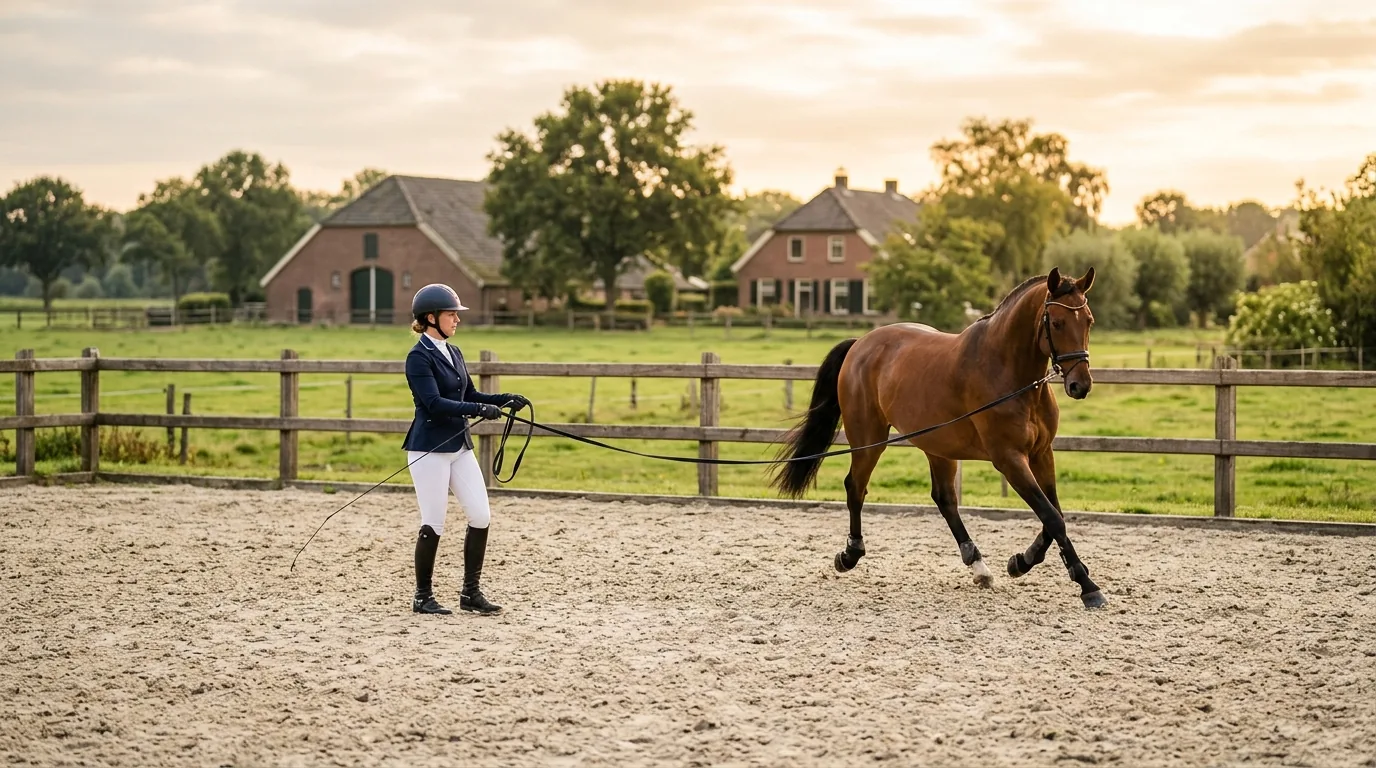
Training
Lungeing: basic principles for beginners
Lungeing is one of the most useful skills you can learn as a horse owner. You train your horse in hand, improve its balance and build a solid bond of trust — without getting in the saddle straight away. For beginners it can sometimes feel overwhelming: the lunge line swings in all directions, your horse pulls or stands still. But with the right basic principles you can learn an effective way of working from the ground, step by step. This article explains how to get started, what you need and which mistakes to avoid.
Read more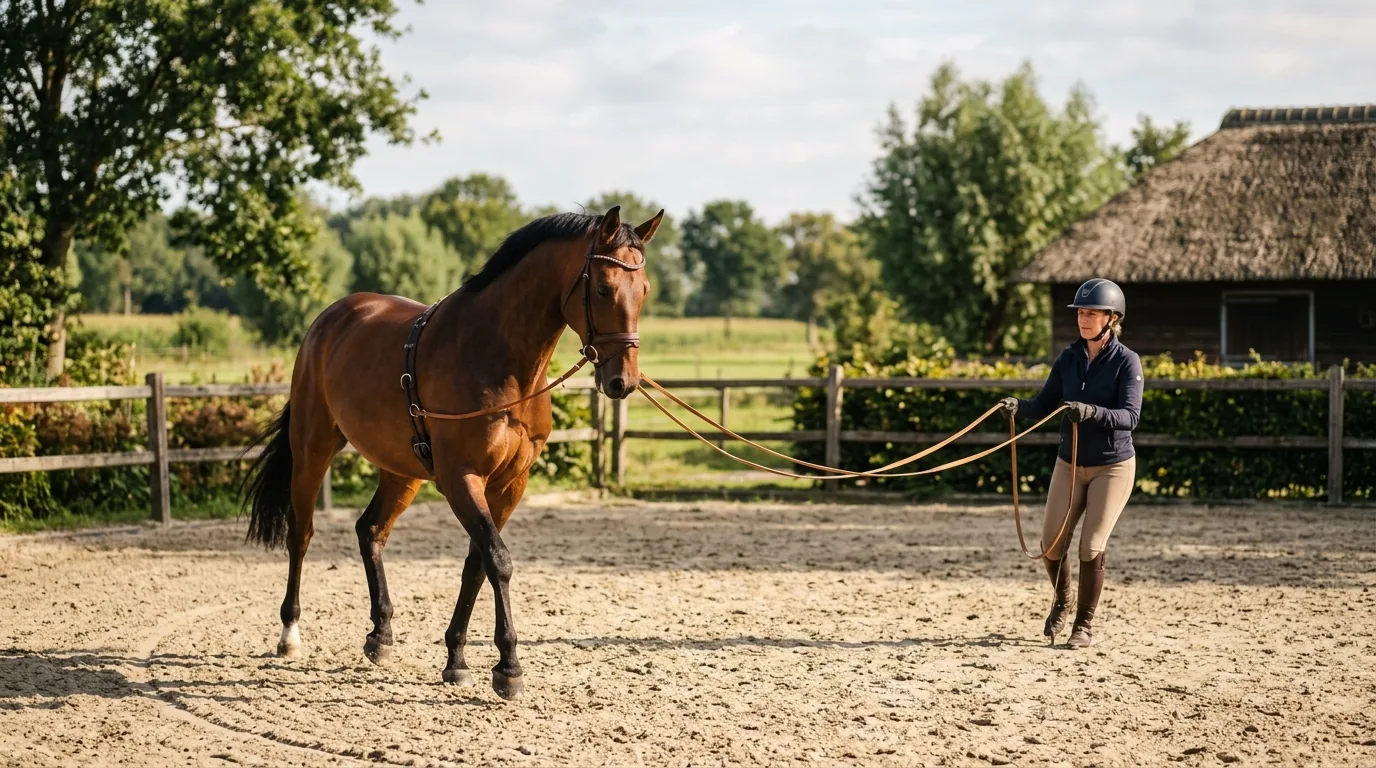
Training
Working with the double lunge: here's how to do it
The double lunge is one of the most valuable tools in groundwork training, yet it's also a technique that many riders overlook. With two lunge lines you can direct the horse far more precisely than with one, you train throughness from back to front, and you lay a solid foundation for ridden work. Whether you're working with a young three-year-old or an older horse that has become tight in its back — the double lunge offers concrete solutions. In this article you'll find out how to start safely, which mistakes to avoid, and how to track your progress.
Read more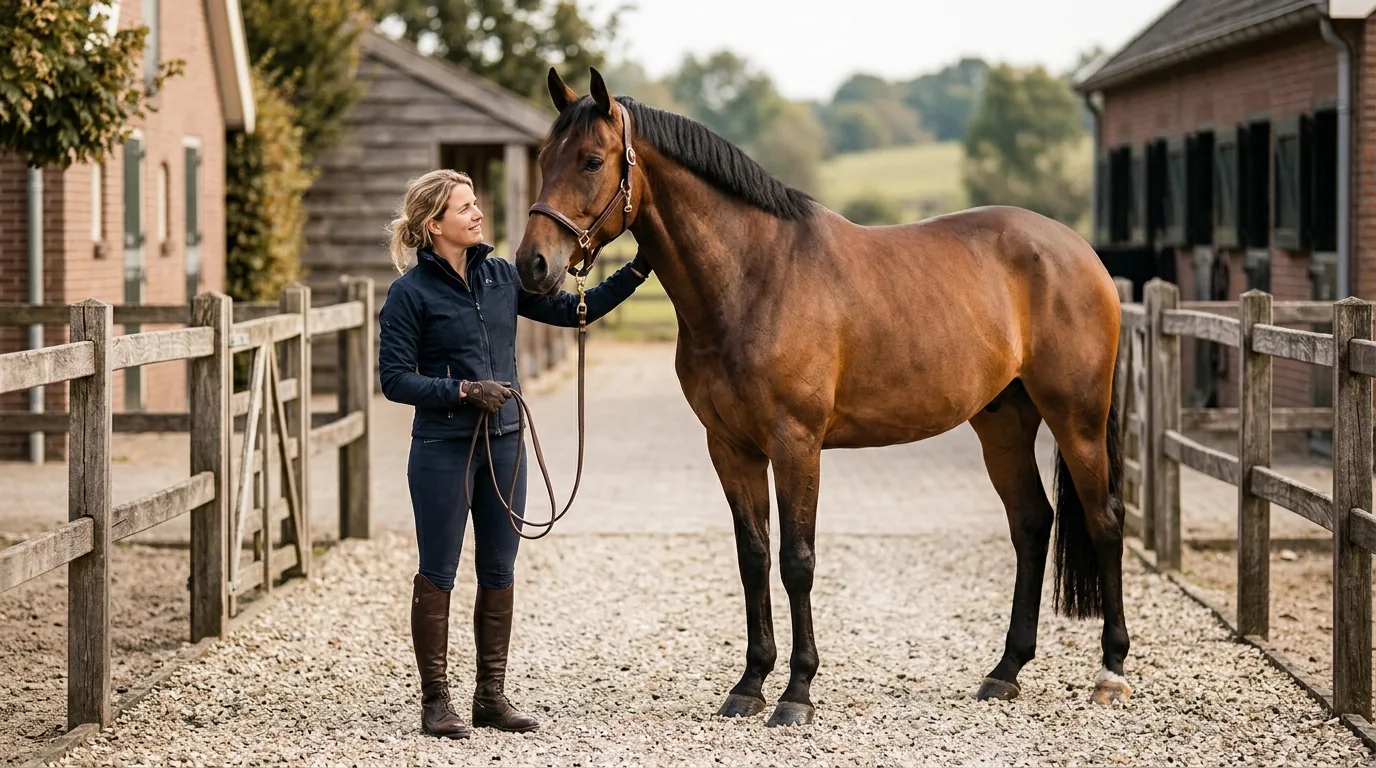
Training
Teaching your horse to lead in hand: here's how
A horse that walks calmly and respectfully on the lead makes every day at the stable much more pleasant — and safer. Yet leading is something many horses have never been taught systematically. They pull, walk on your heels or suddenly stop dead. In this article you'll learn how to teach leading step by step, what equipment you need and how to avoid common mistakes. Whether you have a young horse or an older giant who always did things his own way: with the right approach, you'll go far.
Read more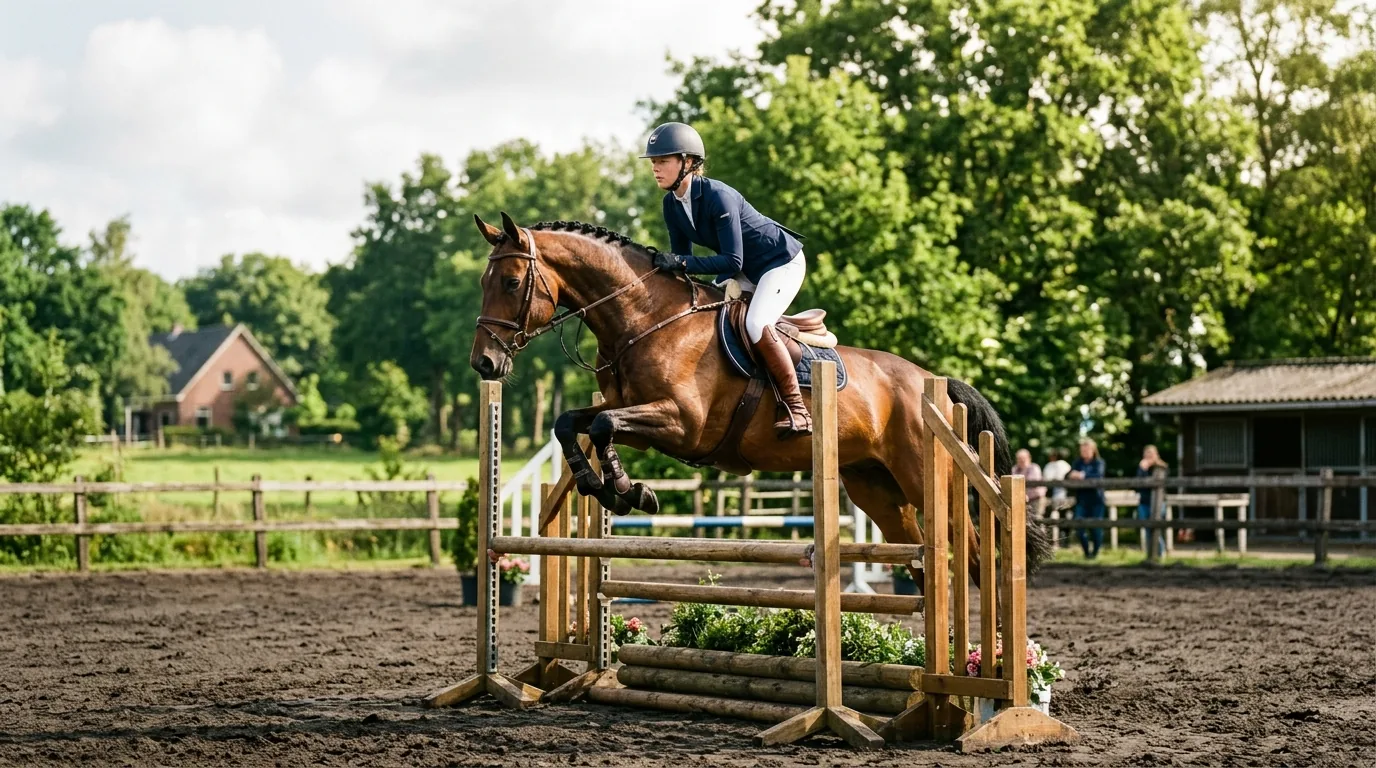
Training
Jump training for a young horse: how to get started
Teaching a young horse to jump takes patience, a gradual build-up, and a solid plan. Push too hard too soon and you risk physical damage as well as a horse that mentally checks out. But take it step by step and you lay a foundation that will serve you for years. In this article you'll find out how to start jump training responsibly, which exercises work in the first year, and how to track progress so nothing slips through the cracks.
Read more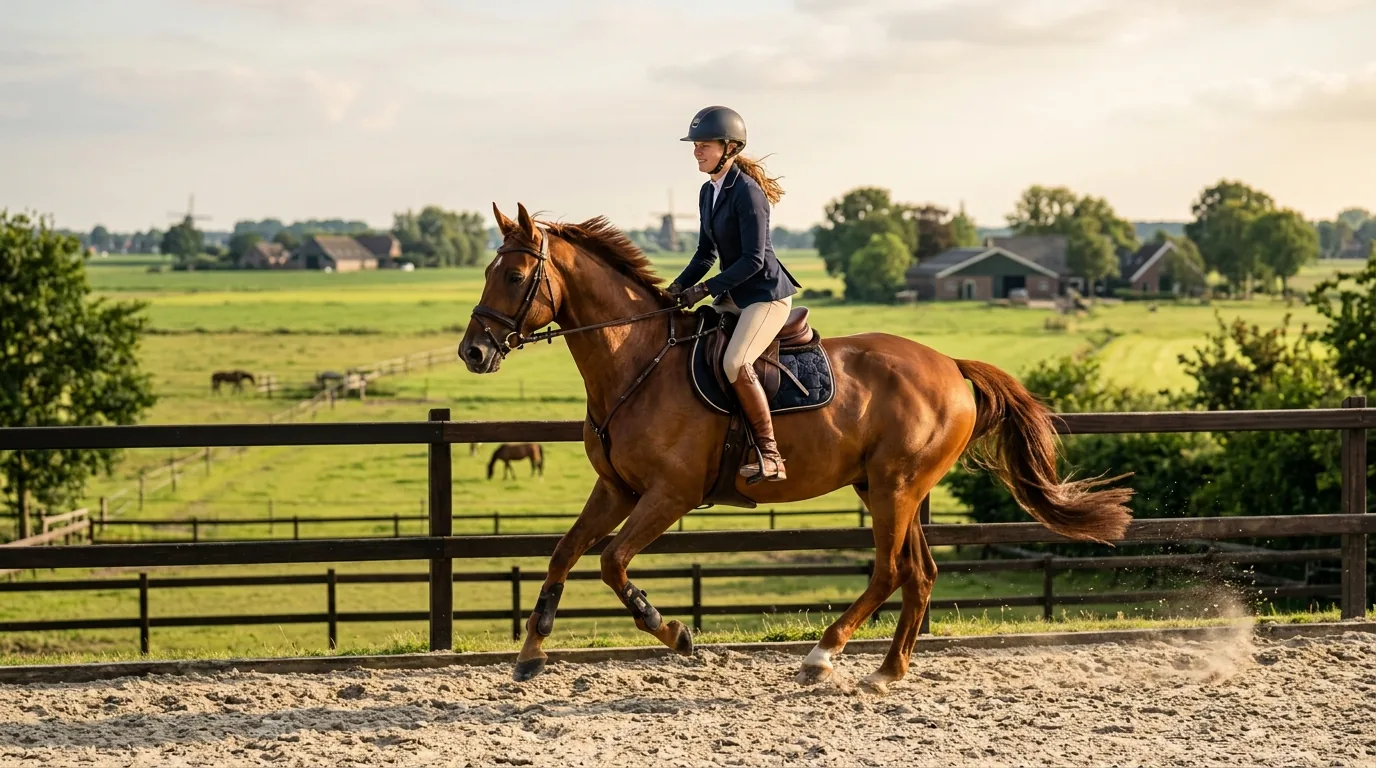
Training
Teaching canter to young horses: here's how to approach it
The canter is a big step for many young horses. It demands balance, strength, and trust — from both the horse and the rider. With the right progressive build-up, you can prevent tension and unwanted habits. In this article, you'll learn when to start, how to structure the exercises, and what to watch for when things don't go smoothly right away. Whether you're starting a three-year-old under saddle for the first time or developing a four-year-old further: a thoughtful approach always pays off.
Read more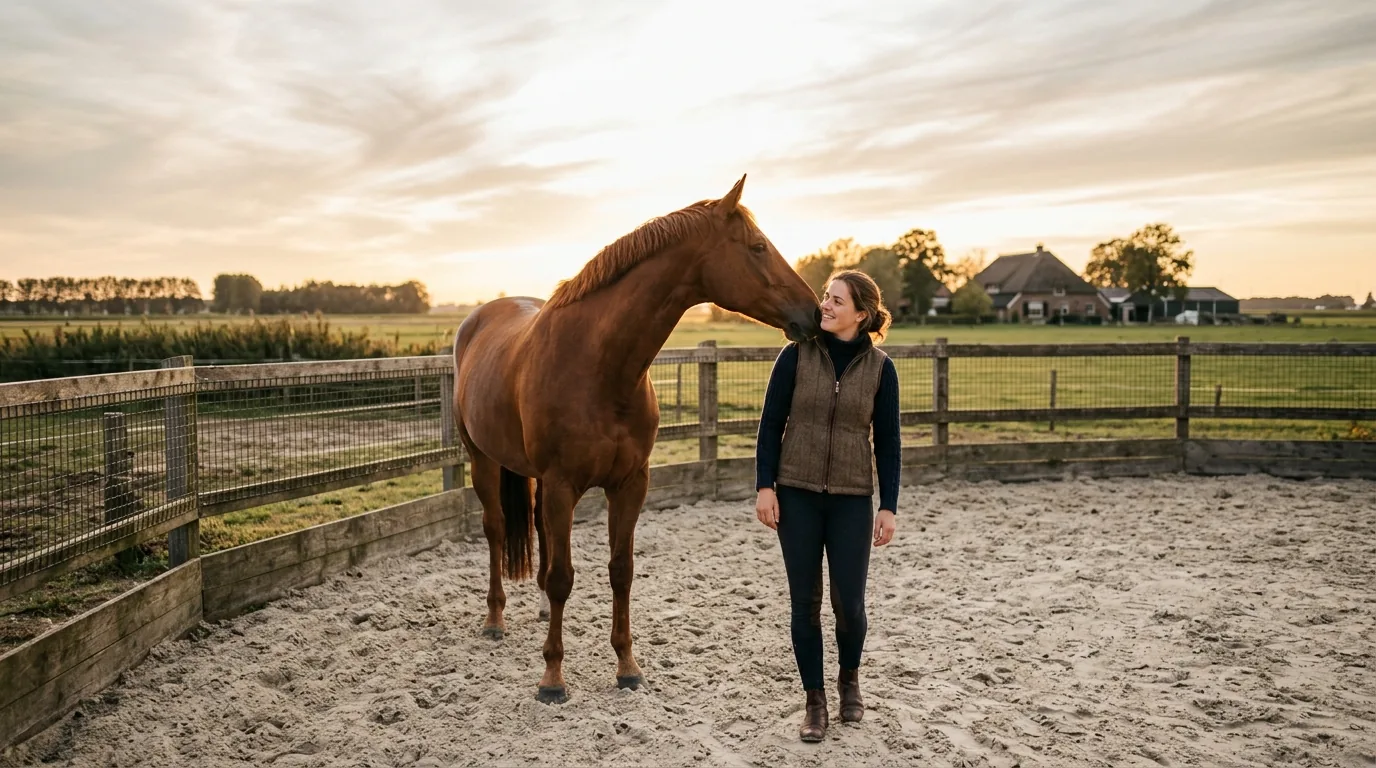
Training
Free work: how to build a genuine connection
Free work and natural horsemanship are not tricks — they are a way to fundamentally improve communication with your horse. You work without a halter or rope, purely on the basis of body language and mutual trust. For many horse owners, this is both the greatest challenge and the most rewarding experience. In this article you will learn exactly what free work involves, how to get started, and which pitfalls to avoid.
Read more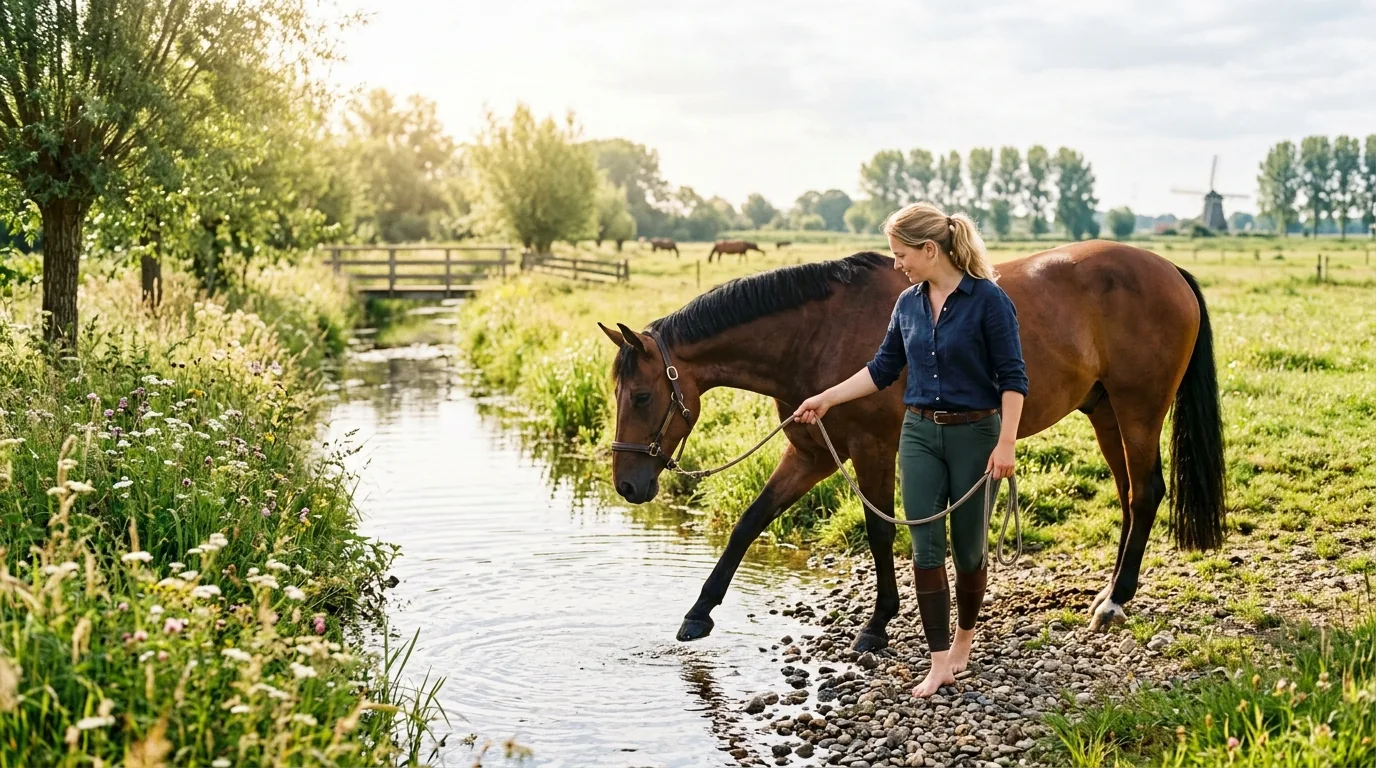
Training
Horse afraid of water: training step by step
Many horses hesitate at puddles, wet ground, or even a garden hose. This is completely normal: in the wild, murky water is a potential danger. With a structured desensitisation approach, you can resolve this in most cases — without force and without stress. In this article you'll learn exactly how to go about it, from the first introduction to a dripping bucket to calmly wading through a ditch. Give yourself and your horse the time — on average four to eight weeks is realistic for solid results.
Read more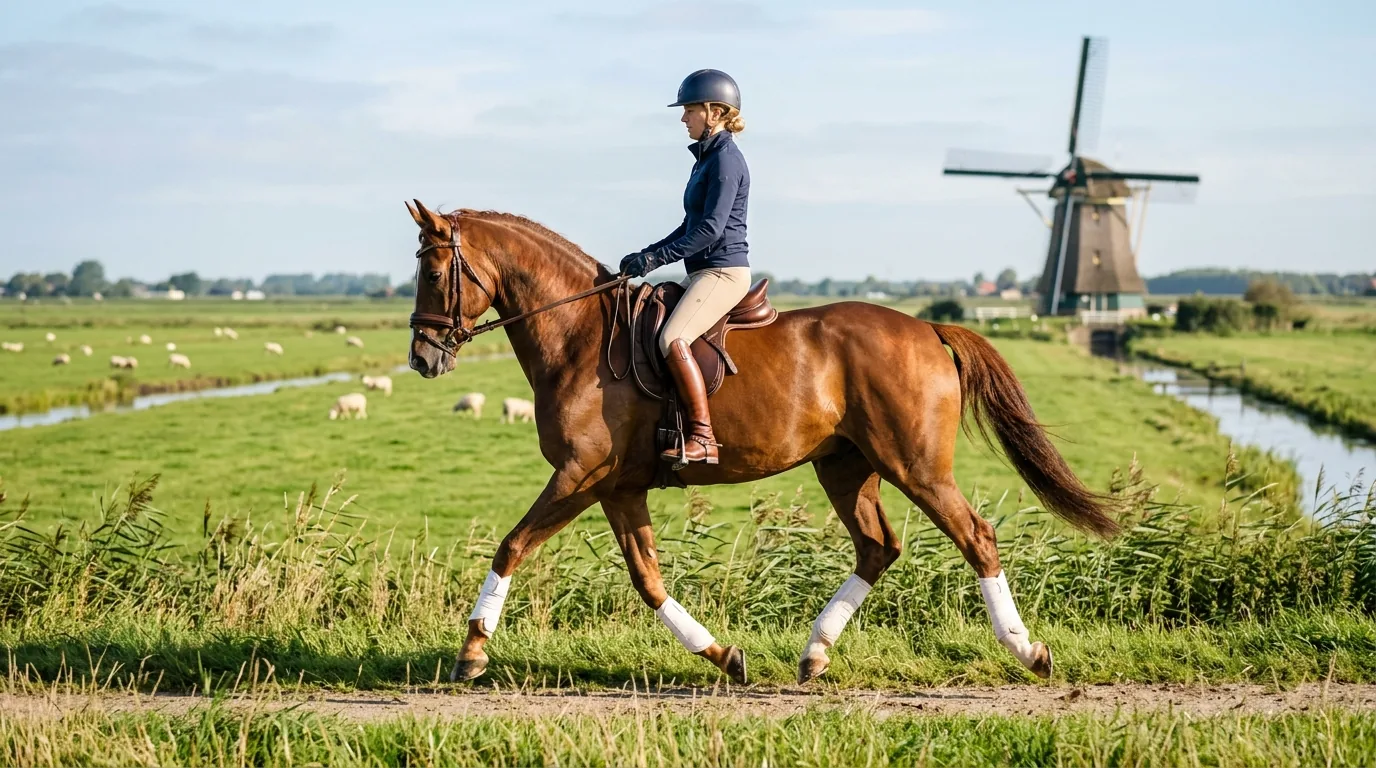
Training
Walk or trot: what really builds fitness?
When it comes to fitness building, many riders immediately think of long trot sessions. That makes sense — trotting feels intense and active. But the walk plays an equally important role in a well-structured training programme. The question isn't which gait is better, but when to use each one for the desired effect. This article explains how walk and trot each contribute to your horse's physical fitness in different ways, and how to combine both effectively.
Read more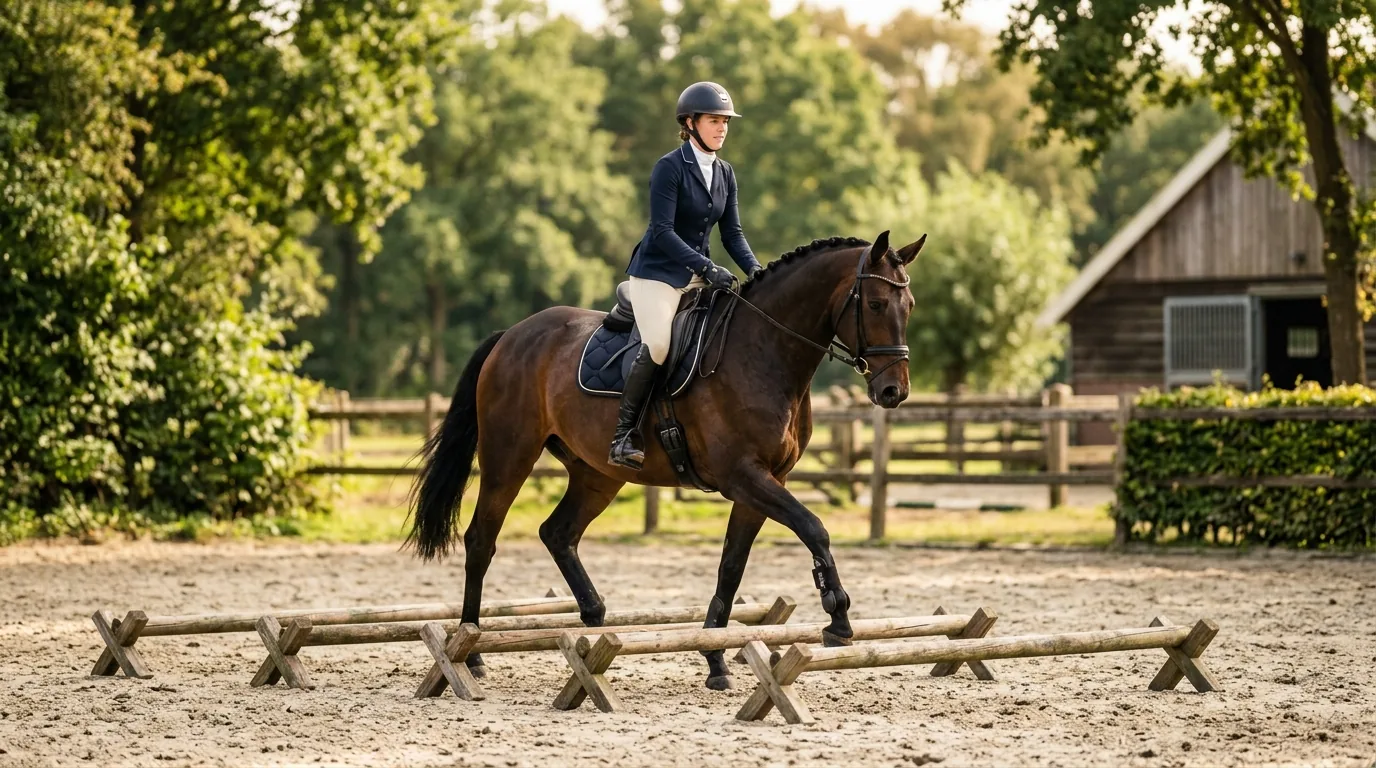
Training
Cavaletti training: purpose, structure and frequency
Cavalettis may look simple, but they do more than you might think. By regularly working your horse over low poles or rails, you improve coordination, rhythm and hindleg activity without putting heavy strain on the joints. Whether you're a young rider building the basics or looking to further refine a more advanced horse: cavaletti training is suitable for almost every level. In this article you'll find out exactly what cavalettis train, how to build up the exercises and how often to best include them in your schedule.
Read more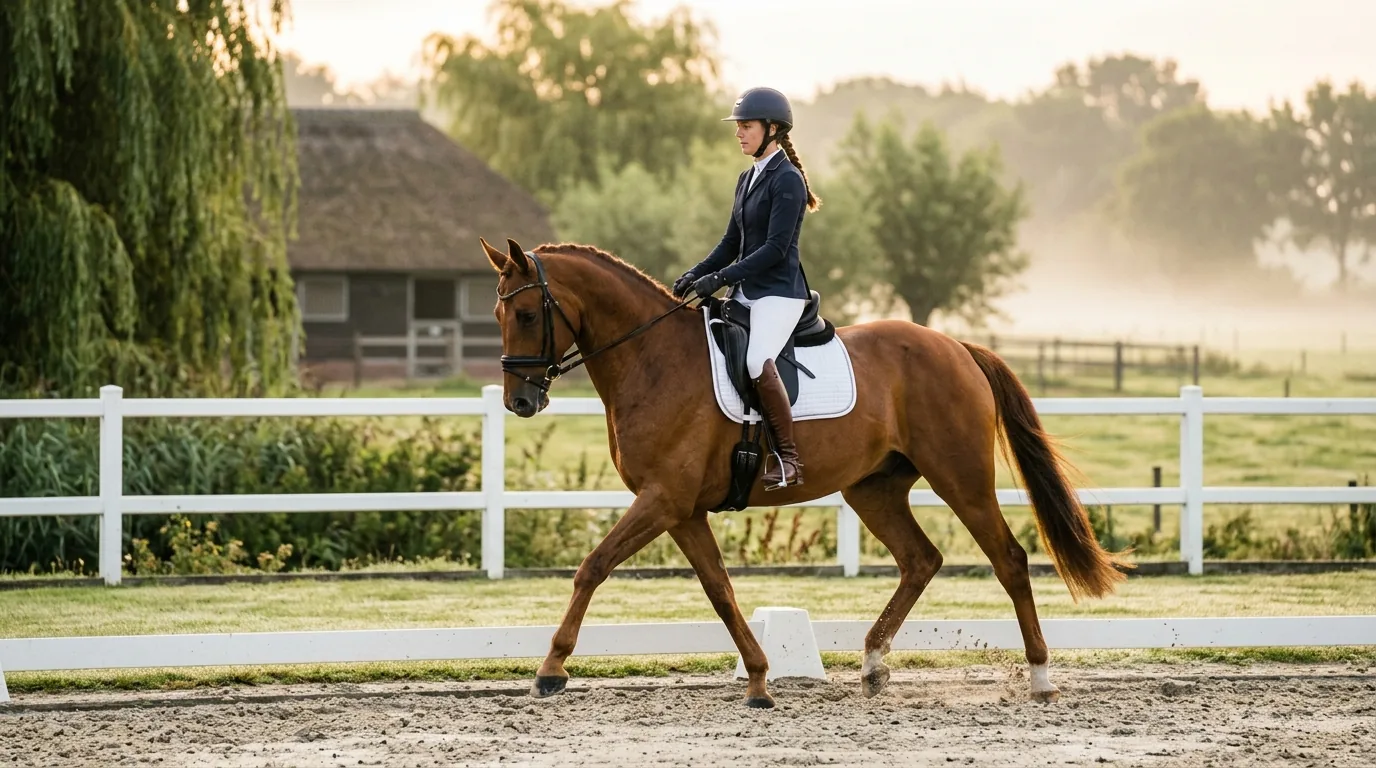
Training
Mental training: sharpen your focus at competitions
You know the feeling: you train brilliantly at home, but the moment you set foot on a competition ground, things start to go wrong. Your horse senses your tension, you forget your test, or you react too slowly to what is happening around you. Mental training helps you deliver the same quality under pressure as you do at your home yard. With the right techniques you build a routine that gives both you and your horse a sense of calm when it matters most.
Read moreTraining
Choosing the right bit for your horse
The bit is the direct means of communication between you and your horse, and the wrong choice can lead to resistance, pain or behavioural problems. Yet the bit section in an equestrian shop can be overwhelming: snaffles, pelhams, gags, with and without a port, in dozens of sizes and materials. Where do you start? In this article you'll learn which criteria to use when choosing a bit, how to determine the correct size, and when it's better to bring in a specialist. With the practical approach below, you'll make a well-informed decision rather than guessing.
Read moreTraining
How do you train a dressage horse? Periodisation for amateurs
Periodisation means building up training systematically in cycles. It sounds like elite sport, but it works for amateurs too. Stuck in your tests? Periodisation brings progress back.
Read more
Join · Beta tester
Become a Beta tester.
Get 3 months Professional for free.
EquiSight goes live on September 1 2026. Sign up now for the Beta and receive the full Professional package for three months at no cost.
No spam. Unsubscribe at any time.