
Health
Alles over health.
23 artikelen gefocust op health — praktisch, met concrete getallen en bronnen.
Also check out the dedicated overview pages per category: Health, Management, Conditions, Training, Nutrition, Breeding, Competitions, Care, Apps, Hoof Care, Dressage, Season, Costs, Sales, Riding School, Stable Management

Health
Why is my horse coughing? Causes and solutions
A coughing horse is never something to ignore. Whether it's a single cough after feeding or a persistent dry cough during riding — coughing is always a signal that something is wrong in the airways. The causes vary widely: from dust in the hay to a respiratory infection or a chronic condition such as IAD or RAO. In this article you'll find the most common causes, when to call your vet immediately, and what you can do yourself to help your horse.
Read more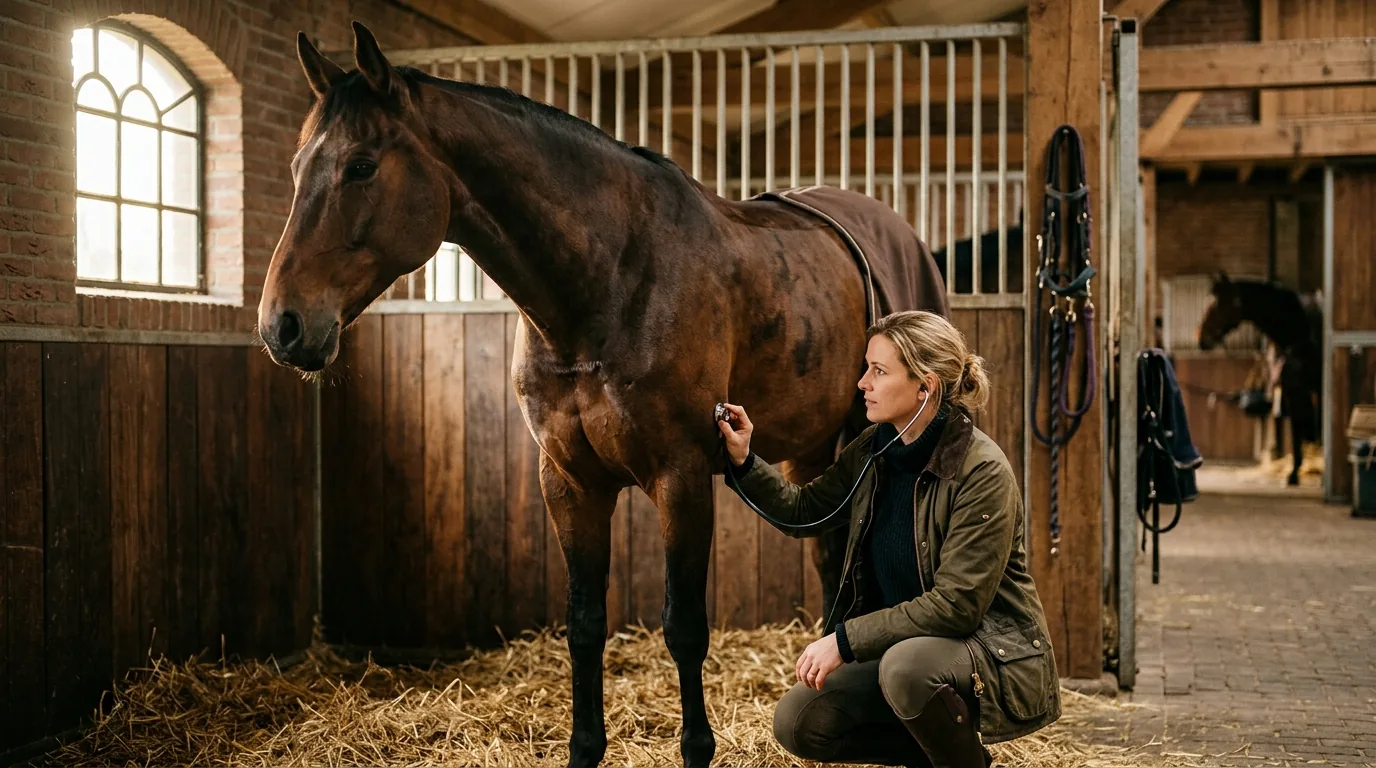
Health
Colic in horses: recognising early symptoms
Colic is the most common medical emergency in horses and one of the leading causes of death. Yet with the right knowledge, you can intervene much earlier than most horse owners think. The sooner you pick up on the first signals, the greater the chance of a smooth recovery. In this article you'll find which early symptoms may indicate colic, when to call the vet immediately, and how to use the horse profile in EquiSight to track patterns in your horse's health.
Read more
Health
Horse with a runny nose: when should you call the vet?
A little nasal discharge is sometimes perfectly normal, but when does it become more than that? Nasal discharge in horses can range from an innocent reaction to dust to a sign of a serious respiratory infection or even strangles. In this article you'll learn how to tell the difference, which signs genuinely require a vet visit, and what you can track yourself to help reach the right diagnosis faster.
Read more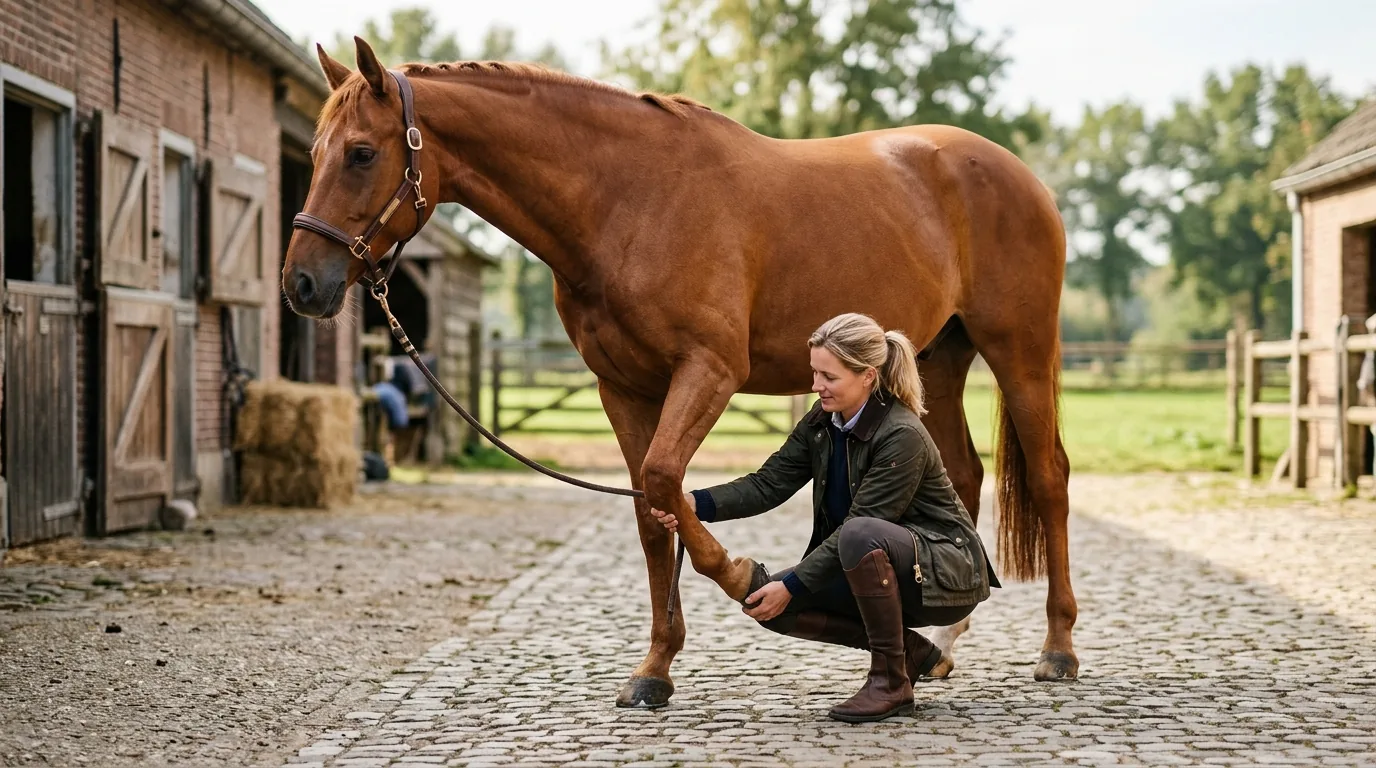
Health
Lame horse: how to assess it step by step
You can sometimes spot a lame horse straight away, but more often the signs are subtle: a slight head movement, a marginally shorter stride, a horse that just isn't moving quite right. How do you assess lameness in a structured way so that you have useful information for the vet? With a consistent approach you miss less and save time during the consultation. In this article you'll learn how to carry out an initial assessment yourself, what to record, and when to call the vet immediately.
Read more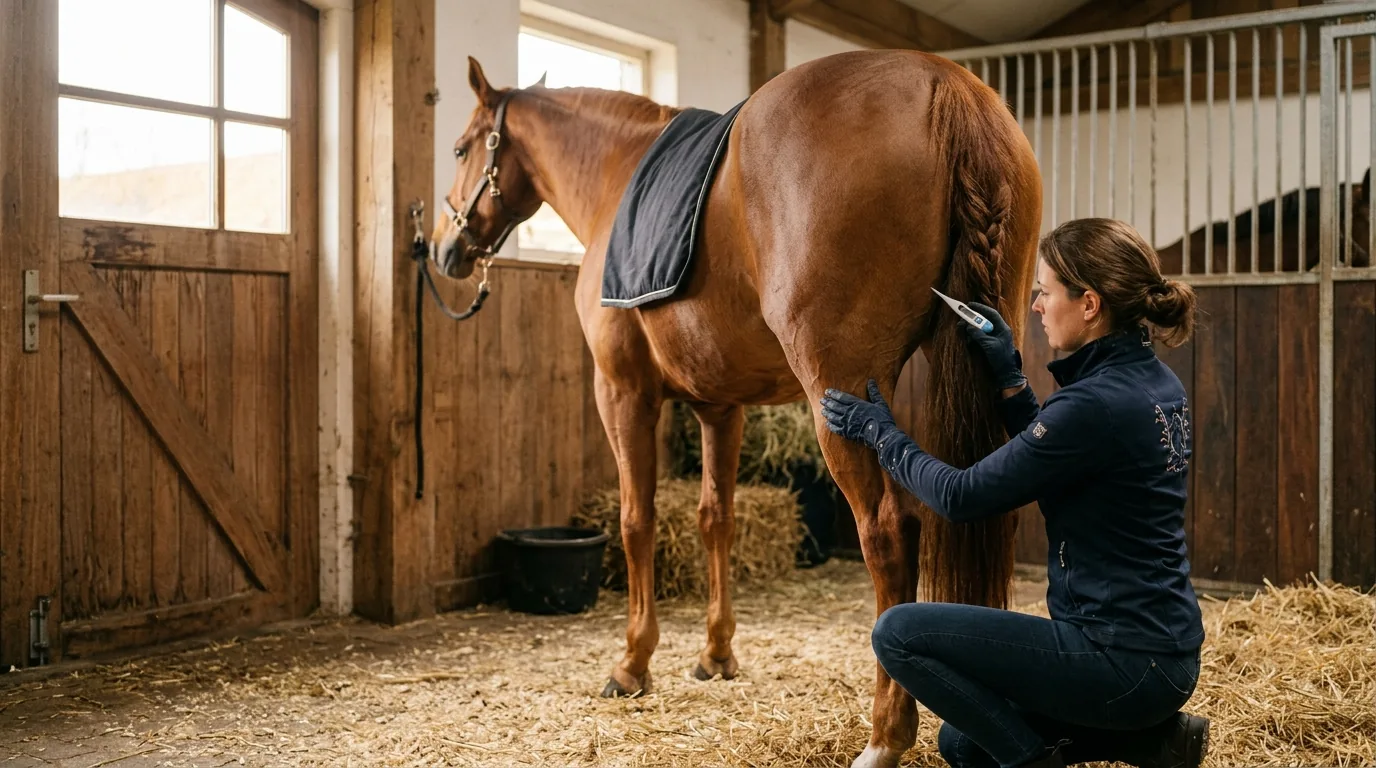
Health
Fever in horses: values and what to do
A horse with fever requires prompt action. Normal body temperature is between 37.5 and 38.5 °C — anything above that is considered a fever, and above 39.5 °C it becomes serious. Knowing how to measure temperature correctly, which threshold values really matter, and when to call the vet can make the difference between a quick recovery and a lingering illness. This article tells you exactly what you need to know.
Read more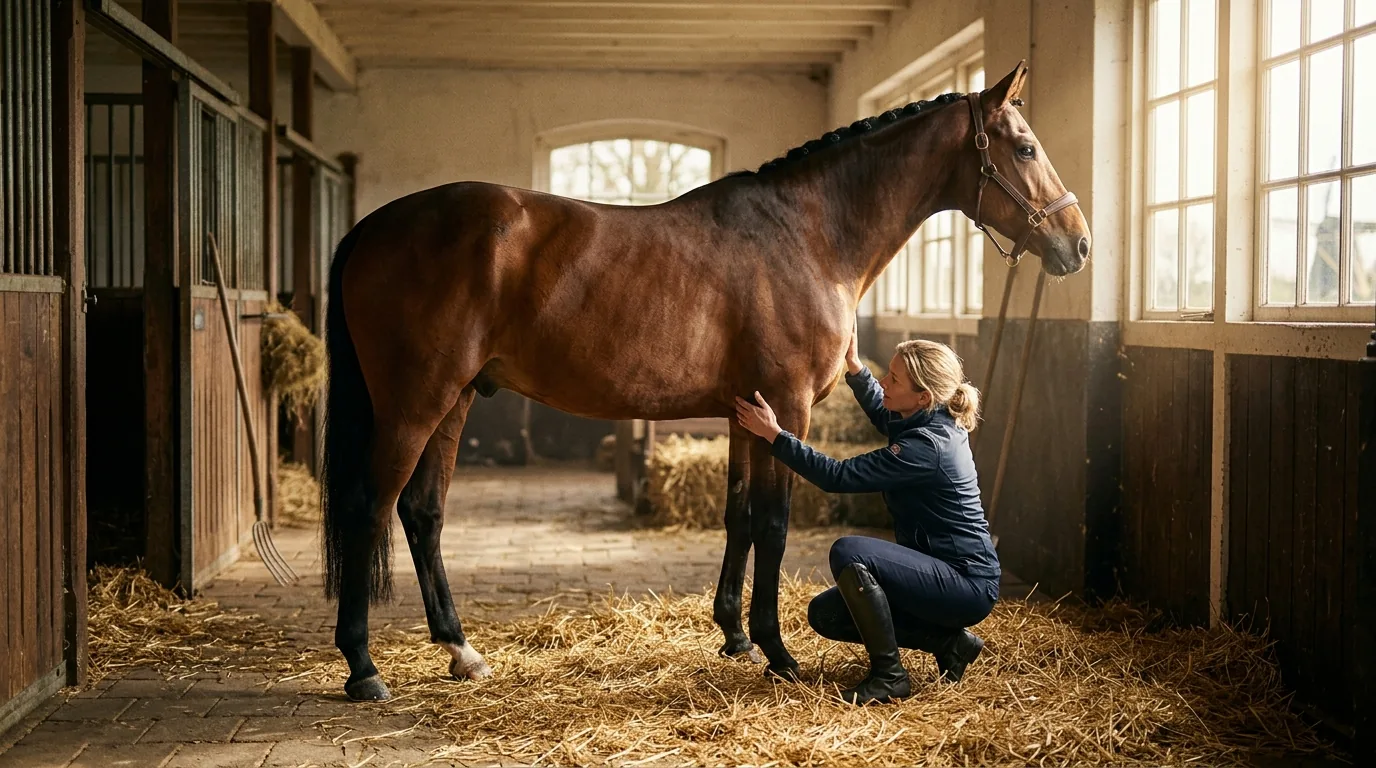
Health
Blood in horse urine: what's behind it?
If you notice red or brown urine in your horse, that's a signal you shouldn't ignore. Blood in the urine — medically known as haematuria — can point to a wide range of conditions, from a relatively harmless bladder irritation to a serious kidney disorder. In this article you'll find the most common causes, how to recognise them, and when to call your vet immediately.
Read more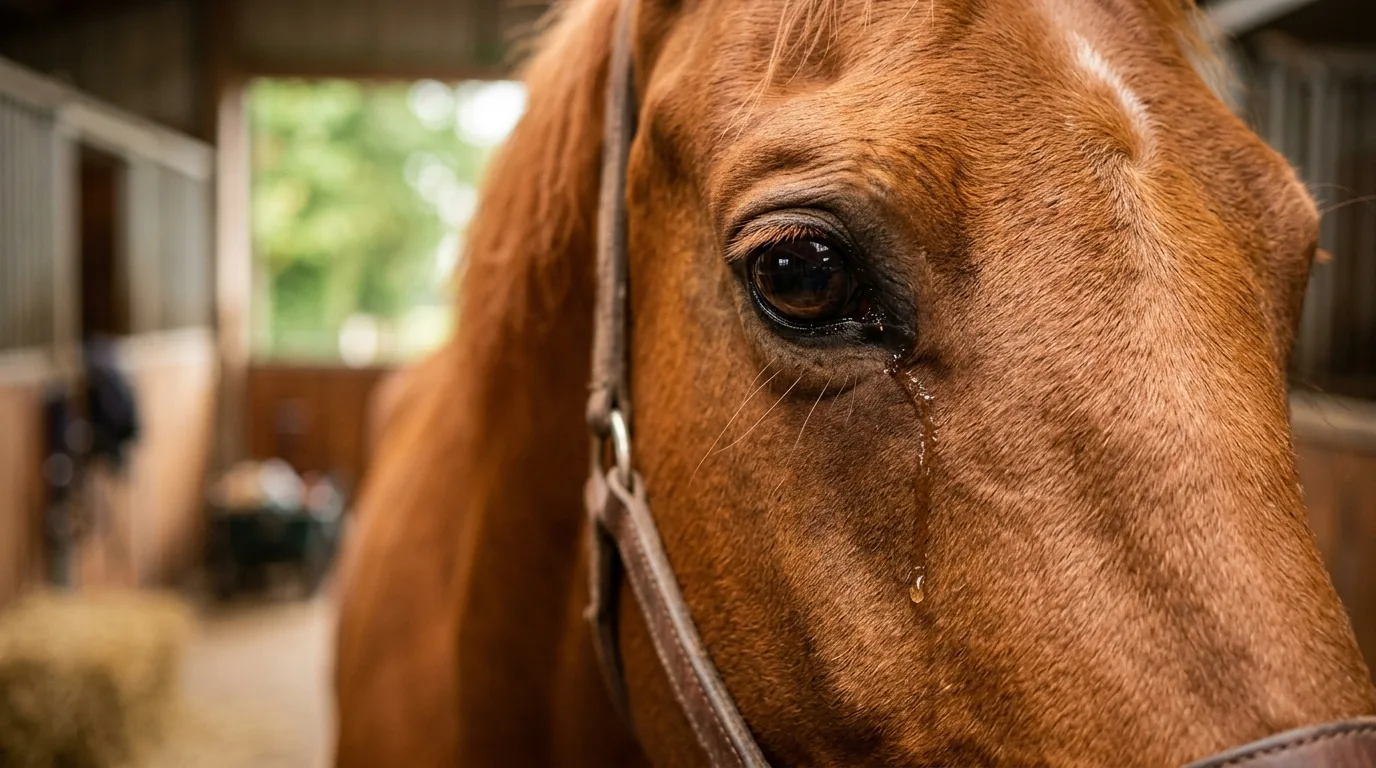
Health
Watery eyes in horses: what does it mean?
A wet eye on your horse is easy to overlook, but persistent tearing can be a signal that something is wrong. The causes vary widely: from a speck of dust under the eyelid to a serious infection or blocked tear ducts. In this article you will learn how to recognise common causes, when to call the vet immediately, and what you can do yourself to monitor the eye closely.
Read more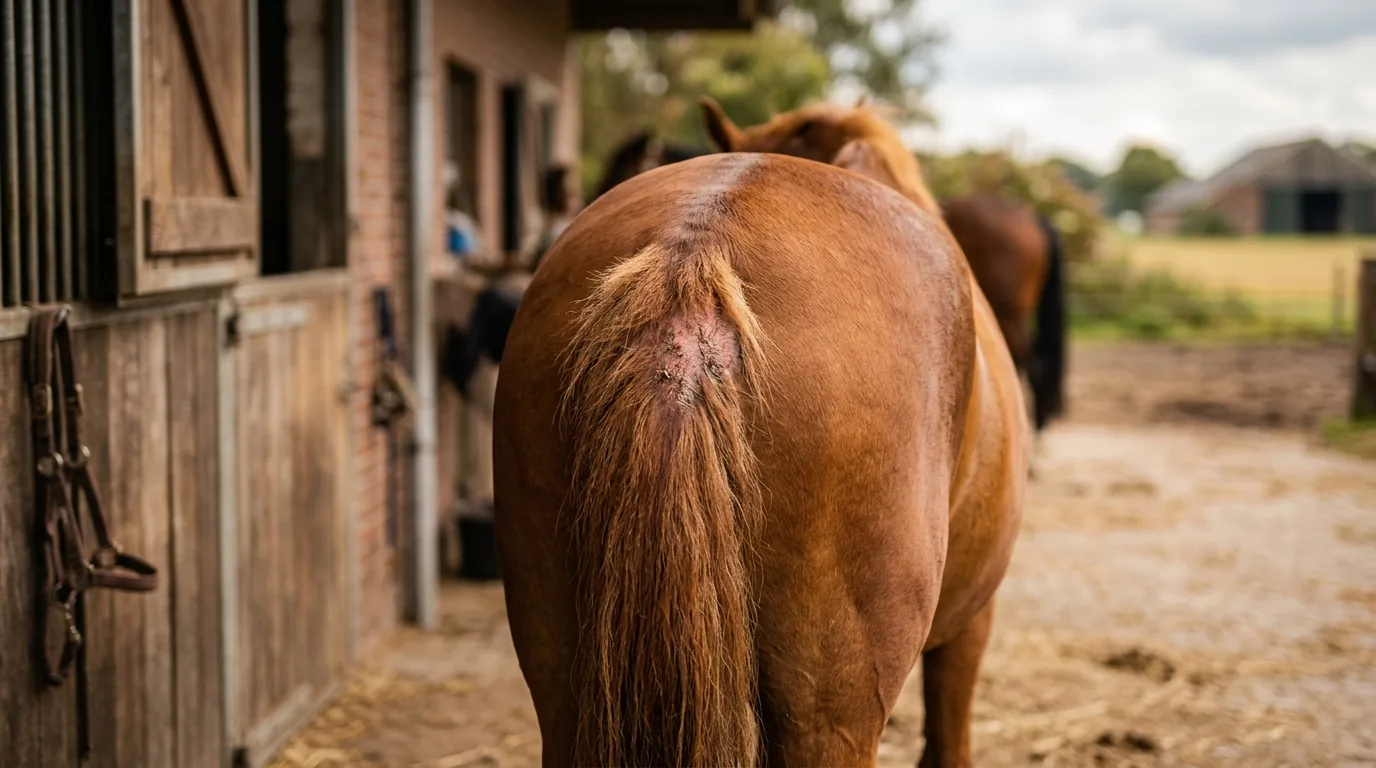
Health
Tail itching in horses: the causes
Your horse is rubbing its tail against the fence post or constantly scratching — a familiar and frustrating sight. Tail itching is a common problem in horses across the Netherlands, but the cause is not always clear. From parasites and skin fungi to allergies and poor hygiene: the possible culprits are varied. In this article we outline the most common causes so you can take targeted action and better inform your vet or farrier. With the horse profile in EquiSight you can easily track complaints, treatments and their progress.
Read more
Health
Dry or wet cough in horses: what should you do?
Your horse coughs a few times in the stable or during a ride. But is it a dry, irritated cough or a wet cough with mucus? The distinction sounds subtle, but it makes a big difference in how you respond. A dry cough often points to airway irritation or asthma, while a wet cough more commonly indicates an infection or excessive mucus production. In this article you will learn how to tell the two apart, when to call the vet, and what you can do yourself to support your horse.
Read more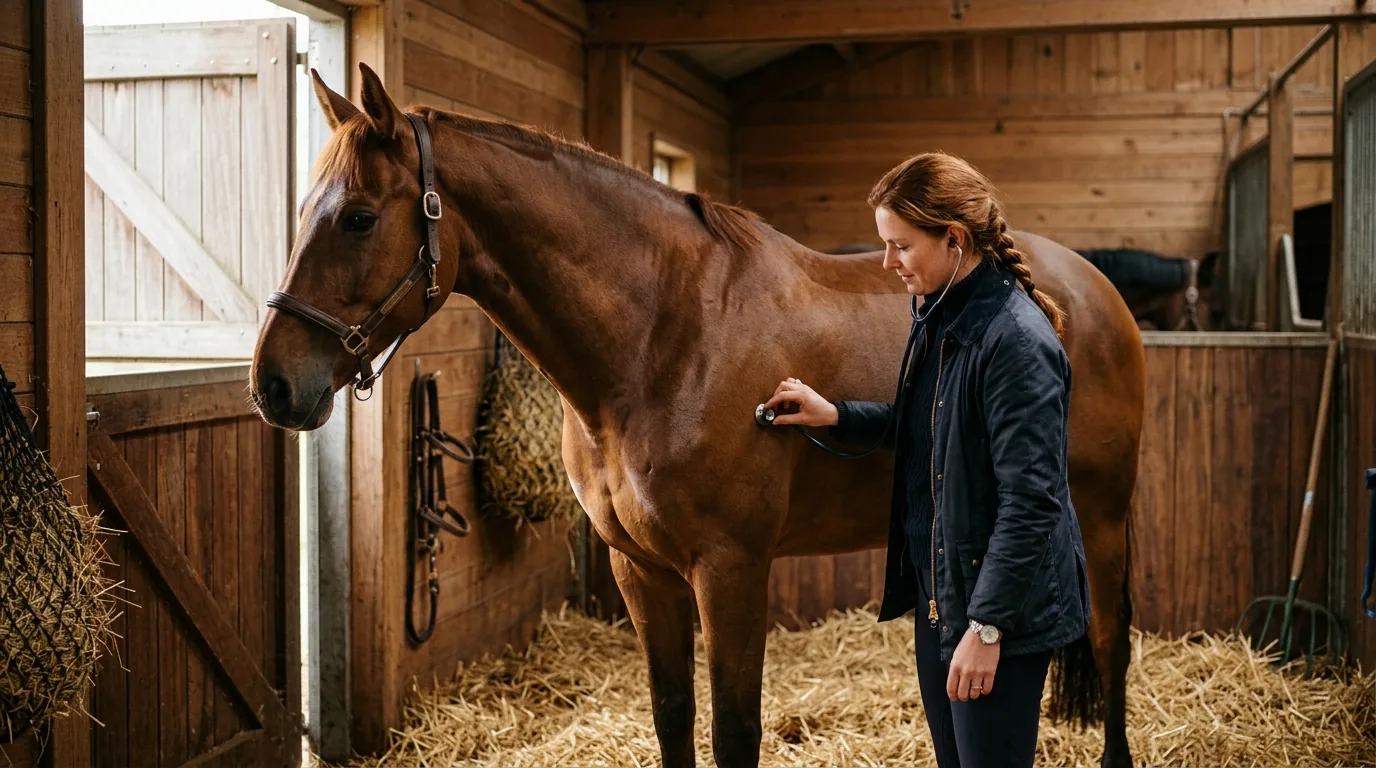
Health
Gut sounds in horses: what do they tell you?
A rumbling or silent belly in your horse can mean the difference between healthy gut function and the onset of colic. Gut sounds are a direct indicator of how the intestines are working, and as an owner it is valuable to know what is normal and when you need to take action. In this article you will learn what the different sounds mean, how to assess them yourself, and when to call the vet.
Read more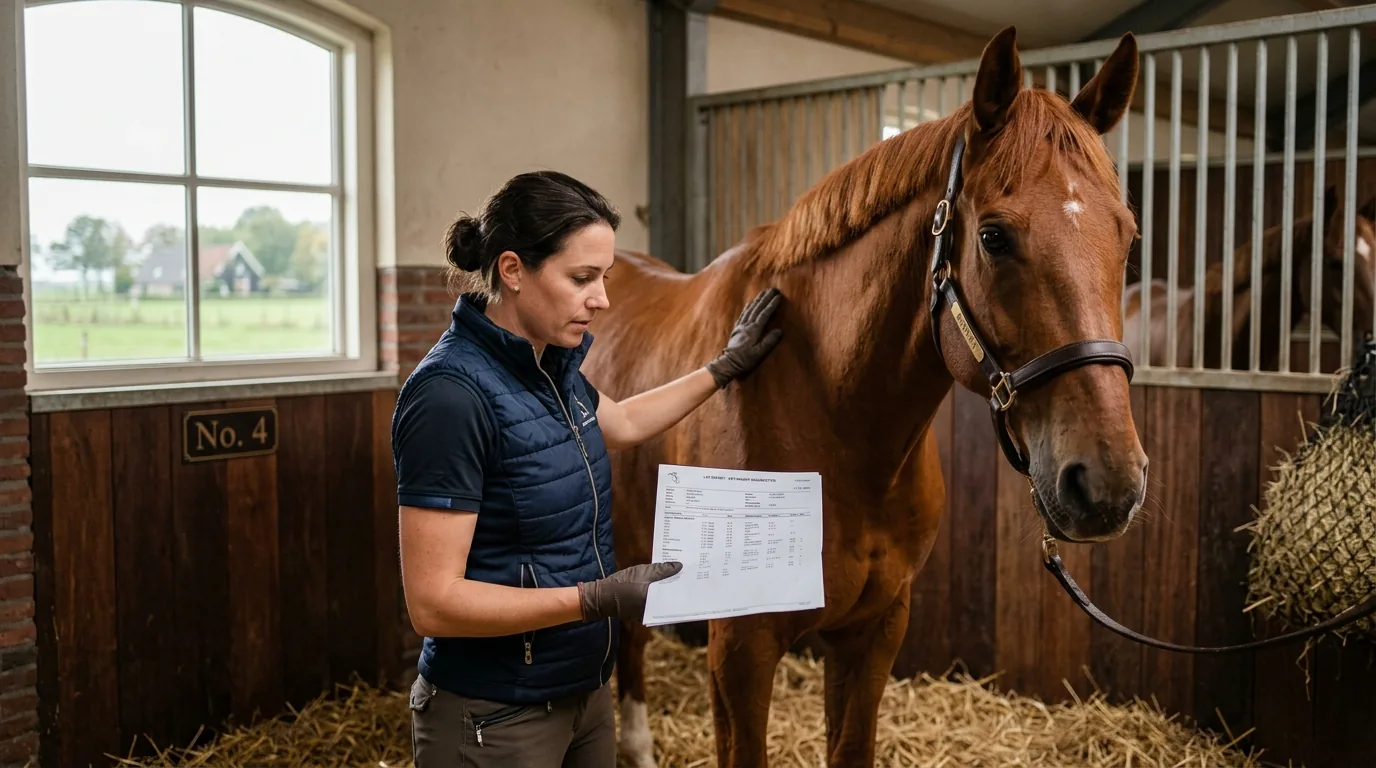
Health
Liver values in horses: how to read your blood test results
A blood test result for your horse often contains a row of abbreviations and numbers that seem to say little at first glance. Yet those figures tell you a great deal about how the liver is functioning. The liver is a crucial organ: it processes nutrients, breaks down toxic substances, and plays a major role in metabolism. Knowing which values matter and what abnormalities mean helps you ask the right questions of your vet more quickly — and make better decisions for your horse.
Read moreHealth
Why isn't your horse eating? Causes and what to do
A horse that leaves its feed untouched is always a warning sign. Horses are natural grazers that eat for around 16 to 18 hours a day — when they stop, something is almost always wrong. The causes range from dental problems and stomach issues to stress or an incorrect feeding strategy. In this article I outline the most common reasons and explain when you need to take immediate action. The sooner you know the cause, the better off your horse will be.
Read moreHealth
Lethargic horse: recognising symptoms and addressing causes
A horse that stands listlessly in the corner, barely responds to stimuli or is excessively drowsy is often referred to as a 'lethargic horse'. This can be a temporary occurrence after a busy day, but it can also indicate a serious underlying problem. In this article you will find out which symptoms are typical of a lethargic horse, what the most common causes are and when to call your vet immediately. This allows you to act quickly and decisively when your horse is not feeling well.
Read moreHealth
How to measure your horse's temperature correctly
Knowing whether your horse has a fever starts with one simple action: taking its temperature. Yet many horse owners skip this step or do it incorrectly, causing them to intervene too late. A horse's normal body temperature is between 37.5 and 38.5 degrees Celsius. Anything above that — especially above 39 degrees — is a signal to take action. In this article you'll find a step-by-step guide on how to take a rectal temperature, which thermometer you need, what normal values are, and when to call the vet.
Read moreHealth
Horse breathing hard after exercise: when is that normal?
After a solid training session you may notice your horse breathing rapidly or even panting. That can sound alarming, but in many cases it is a completely normal physical response. A horse's body needs oxygen to power its muscles, and after exertion the breathing rate temporarily rises significantly. Even so, it is wise to know when heavy breathing is normal and when something more may be going on. In this article you will learn what your horse's breathing tells you, which factors play a role, and how to quickly recognise when extra attention is needed.
Read moreHealth
Worm infection in your horse: symptoms and approach
A worm infection is one of the most common health problems in horses. Yet the symptoms are often vague or resemble other conditions, meaning an infection can easily be overlooked. Knowing what to look for allows you to intervene early and spare your horse a great deal of discomfort. In this article you will learn which signs may indicate worms, which worms are most common in the Netherlands, and how to approach targeted deworming.
Read moreHealth
Horse sweating too much: causes and what you can do
A horse that sweats after exercise is completely normal — sweating is the primary way horses regulate their body temperature. But what if your horse sweats excessively, even at rest, or barely sweats at all after intense training? Then something may be wrong. In this article you'll learn when excessive sweating is a warning sign, what the most common causes are, and how you as an owner can act quickly and effectively.
Read moreHealth
Faecal testing in horses: what does the EPG value mean?
A faecal test tells you how many worm eggs are present per gram of dung — the so-called EPG value (Eggs Per Gram). That value determines whether your horse needs to be treated or not. More and more vets and horse owners are moving away from the routine in which every horse automatically receives a worming treatment every three months. Targeted worming based on faecal testing is more effective, prevents resistance, and saves money. In this article you will learn how a faecal test works, what the results mean, and how to keep track of them smartly.
Read moreHealth
Fat lump behind the saddle on your horse: what now?
A soft swelling behind the saddle is quickly noticed during grooming or tacking up. In most cases it is a fat lump, also known as a lipoma or fatty deposit. Although fat lumps in horses are usually benign, they still deserve attention: the location behind the saddle can cause pressure pain, discomfort and behavioural problems under saddle. In this article you can read what a fat lump actually is, how to recognise it, when to call the vet and how to prevent a small swelling from becoming a bigger problem.
Read moreHealth
First aid for horses — what to do in case of injuries at the stable
A graze, a cut, a swollen tendon — what do you do before the vet arrives? A practical first aid guide for horse owners.
Read moreHealth
EPG test for horses — when and how to deworm smartly?
Routine blanket deworming is outdated. With EPG tests (eggs per gram), you only deworm when it's truly necessary — preventing resistance and saving money.
Read moreHealth
Horse vaccination schedule — which vaccine and when?
Influenza, tetanus, rhinopneumonia, West Nile: which vaccinations does your horse need and when? An overview including KNHS rules for competition horses.
Read moreHealth
How to prevent colic in your horse? 7 practical tips
Colic is the most common cause of death in healthy horses. The good news: a large proportion is preventable. These 7 tips significantly reduce the risk.
Read more
Join · Beta tester
Become a Beta tester.
Get 3 months Professional for free.
EquiSight goes live on September 1 2026. Sign up now for the Beta and receive the full Professional package for three months at no cost.
No spam. Unsubscribe at any time.