
Management
Alles over management.
18 artikelen gefocust op management — praktisch, met concrete getallen en bronnen.
Also check out the dedicated overview pages per category: Health, Management, Conditions, Training, Nutrition, Breeding, Competitions, Care, Apps, Hoof Care, Dressage, Season, Costs, Sales, Riding School, Stable Management
Management
How to Keep Track of Multiple Horses in 2026
Whether you own three horses, run a small breeding operation, or manage a stable: managing multiple horses simultaneously requires structure. Where else would you be with all the vaccinations, farrier appointments, training schedules, and feeding plans? In this guide, you'll read concrete tips to maintain overview without your entire calendar filling up with post-its and loose notes.
Read more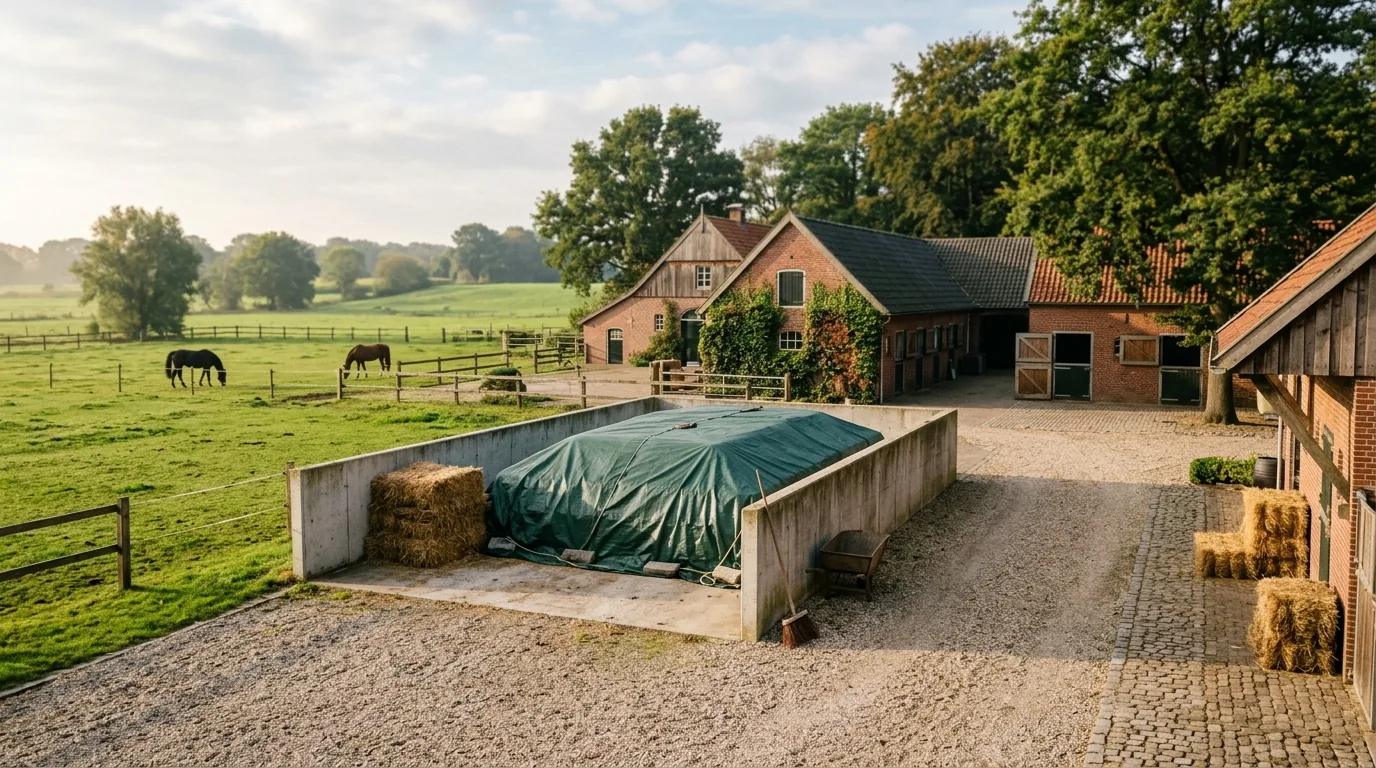
Management
Manure management plan for your stable: rules and permits
If you keep horses in the Netherlands, you have to deal with manure regulations. Whether you run a small home stable with two horses or a professional operation with twenty animals: the legislation on manure storage, manure disposal, and permits applies to everyone. The rules stem from the Environment and Planning Act, the Activities Decree, and the manure legislation from RVO. Anyone unfamiliar with the rules risks fines or complications when applying for a permit. This article outlines the most important obligations so you know exactly what to look out for.
Read more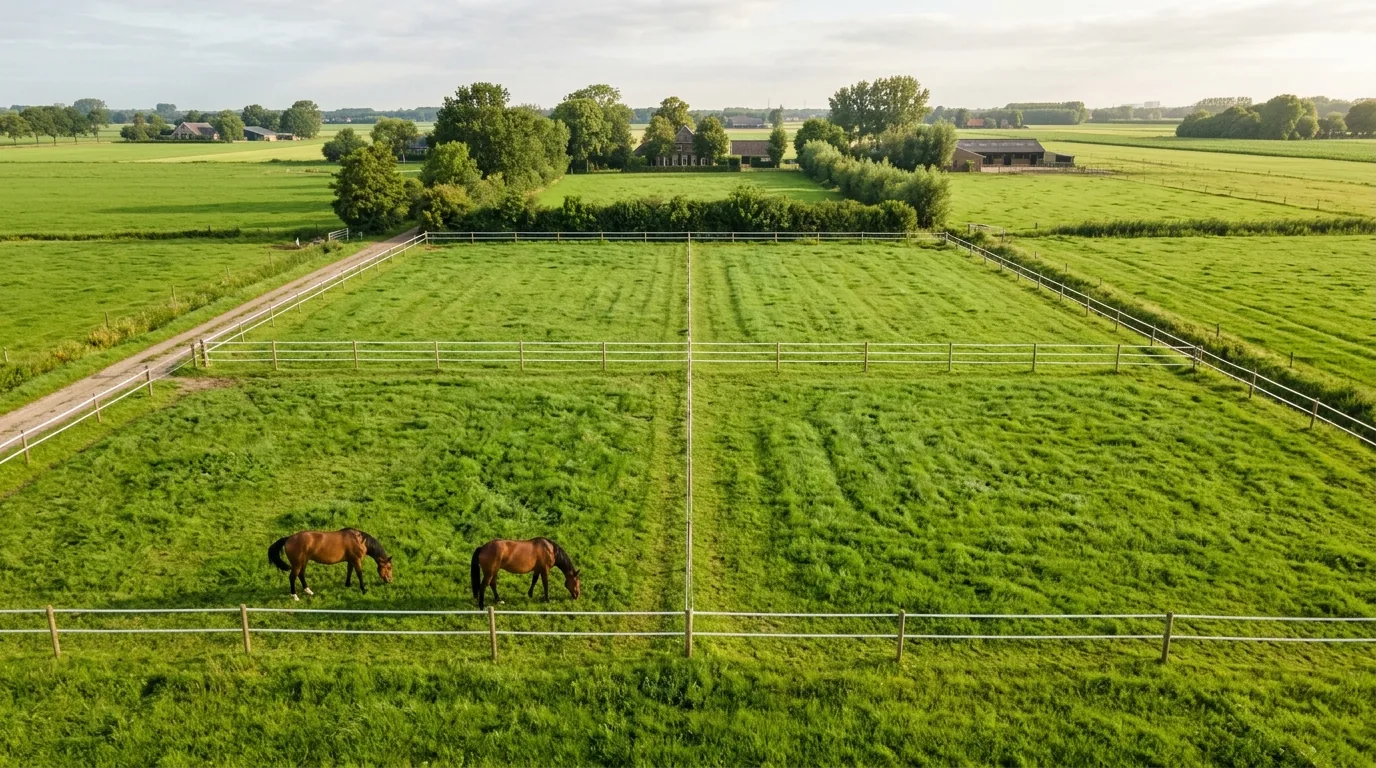
Management
Pasture rotation: how to prevent overgrazing
A bare, churned-up pasture is not only an eyesore — it also harms your horse's health. Overgrazing happens faster than you might think: horses graze selectively, cropping their favourite spots bare while leaving other areas completely untouched. By applying pasture rotation, you give the grass time to recover, keep parasite pressure low, and ensure better grass intake throughout the entire season.
Read more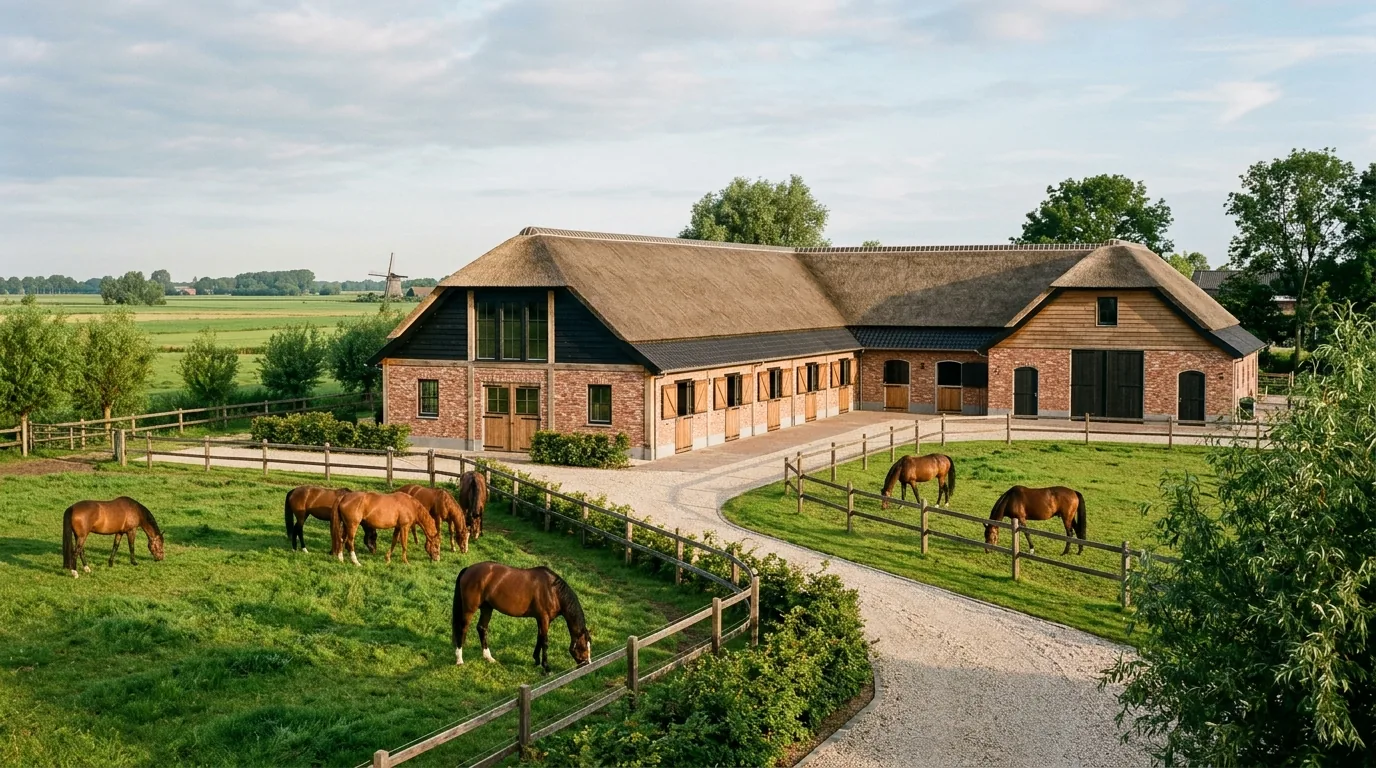
Management
Building permits for stables in the Netherlands: how to tackle it
Building a new stable is a major step, and permit procedures were tightened again in 2026. Between the environmental plan, nitrogen regulations and local authority policy, it is easy to lose track of everything. In this article you will read which permits you need, where most applications get stuck and how to organise your preparation as efficiently as possible.
Read more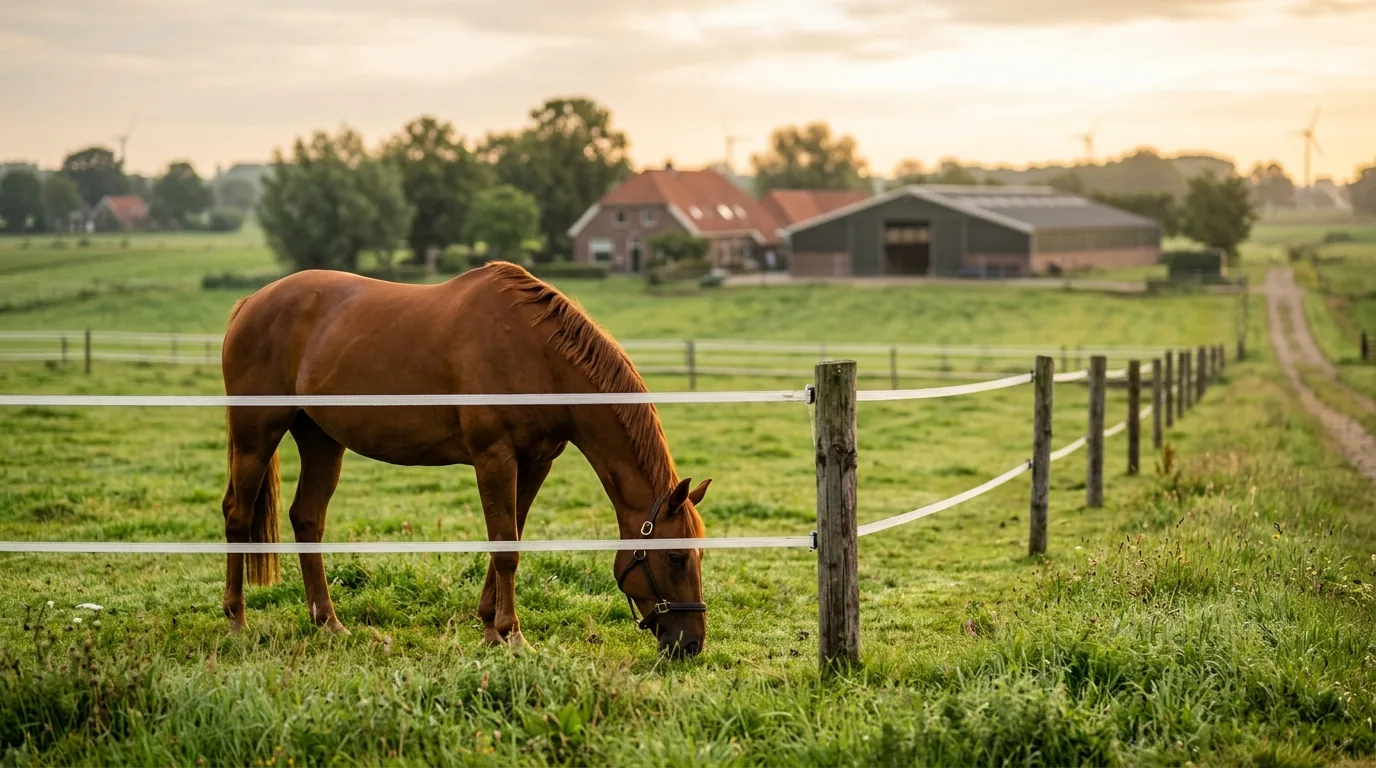
Management
Installing an electric fence for horses
A properly installed electric fence keeps your horses safely inside the pasture and prevents costly escapes. Whether you are setting up a temporary paddock or installing a permanent pasture fence, the choice of materials, voltage and earthing determines whether the system actually works. In this article you will find a step-by-step guide to building a reliable electric fence, the mistakes to avoid, and how to keep up with maintenance.
Read more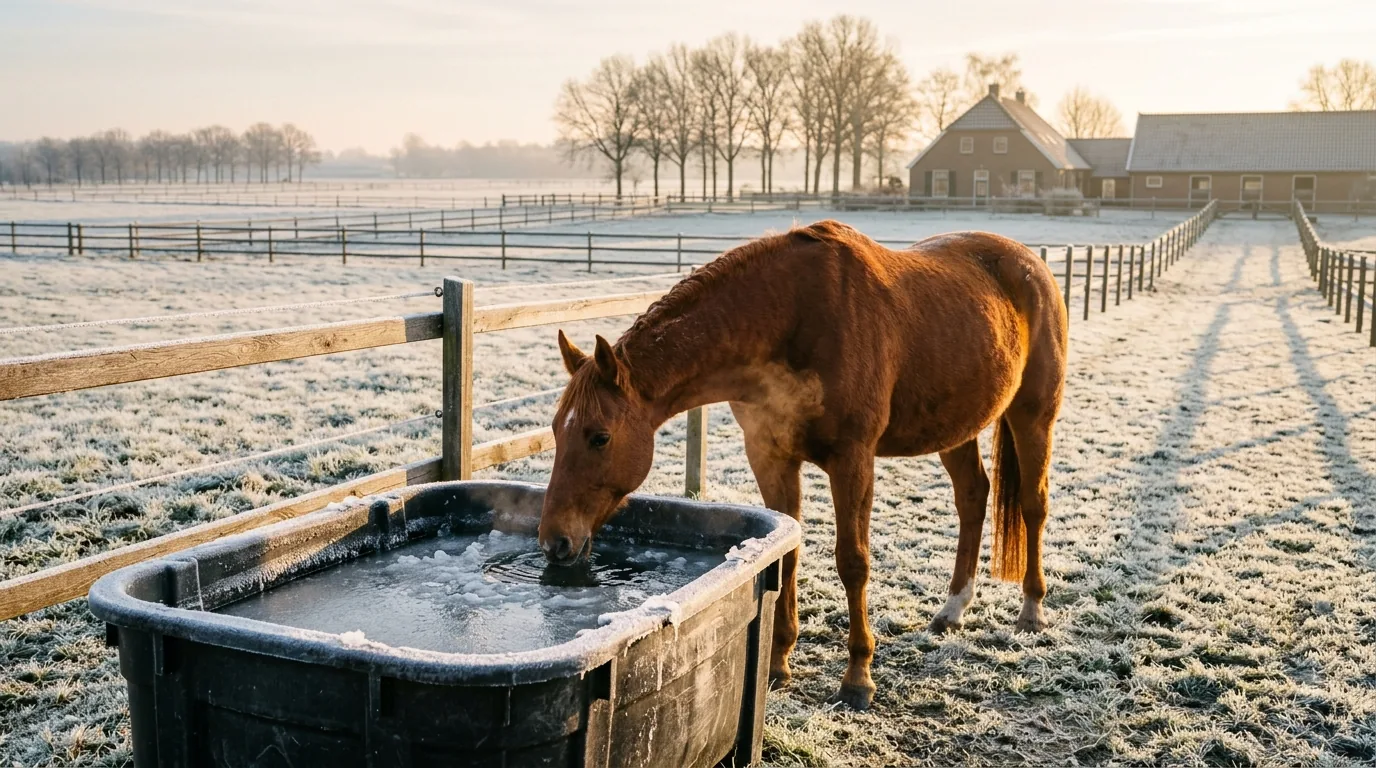
Management
Keeping water points in the pasture frost-free
As soon as the temperature drops below zero, a drinking trough freezes faster than you might think. A horse needs 25 to 50 litres of water every day — in winter at least as much as in summer, because dry roughage demands extra moisture. Frozen water points therefore pose a direct health risk: dehydration and colic are never far away. In this article you will find out what measures you can take to keep your water points frost-free, from simple tricks to smart installations.
Read more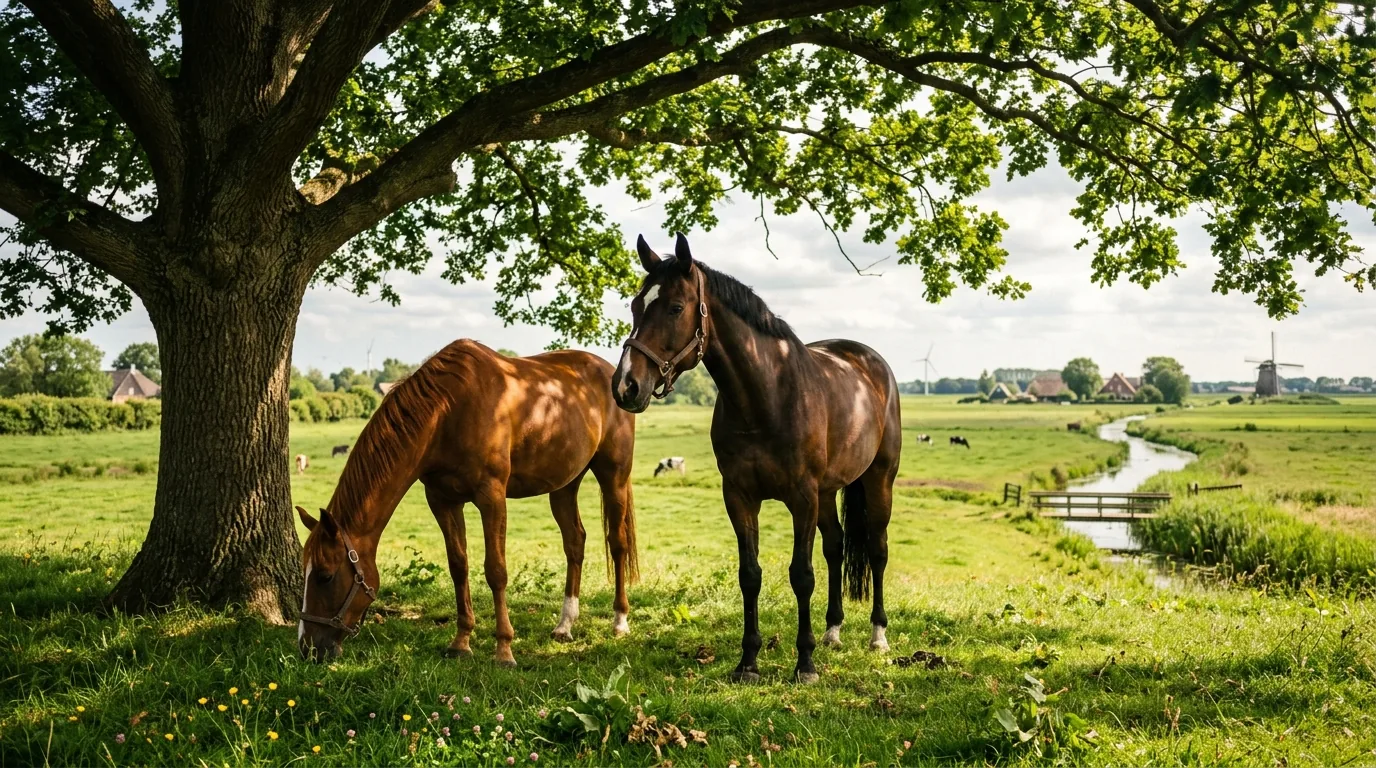
Management
Shade in the pasture: why it's indispensable
A sunny pasture sounds ideal, but for horses, full exposure to the sun in summer is downright dangerous. Without shade, a horse can overheat, suffer from sunburn, and build up chronic stress. In this article, you'll learn why shade is a basic necessity, what requirements it must meet, and how to arrange this practically for your situation.
Read more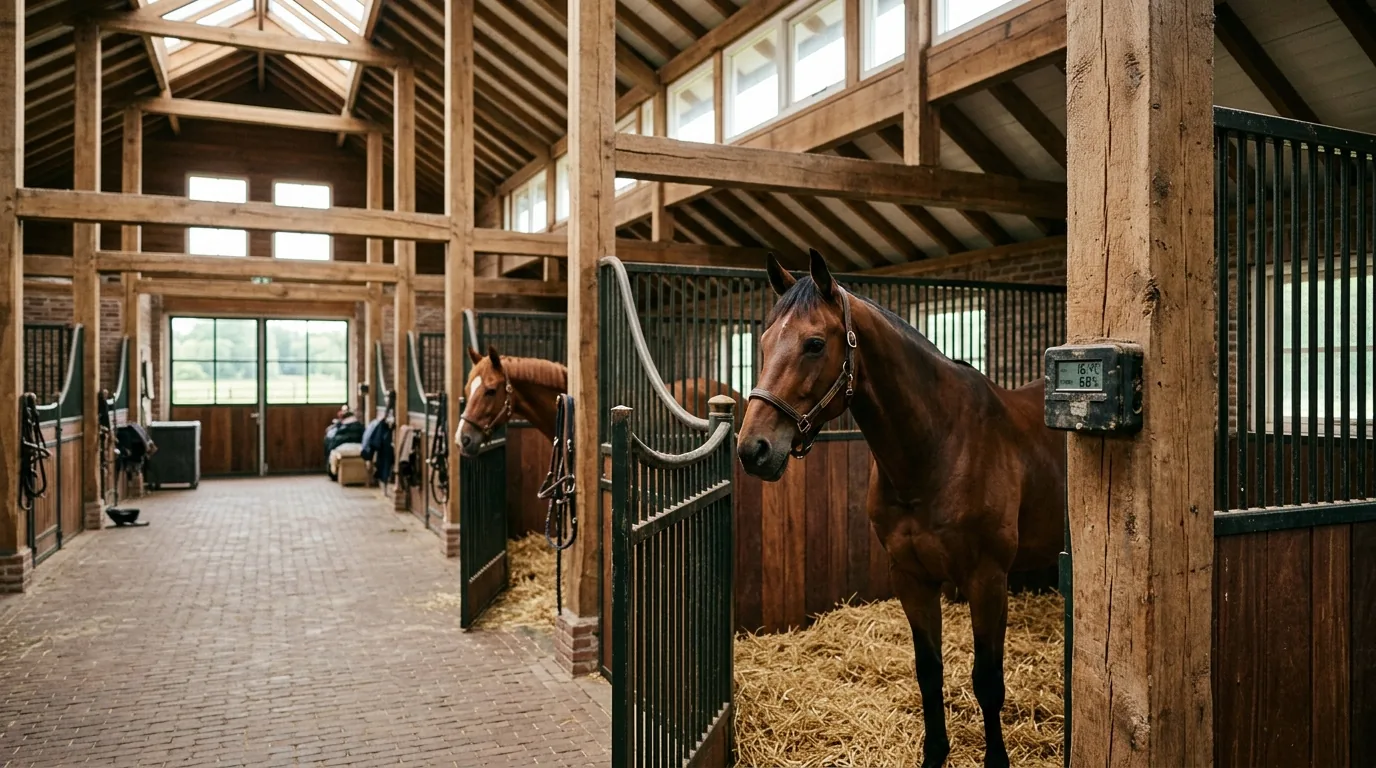
Management
Stable ventilation: how to measure air quality
Poor stable air is one of the most underestimated risks to your horse's health. Ammonia, dust, and excessive humidity damage the airways — often before you can smell or notice anything yourself. By actively measuring air quality, you know exactly when to intervene, rather than waiting until your horse coughs or performs poorly. In this article you'll learn which values to know, which measurement methods are available, and how to structurally improve ventilation in your stable.
Read more
Management
What to do when your horse passes away
Losing your horse is a deeply impactful moment. At the same time, you need to make a number of practical decisions within a short timeframe: from the removal of the body to handling paperwork and insurance. This article guides you through everything step by step, so you know what needs to be arranged and when — while still giving you space to grieve.
Read moreManagement
Transporting horses in the Netherlands: what you need to arrange
Whether you're heading to a competition, moving your horse to a new stable, or visiting a vet: horse transport regulations in the Netherlands are stricter than many owners realise. European regulations, national legislation, and practical requirements for both vehicle and animal are all layered on top of each other. Setting off unprepared risks a fine — or worse: a sick or stressed horse. In this article we lay out the most important rules clearly, so you can tackle your next journey well organised.
Read moreManagement
Horse alone in the stable: risks and smart solutions
A horse kept alone in the stable is more stressed than you might think. Horses are herd animals and need social contact to feel well — the absence of it leads to elevated stress hormones, stereotypic behaviour and sometimes even health problems within just a few hours. Whether you are temporarily without a stable companion or routinely working with a single horse: there are practical ways to make the situation manageable for your horse. In this article you will read about the consequences of social isolation, which signals to watch for, and how to handle the situation as well as possible.
Read moreManagement
Choosing stable bedding: which type suits your horse
The right stable bedding makes a big difference to your horse's wellbeing, your workload, and your wallet. Straw, sawdust, wood pellets, flax, or rubber — each material has its own pros and cons. This article sets out the most important options, with concrete information on consumption, costs, and maintenance, so you can make a well-informed choice for your situation.
Read moreManagement
Loading a horse into a trailer alone: how to tackle it
A horse that refuses to step into a trailer on its own is one of the most frustrating situations for horse owners. You're ready to leave for a competition or a vet visit, and your horse plants all four feet firmly on the ground. Fortunately, this problem can be solved in most cases with the right approach, patience, and consistent training. In this article, you'll find a step-by-step guide on how to teach your horse to load into a trailer independently and calmly, even without a companion horse present.
Read moreManagement
Stopping riding due to injury: what now?
An injury that forces you to stop riding is one of the toughest situations for a horse owner. Not only do you miss the riding itself, your horse still needs daily care and exercise — regardless of how you feel. Whether it's a broken collarbone, a knee injury, or a chronic back complaint: with the right approach you can keep things running without putting extra strain on yourself. In this article you'll find out how to practically organise your recovery period, keep your horse well cared for, and when you can safely get back in the saddle.
Read moreManagement
Composting horse manure: how to do it right
The average horse produces around 8 to 10 tonnes of manure per year. If you don't handle that smartly, the problem literally piles up. Composting is a practical solution: you turn raw manure into stable compost that you can use on pasture, in the garden, or sell to hobby gardeners. It does require some organisation and patience, but the result is well worth it. In this article you'll learn how to build a compost heap, what the ideal conditions are, and how to avoid common mistakes.
Read moreManagement
Weighing your horse without a scale — weigh tape and BCS explained
You don't need a horse weighing scale to properly monitor your horse's weight and condition. A weigh tape + Body Condition Score (BCS) gives you 90% of the insight you need.
Read moreManagement
Horse on livery or loan — what do you need to know?
Full livery, part livery, or DIY? The pros and cons laid out clearly. Plus: what to include in your livery contract, and which agreements help you avoid disputes.
Read moreManagement
Why a health record for your horse matters
How much do you remember about the last dental check-up, the allergy from two years ago, or the medication from last spring? A horse dossier prevents information from getting lost — and is invaluable when it comes to sales, injuries, or veterinary issues.
Read more
Join · Beta tester
Become a Beta tester.
Get 3 months Professional for free.
EquiSight goes live on September 1 2026. Sign up now for the Beta and receive the full Professional package for three months at no cost.
No spam. Unsubscribe at any time.